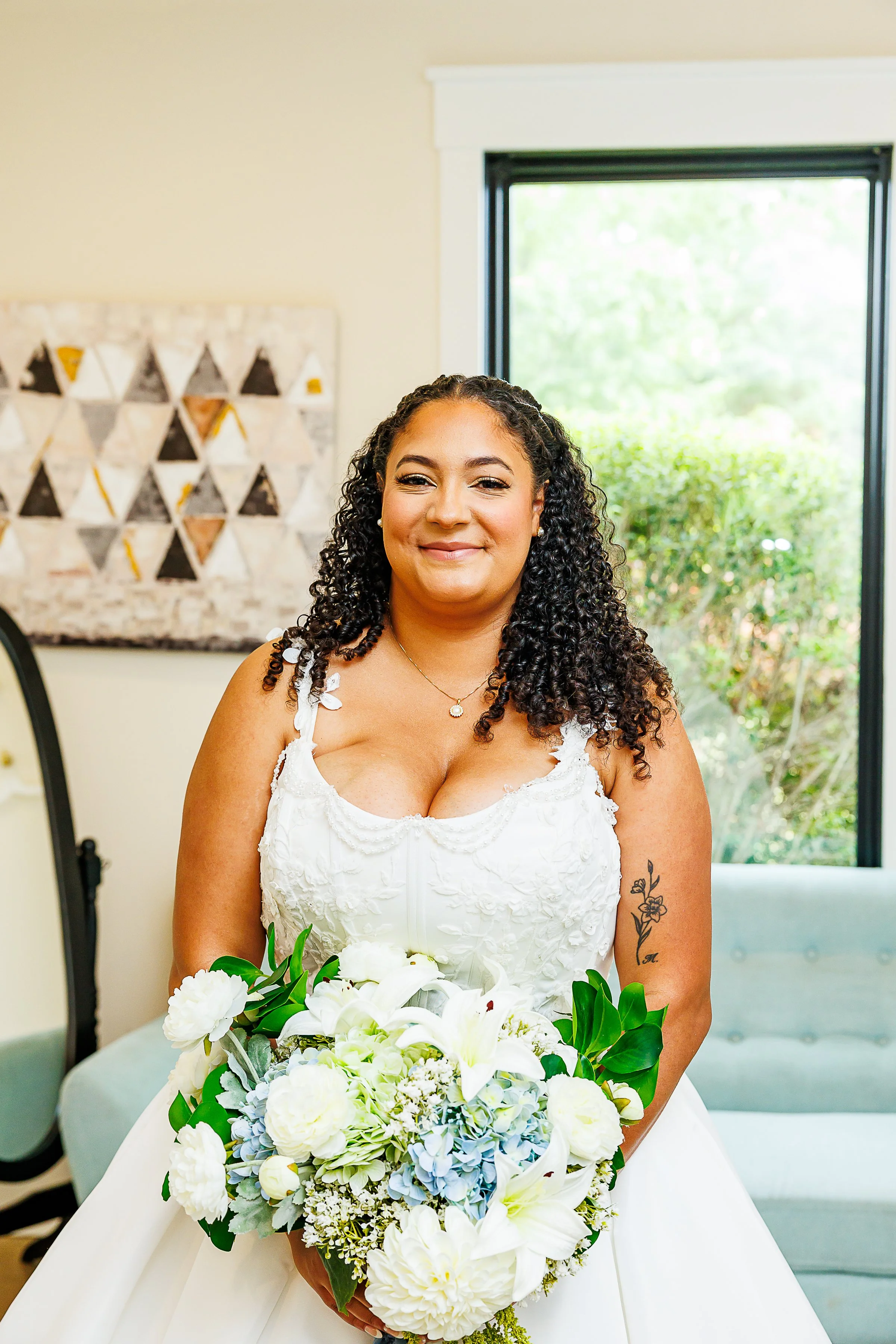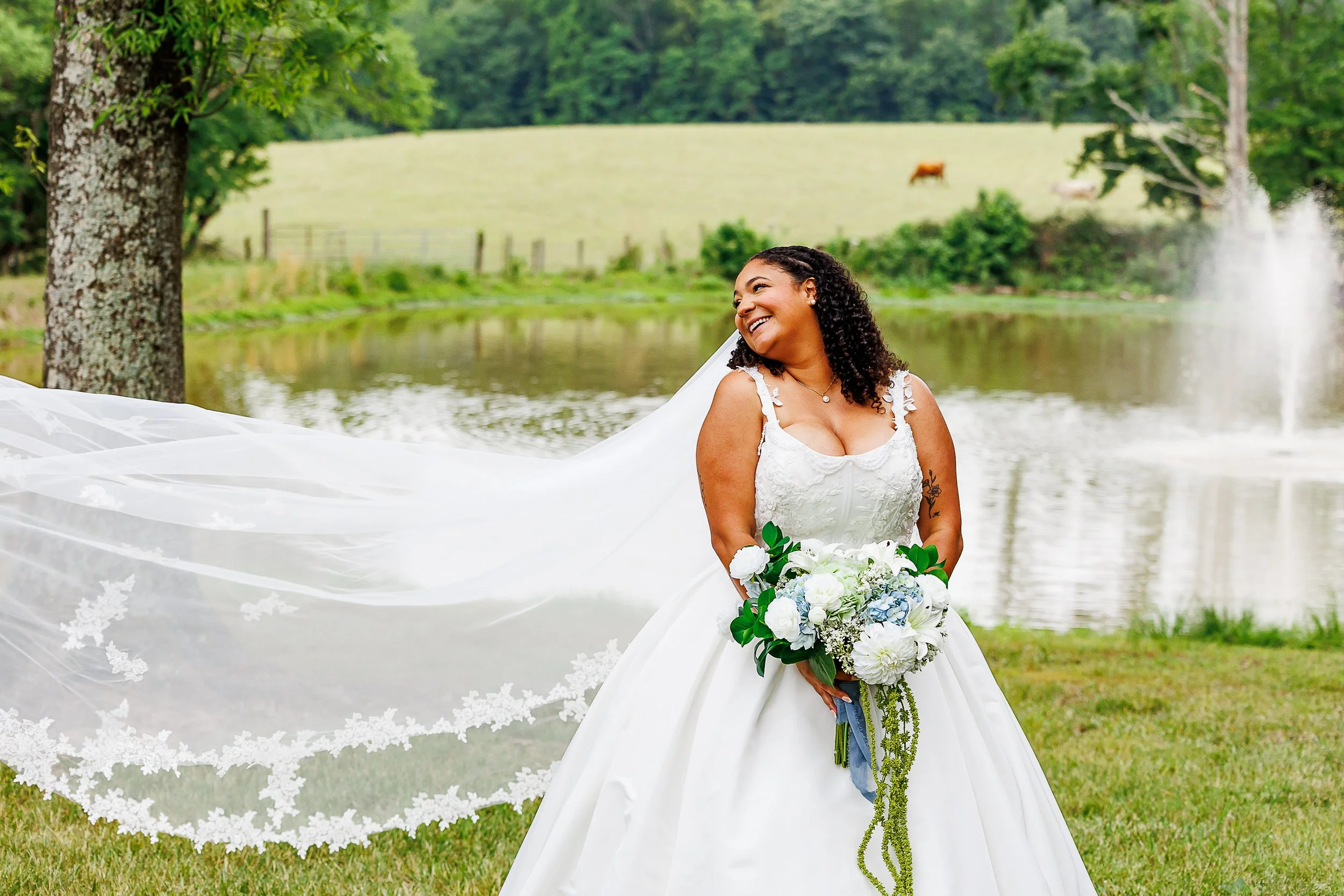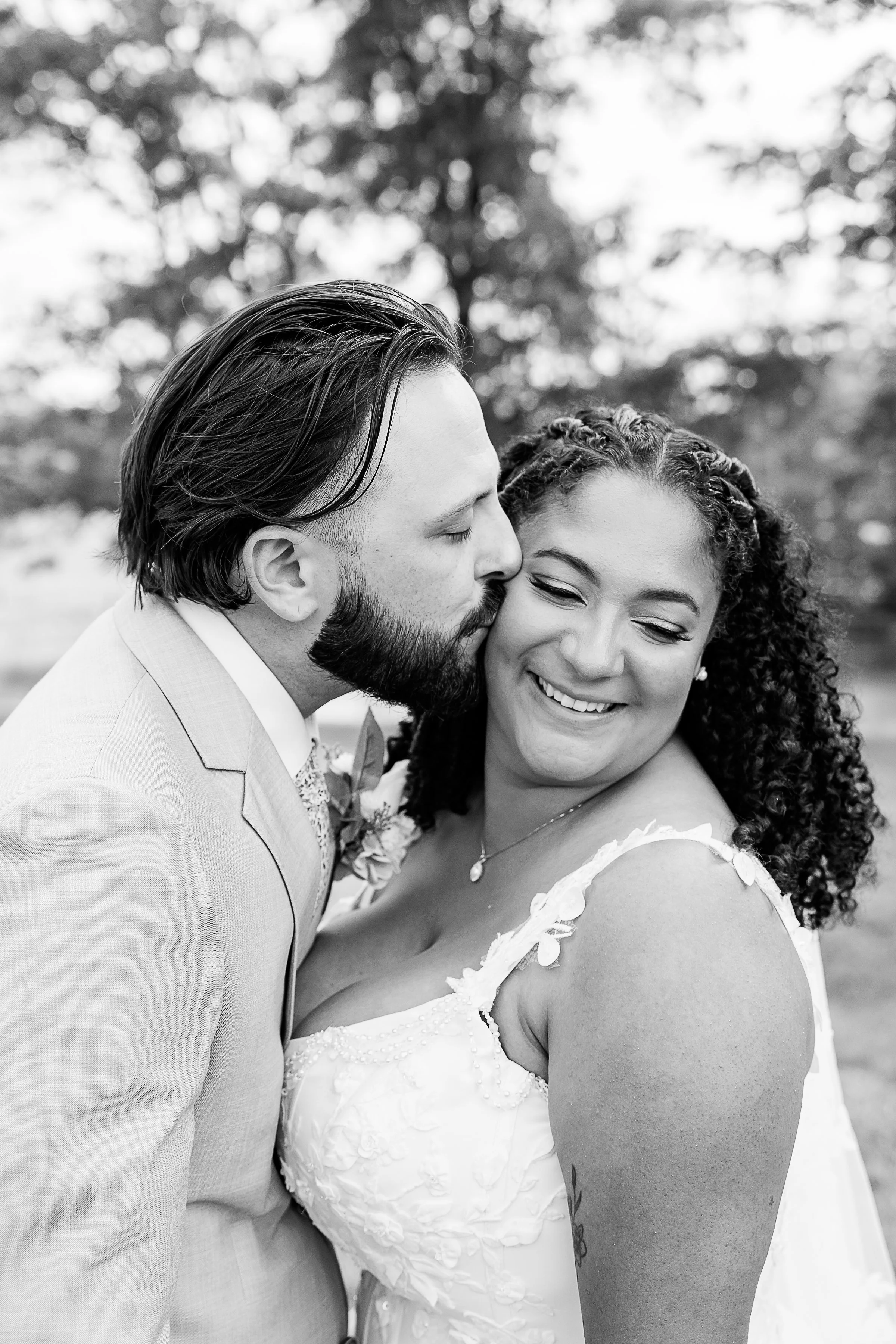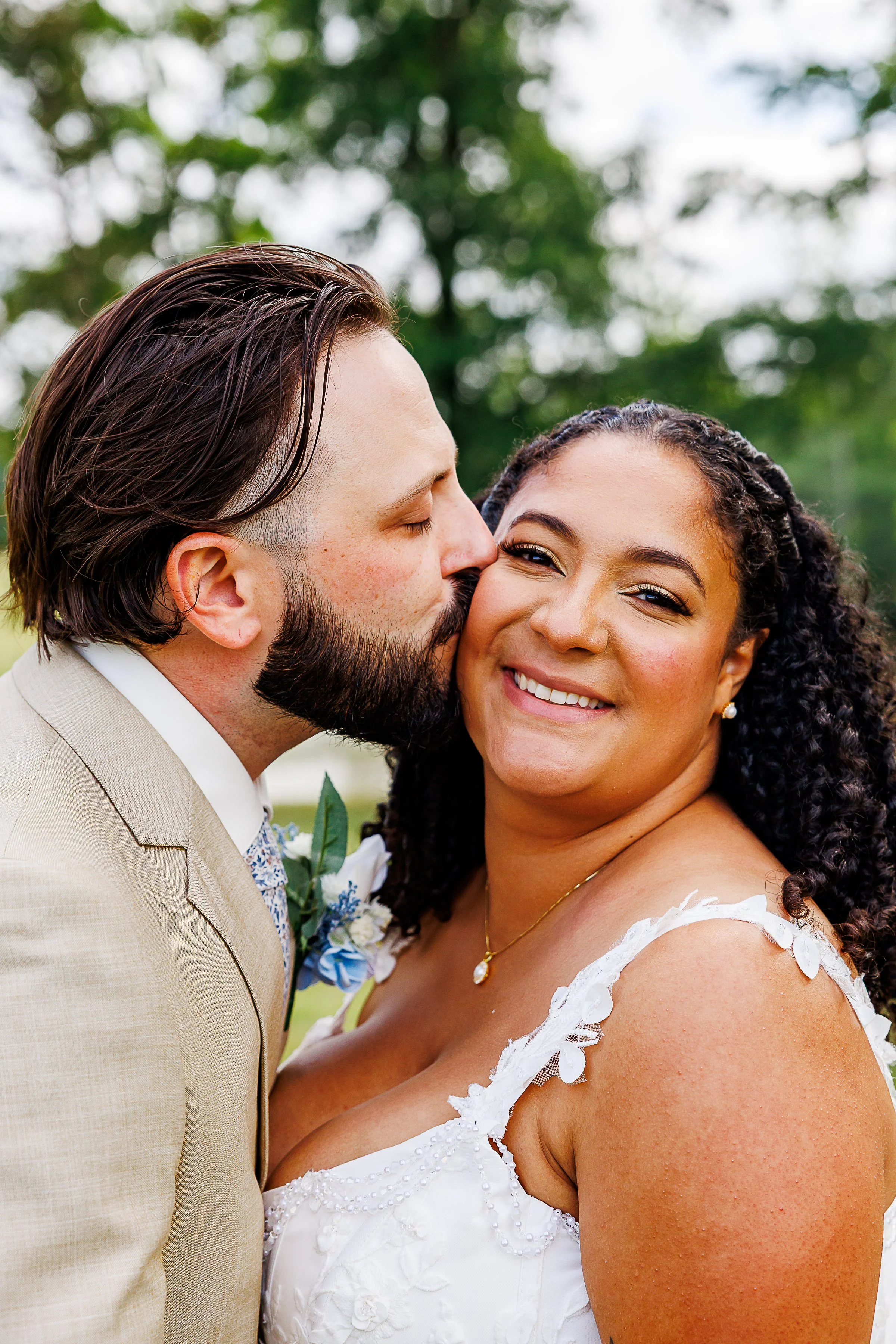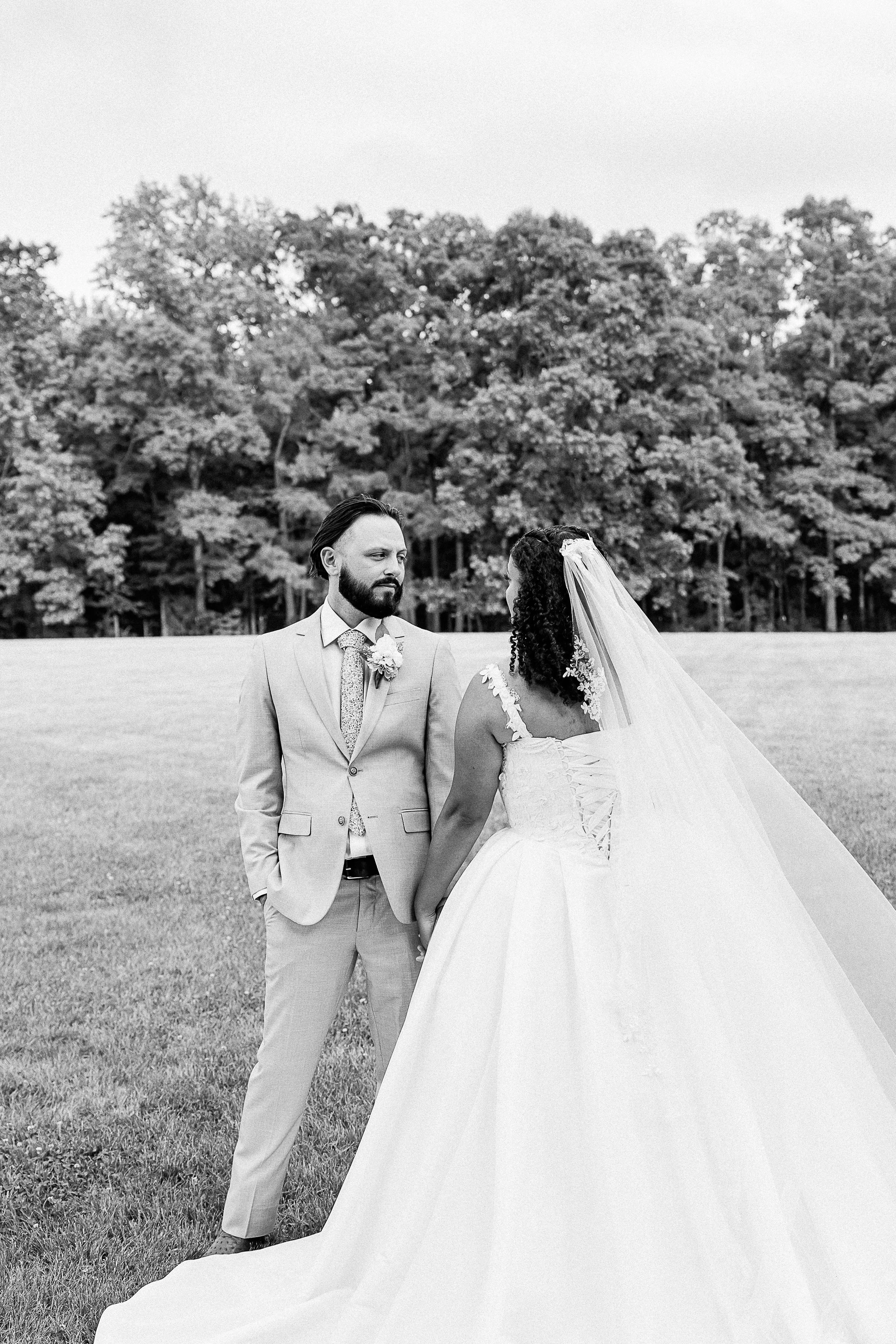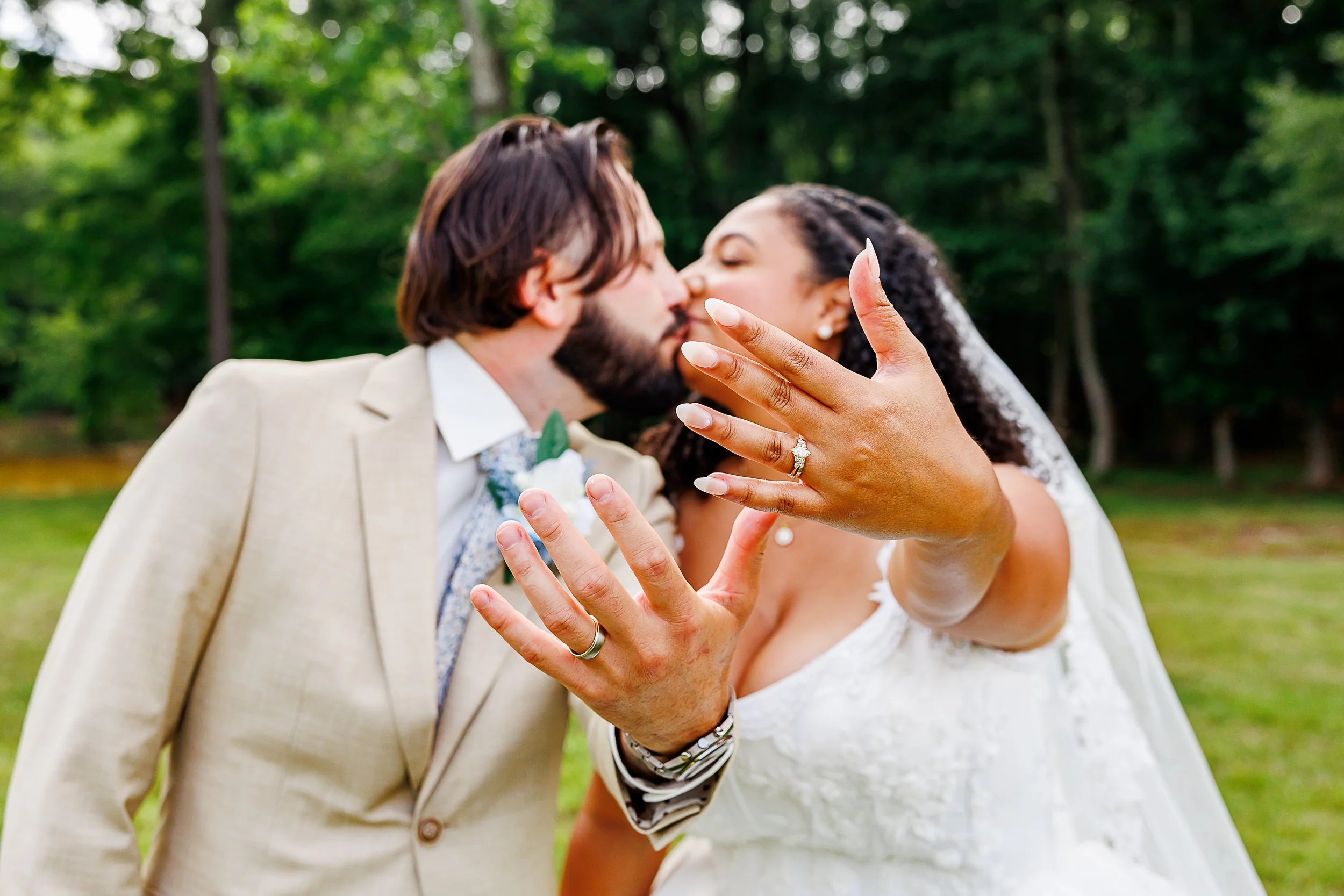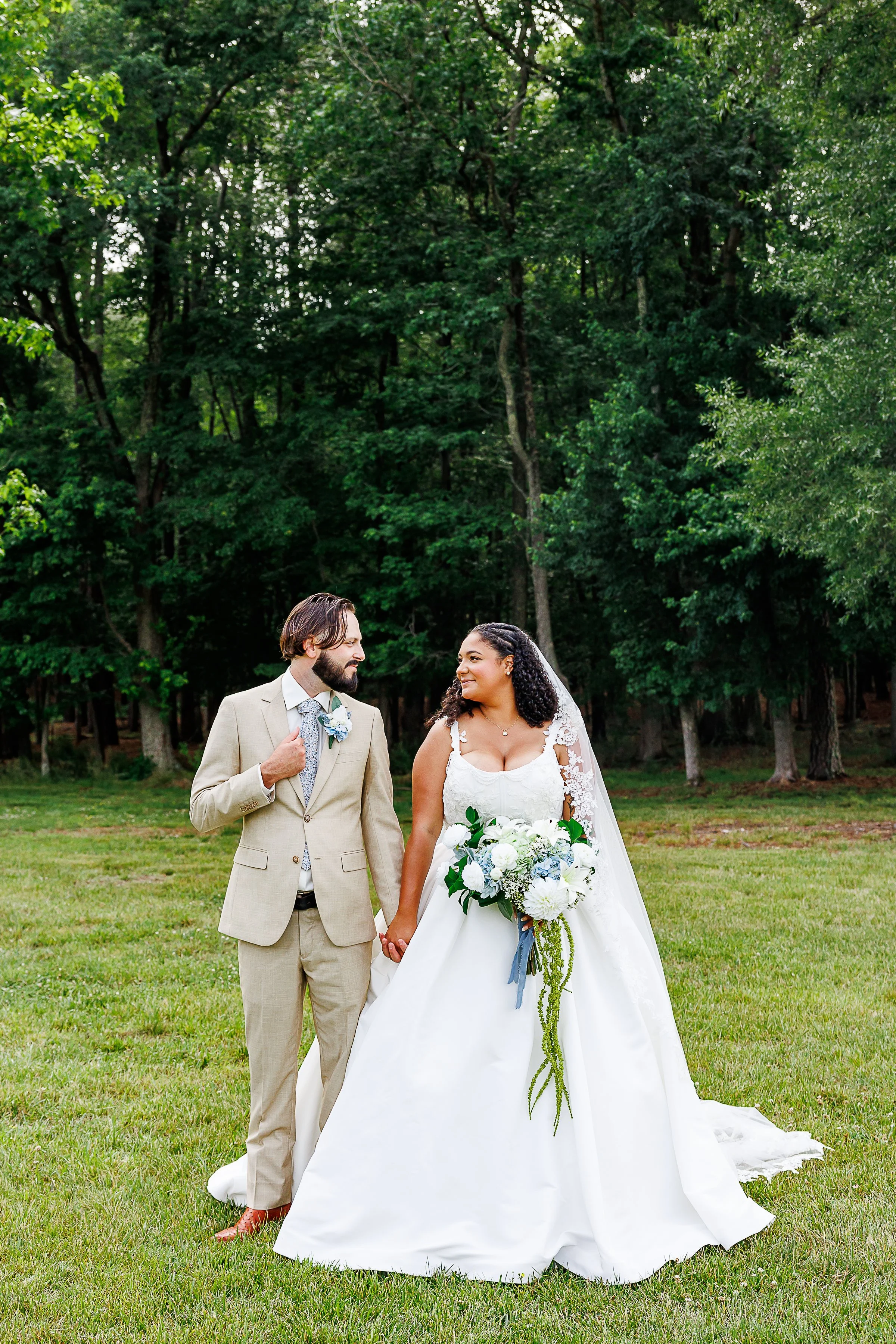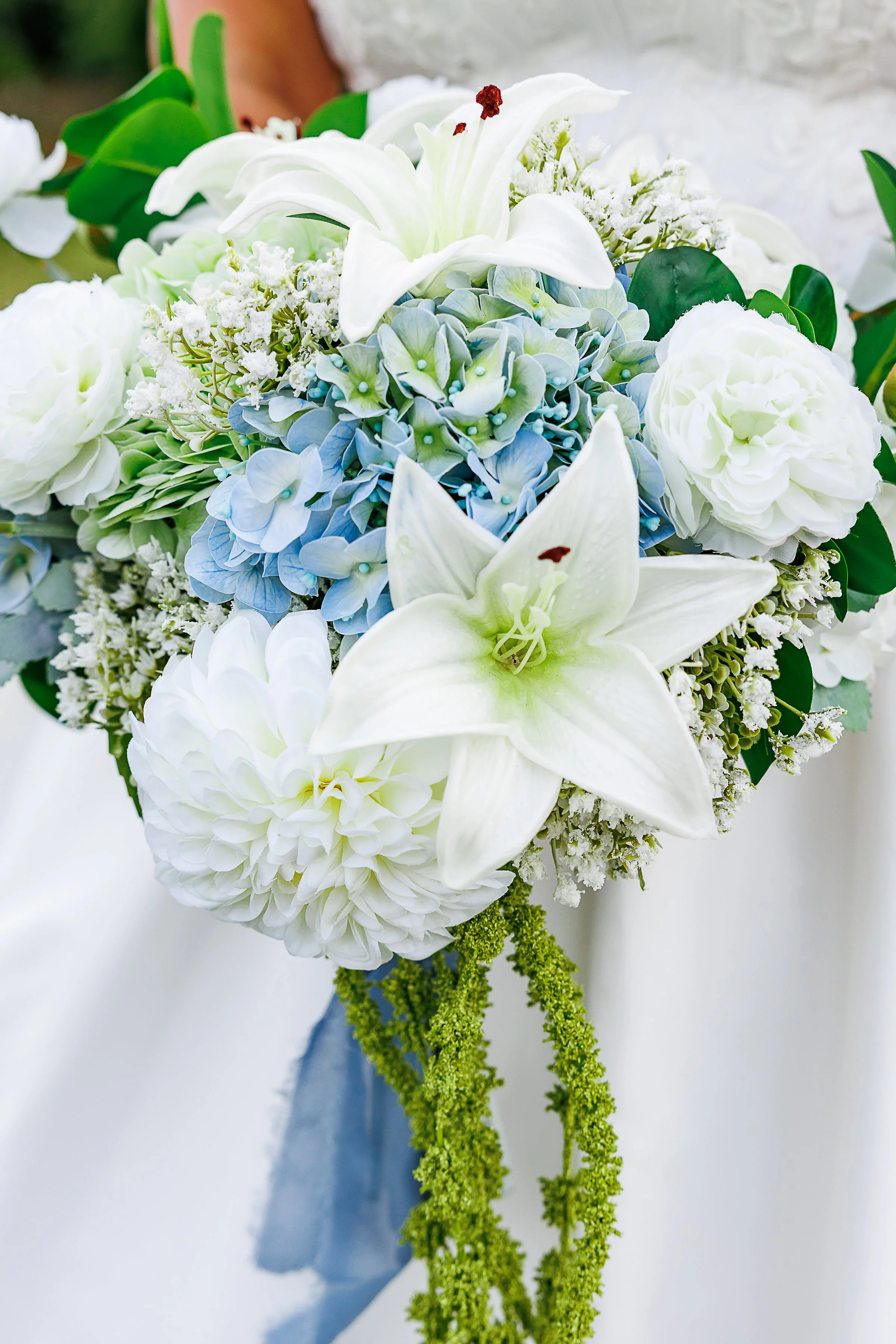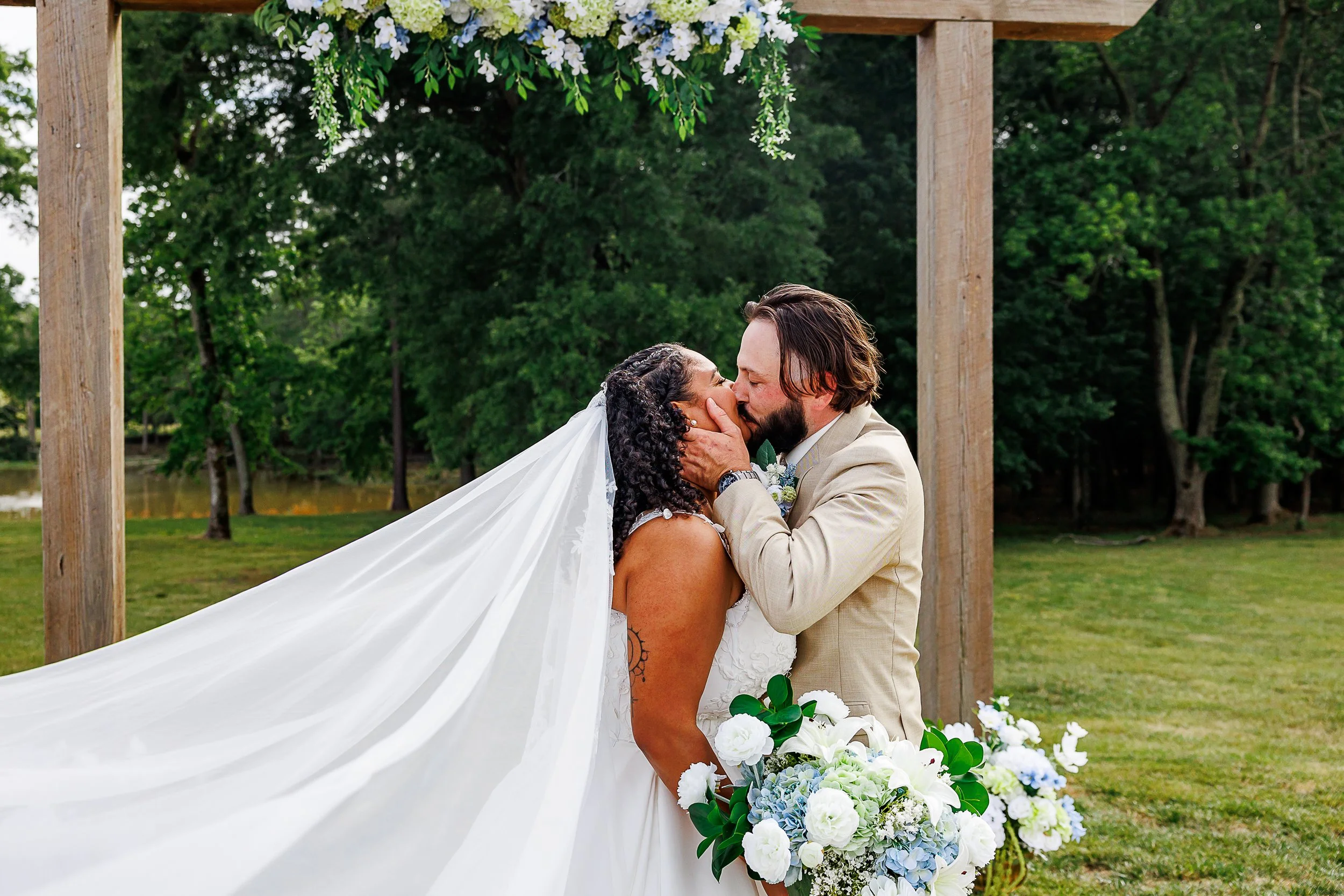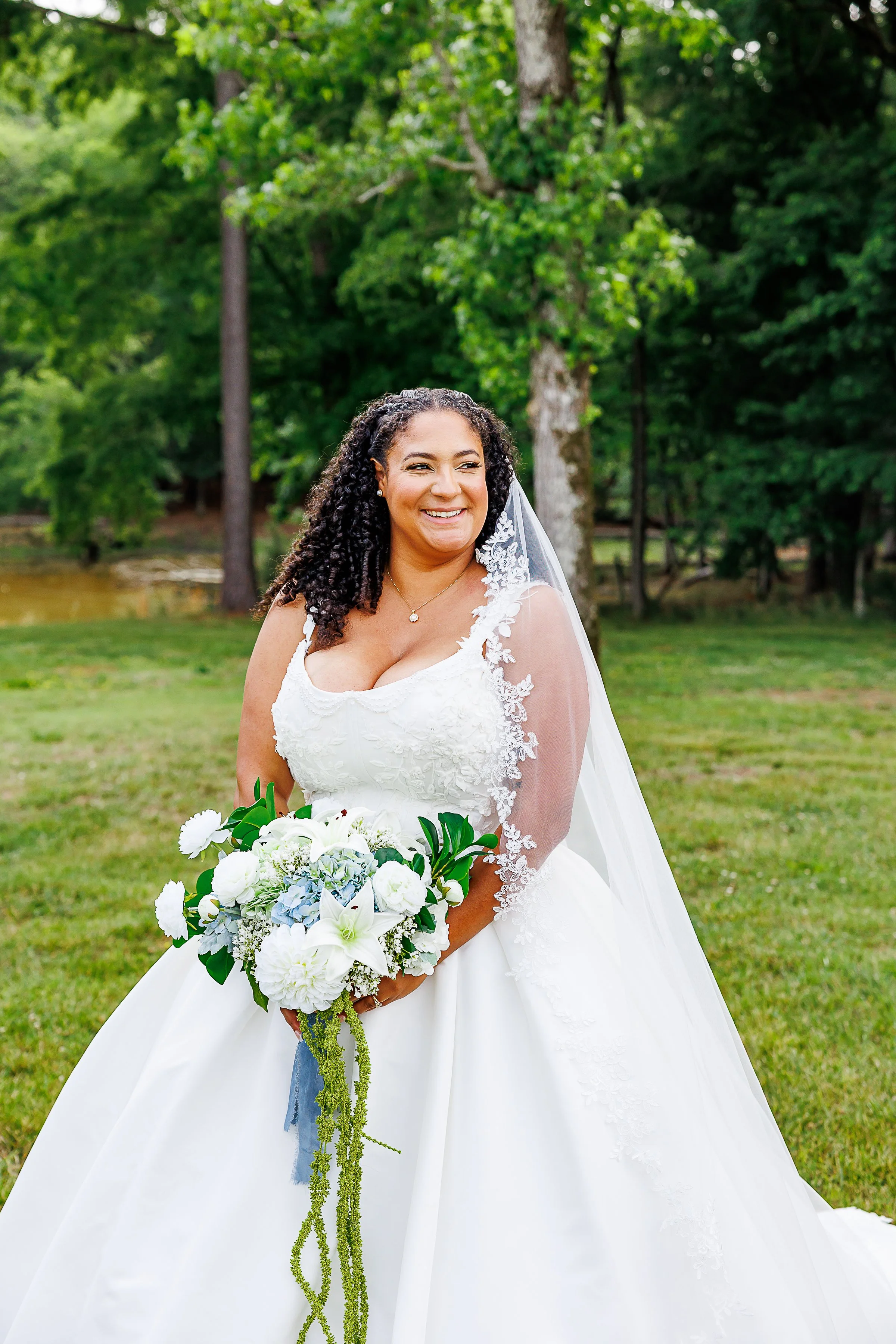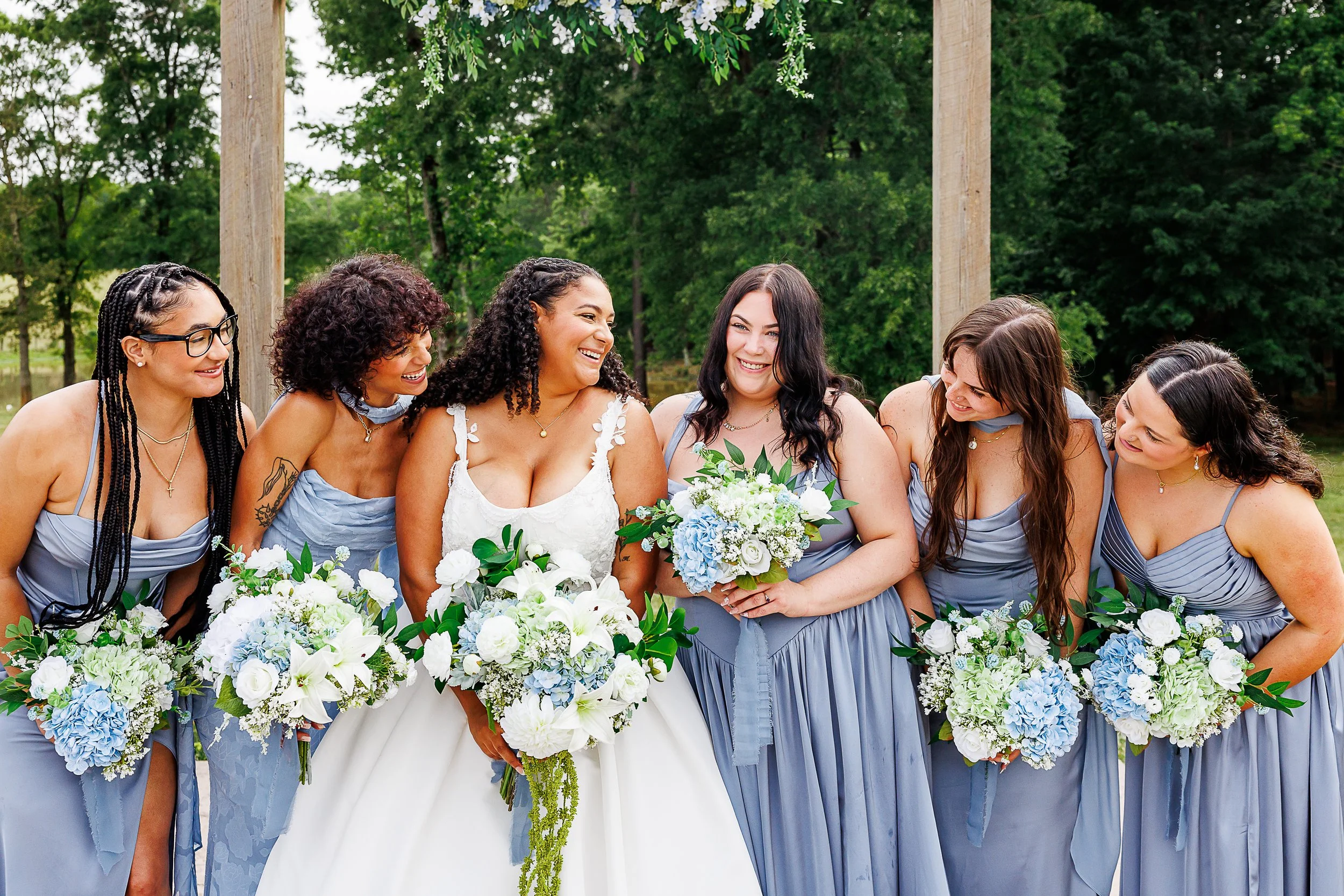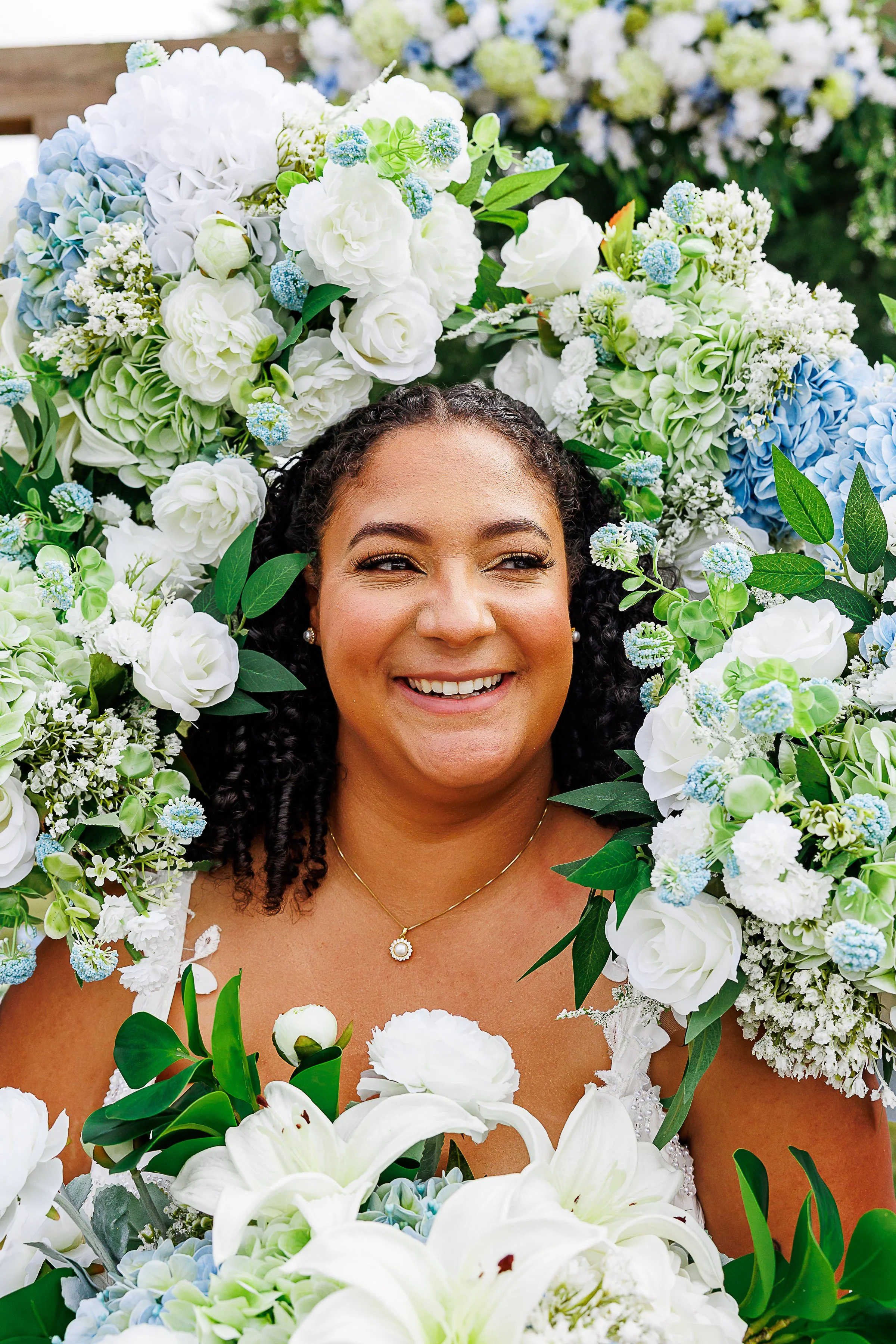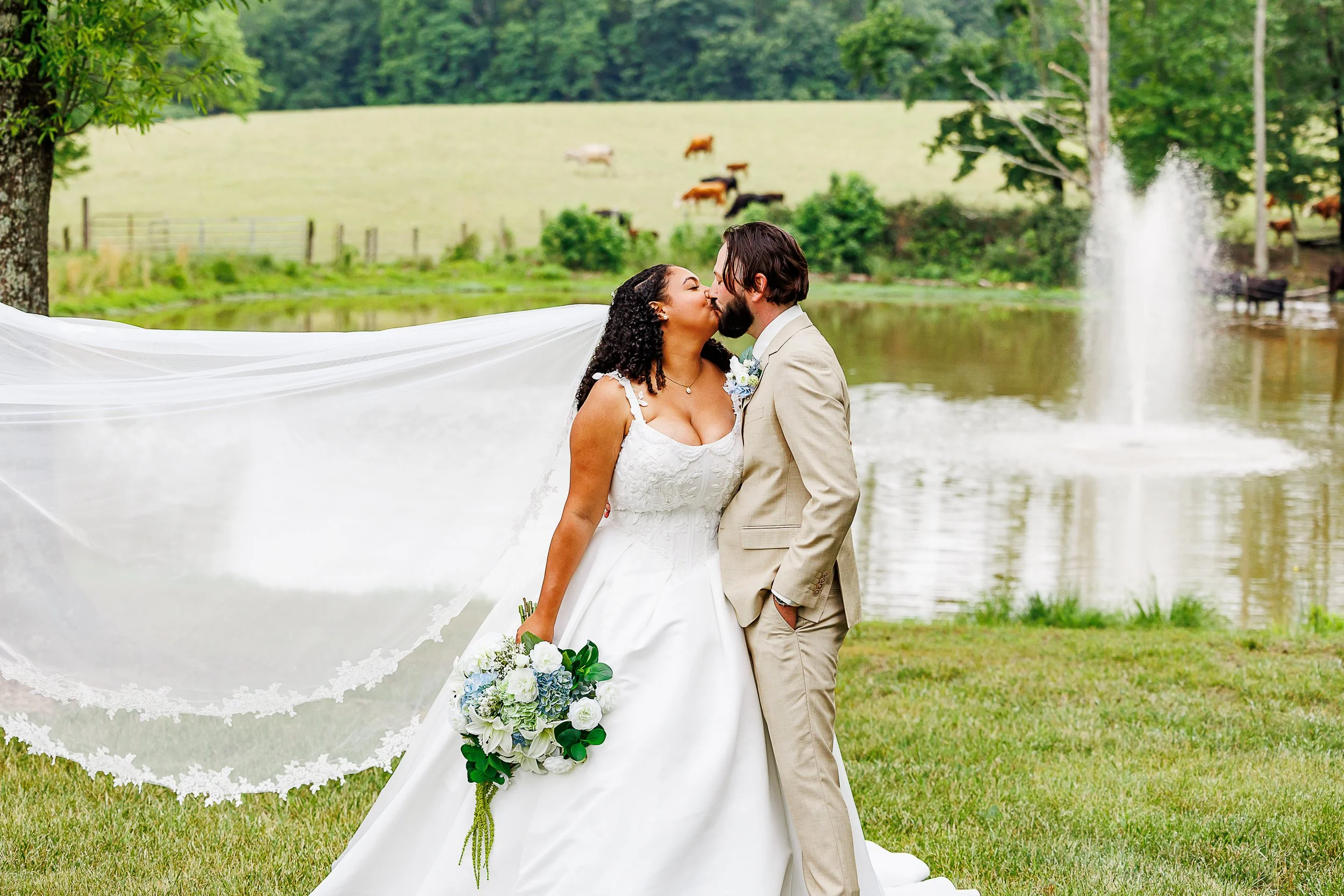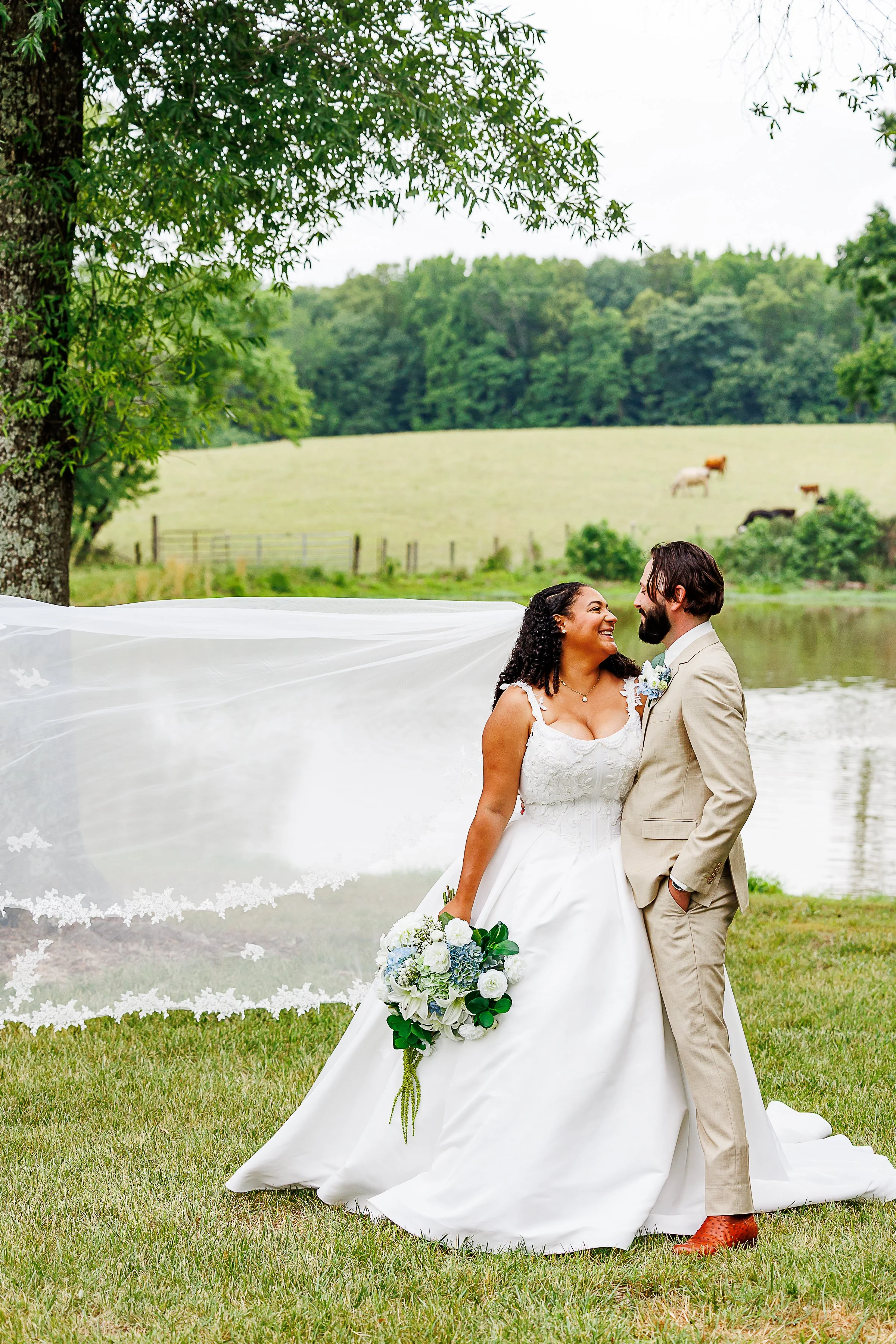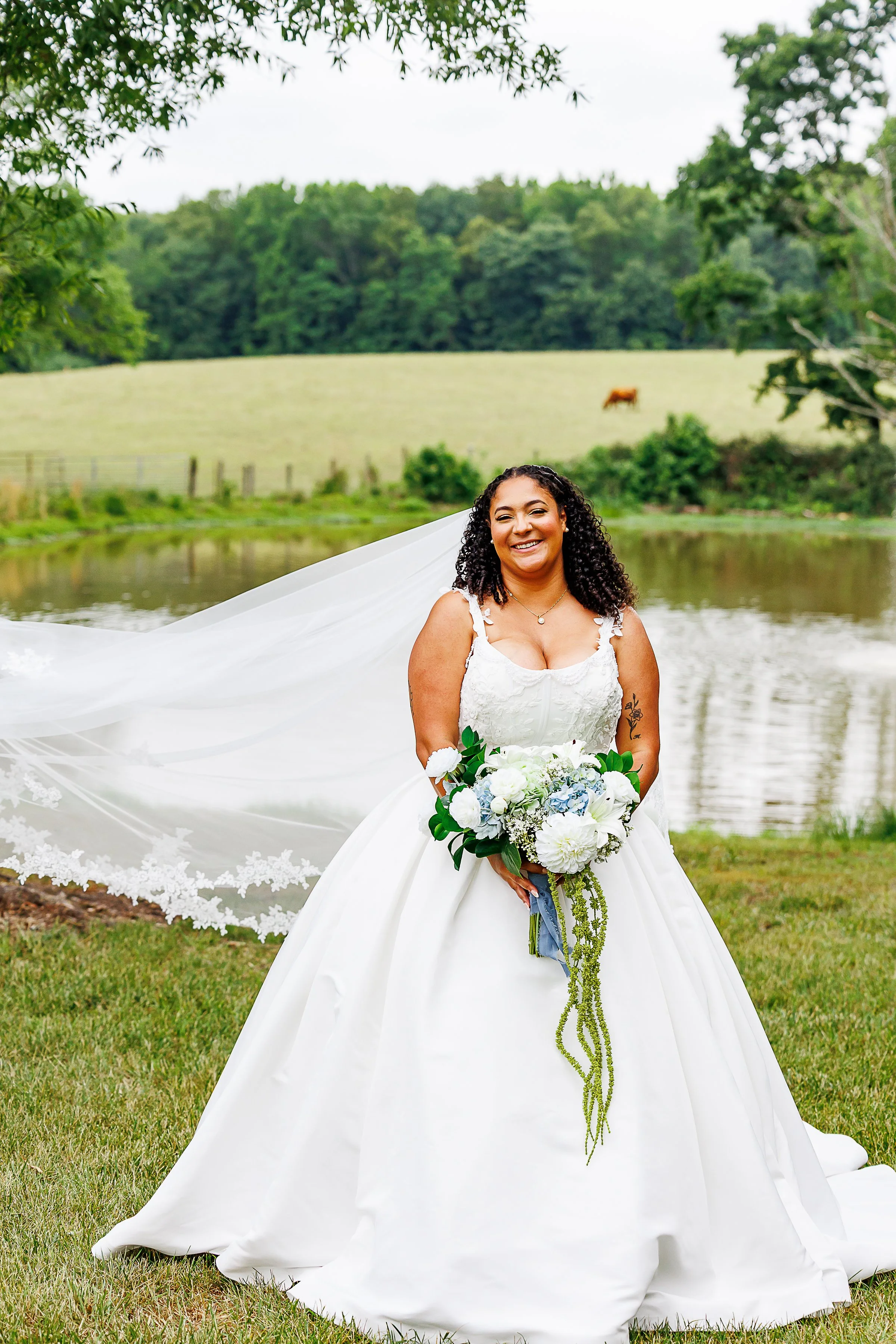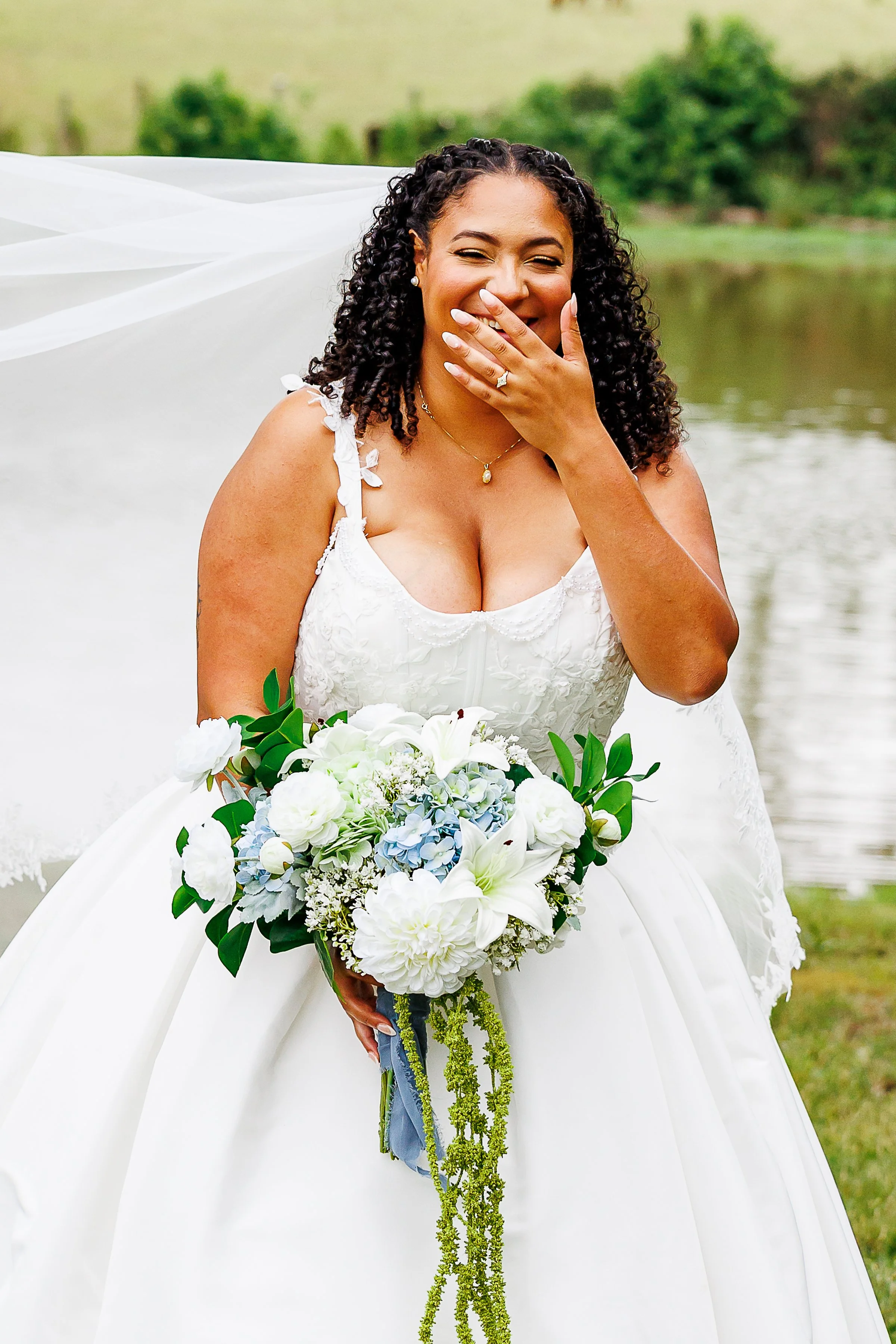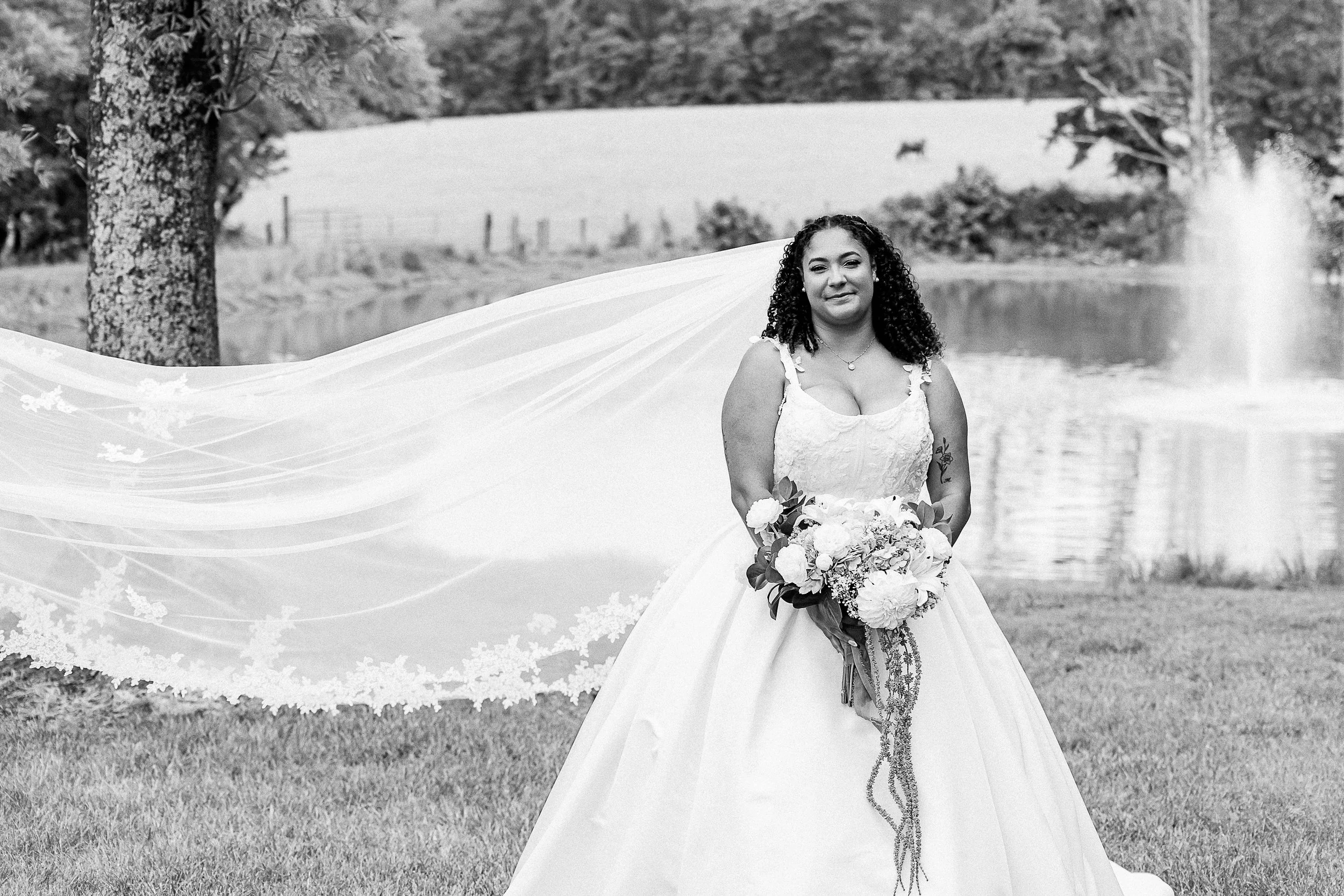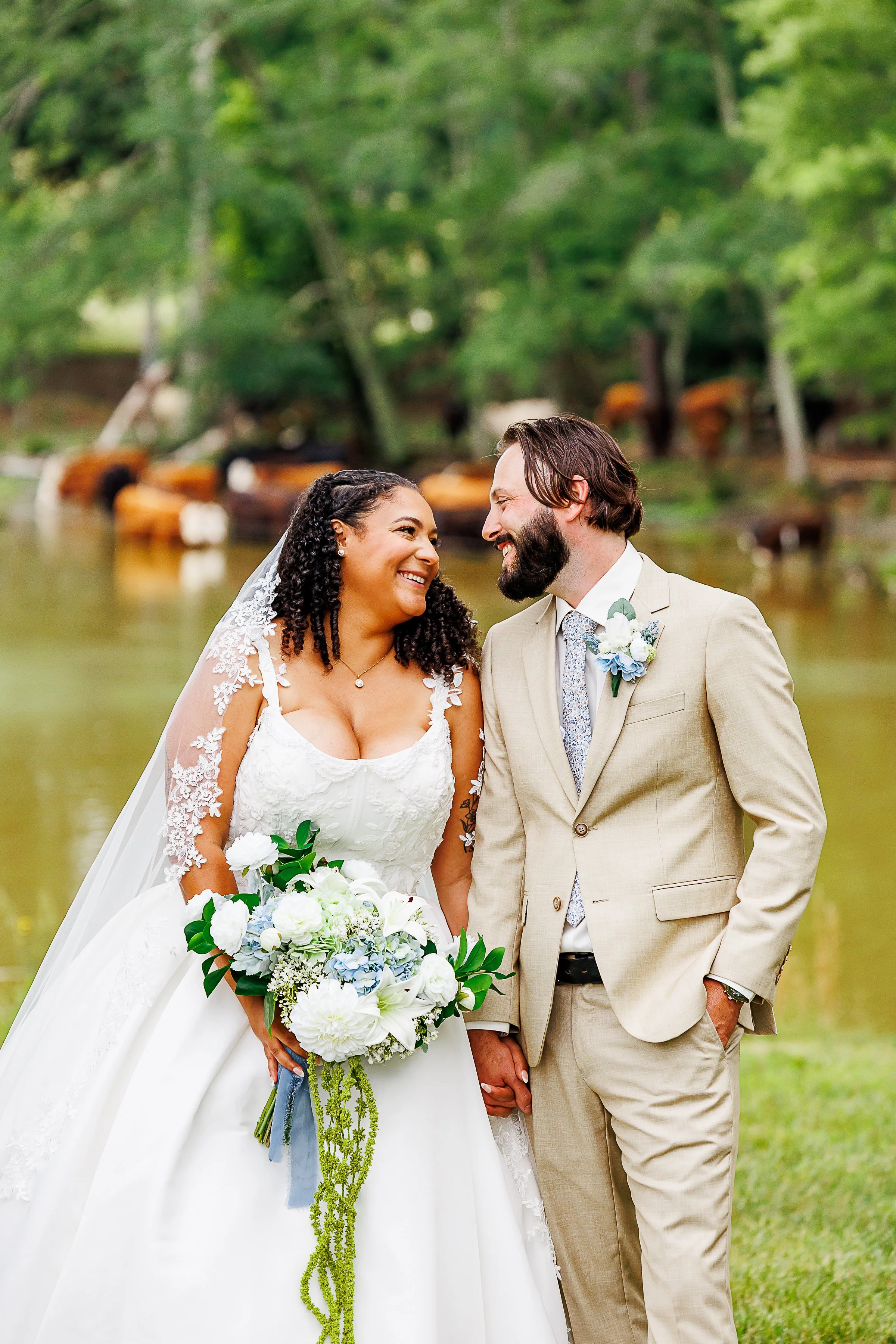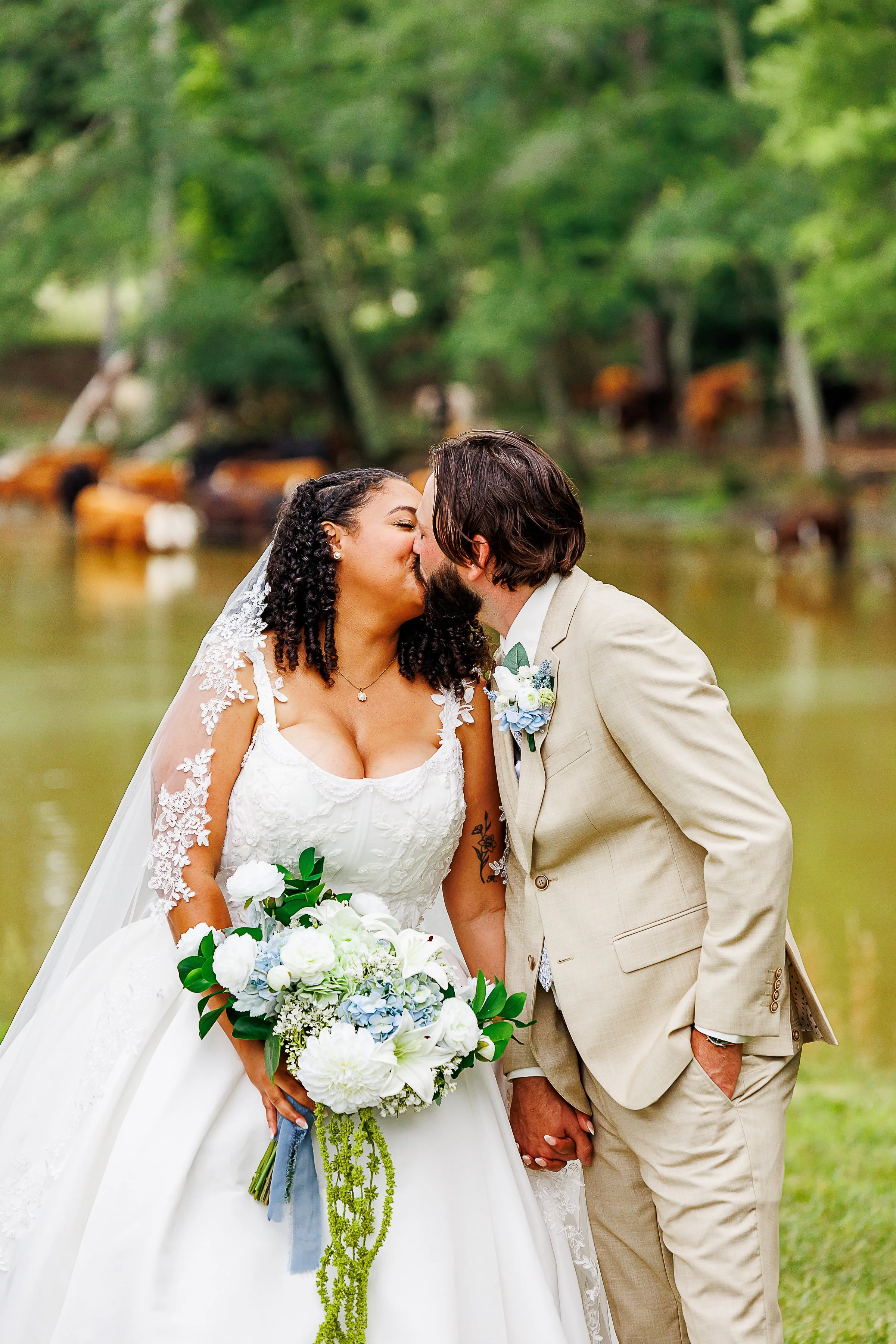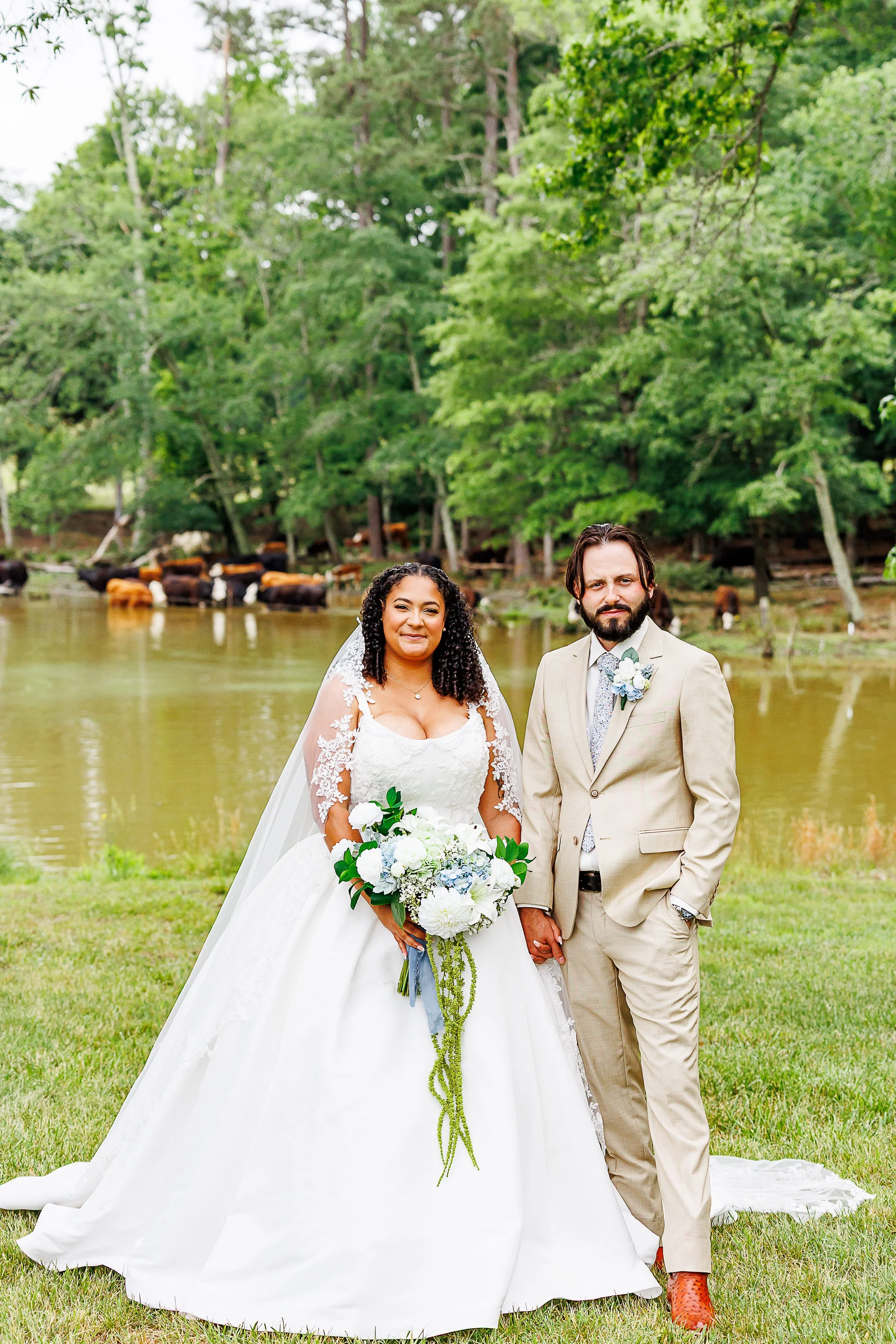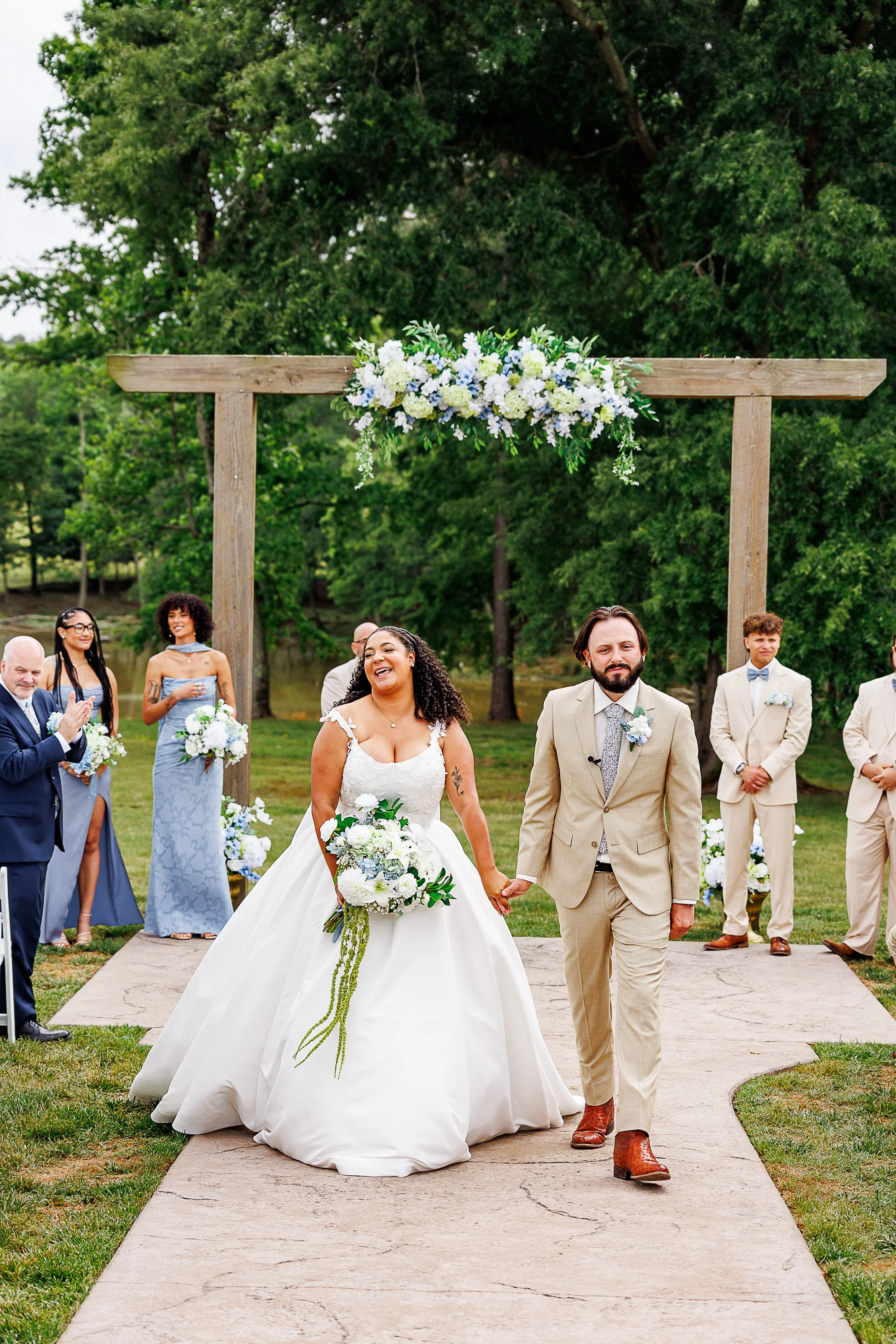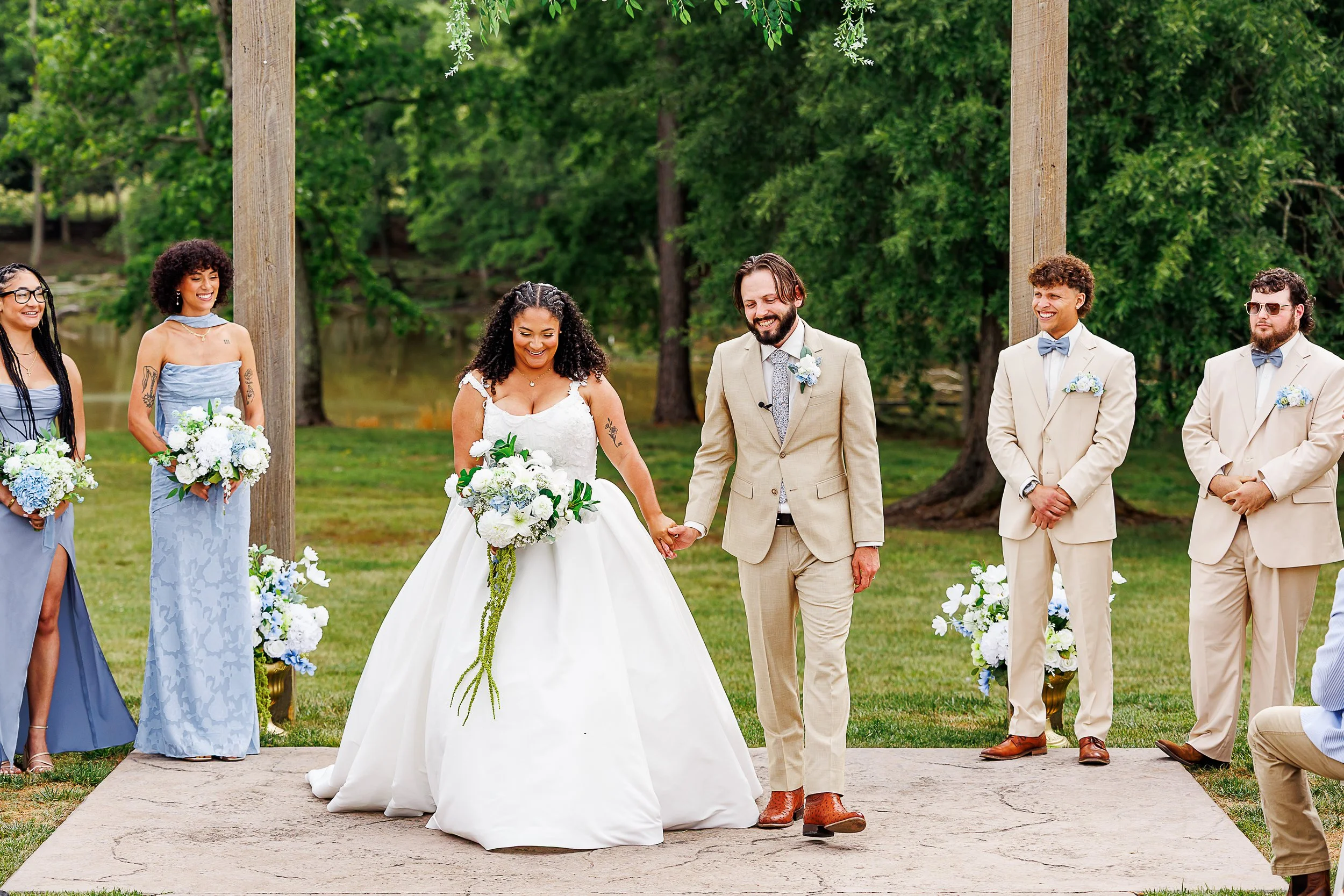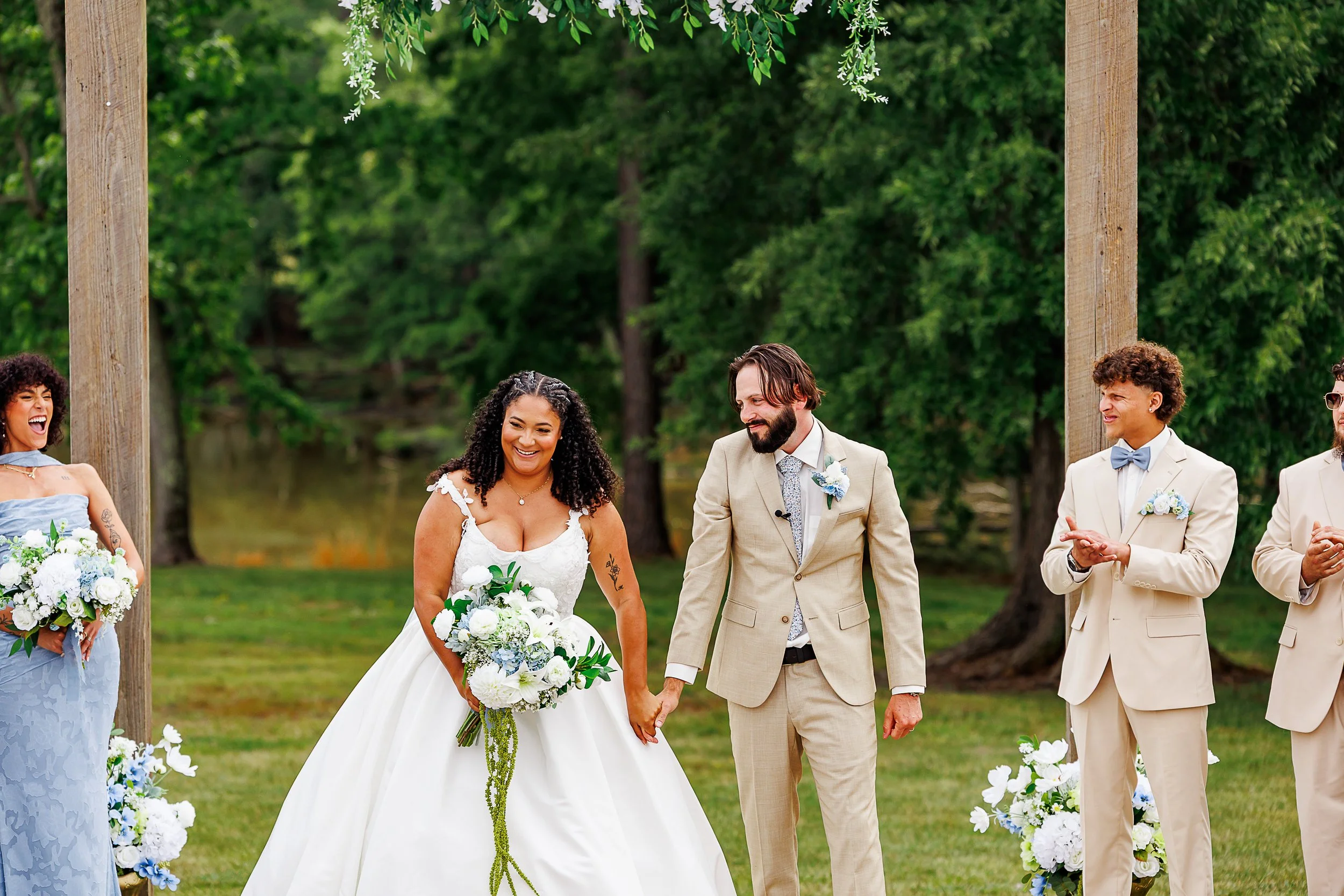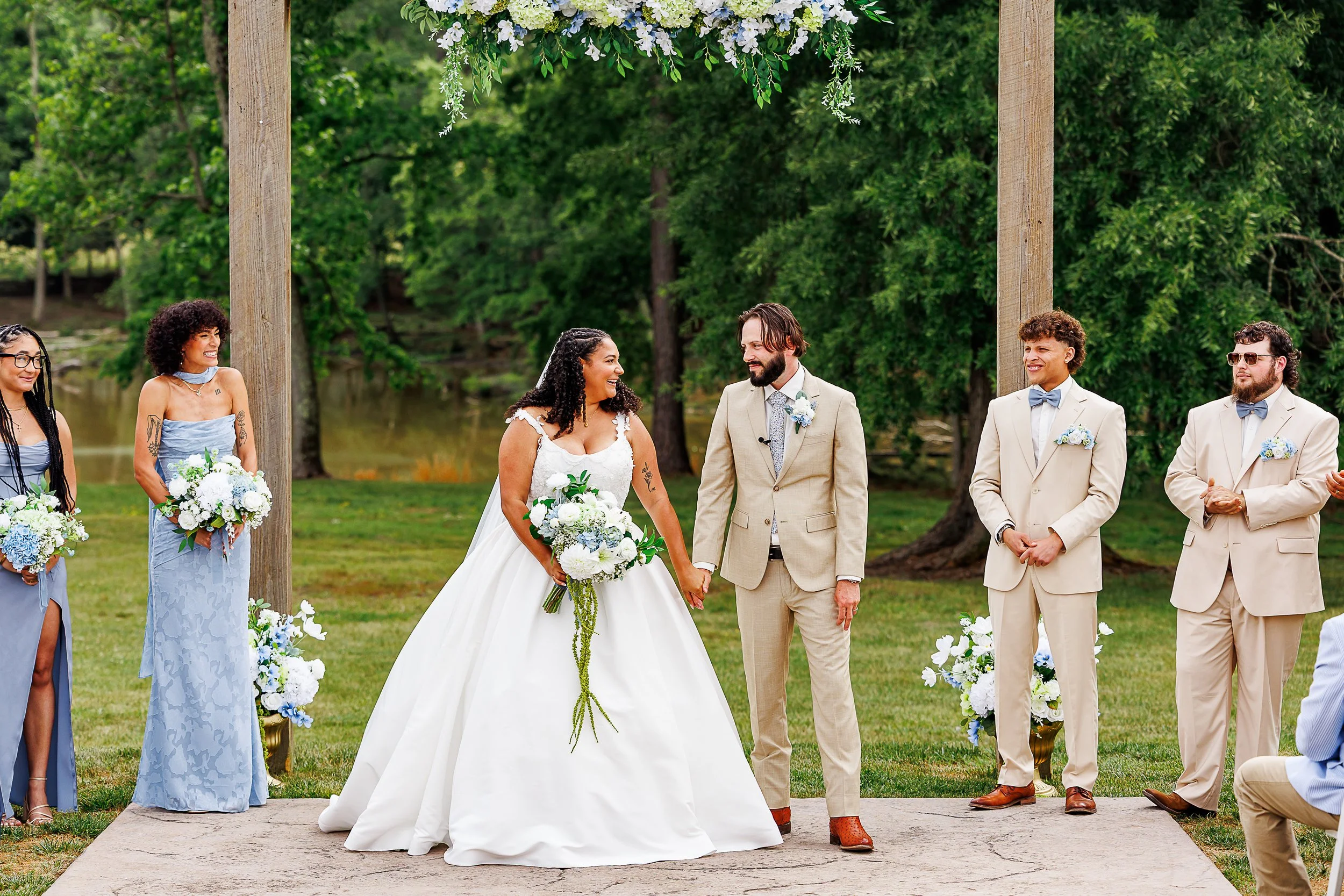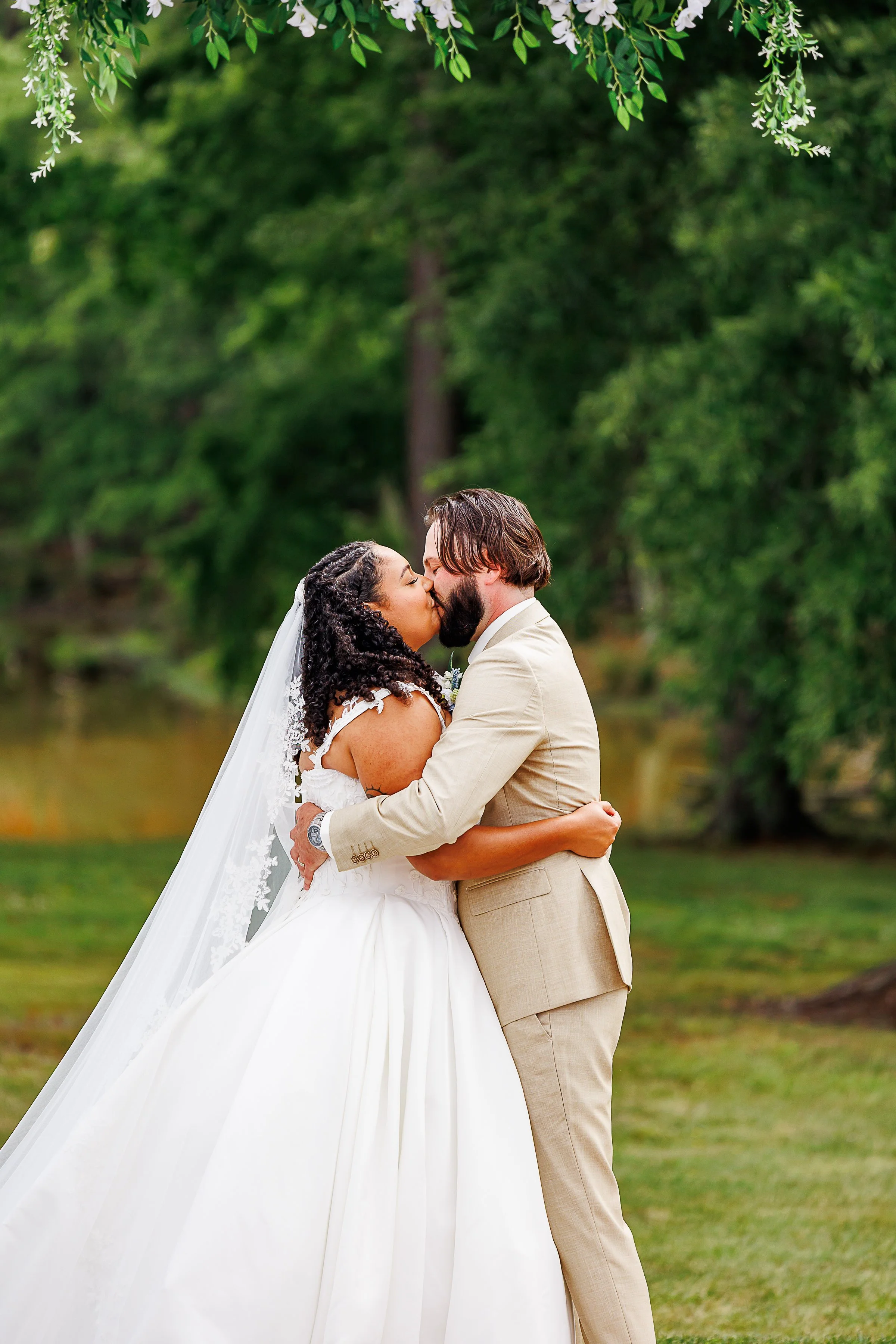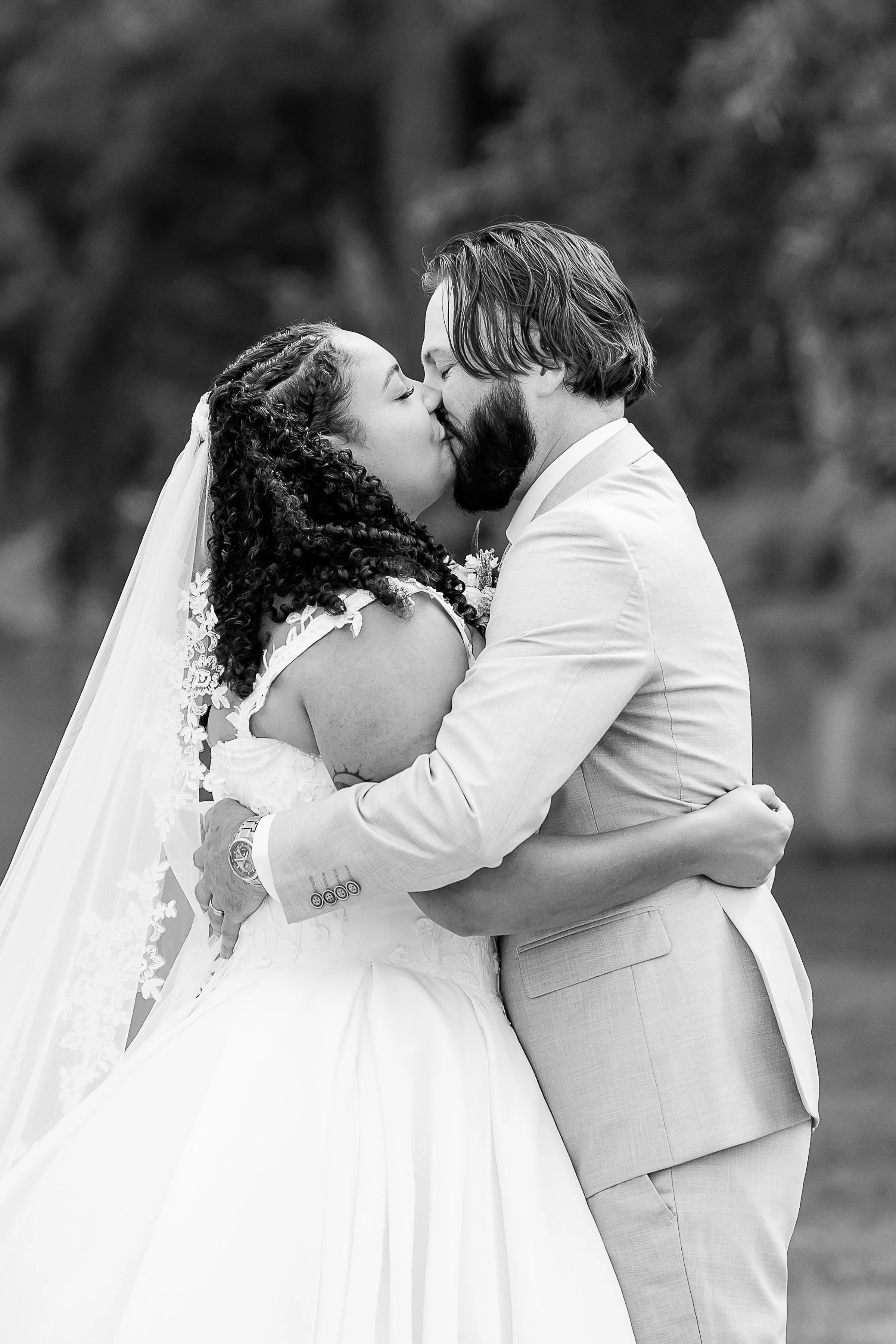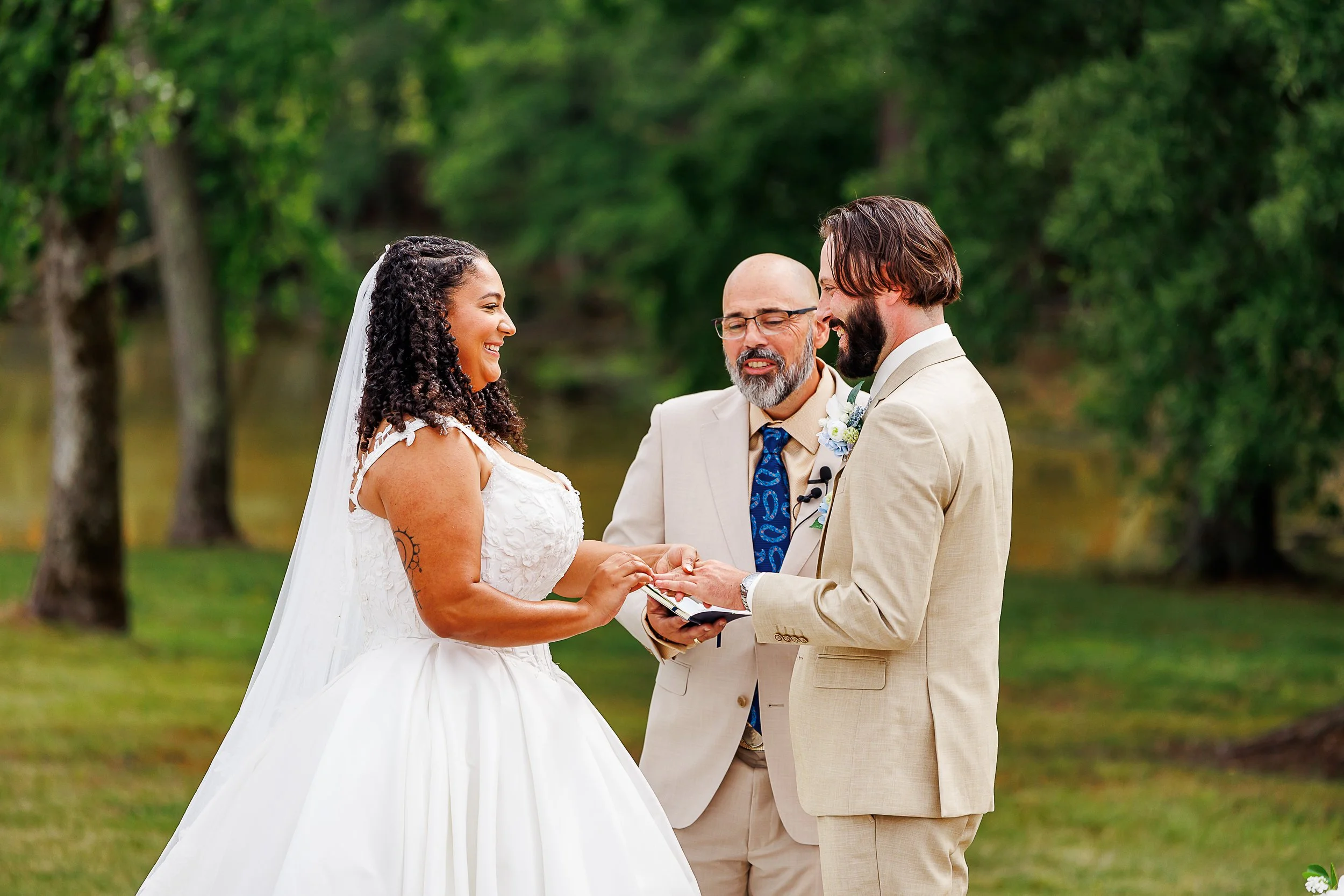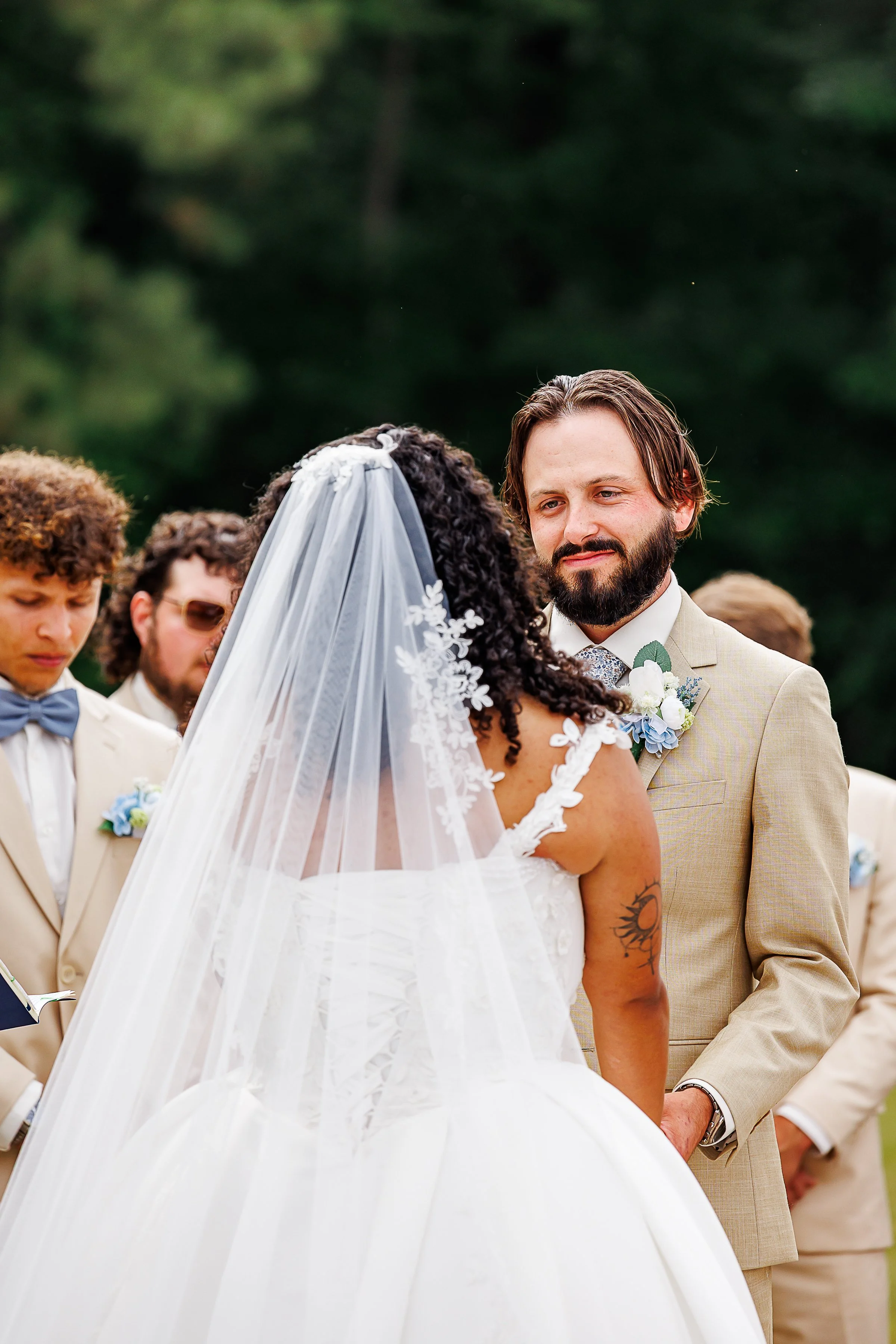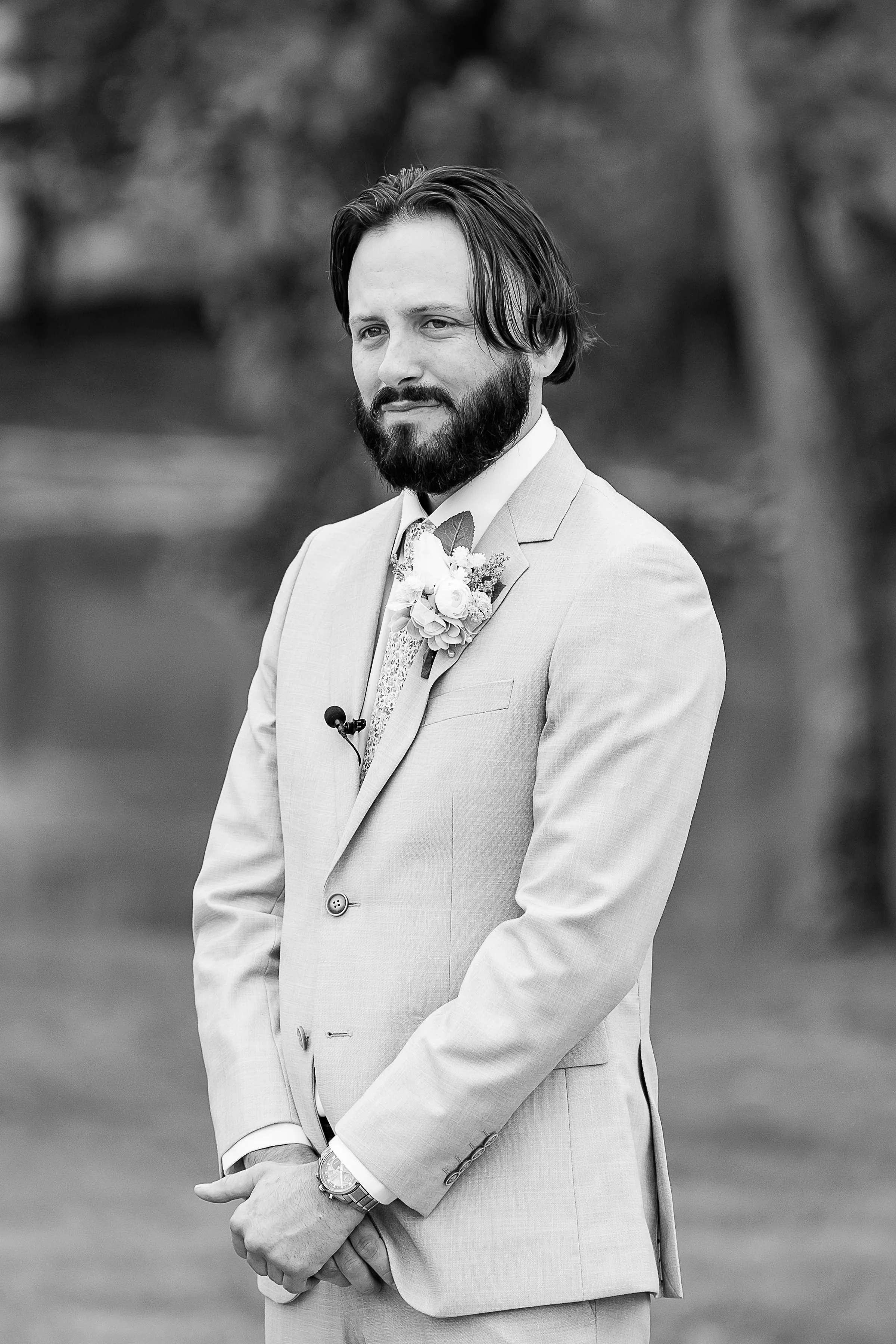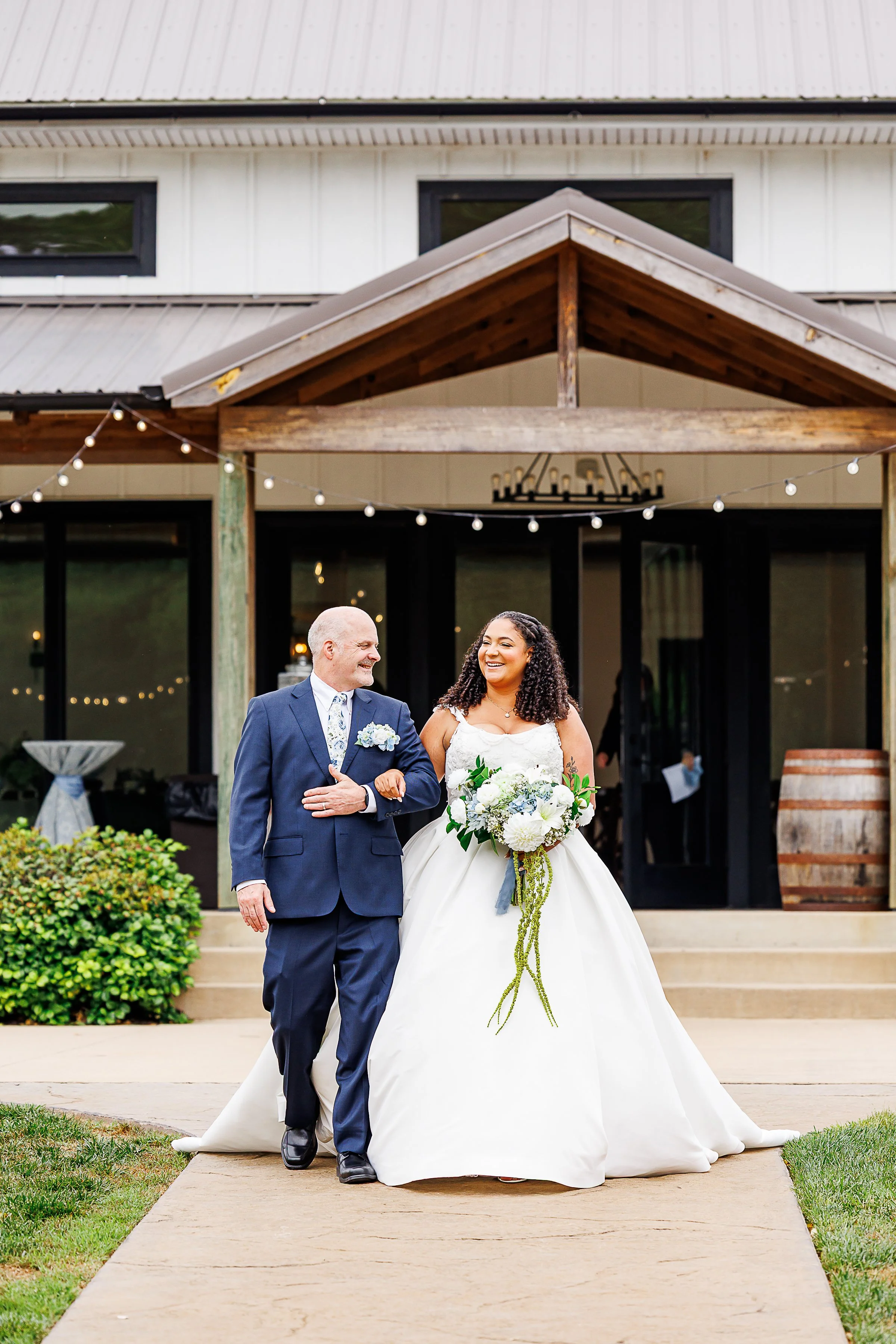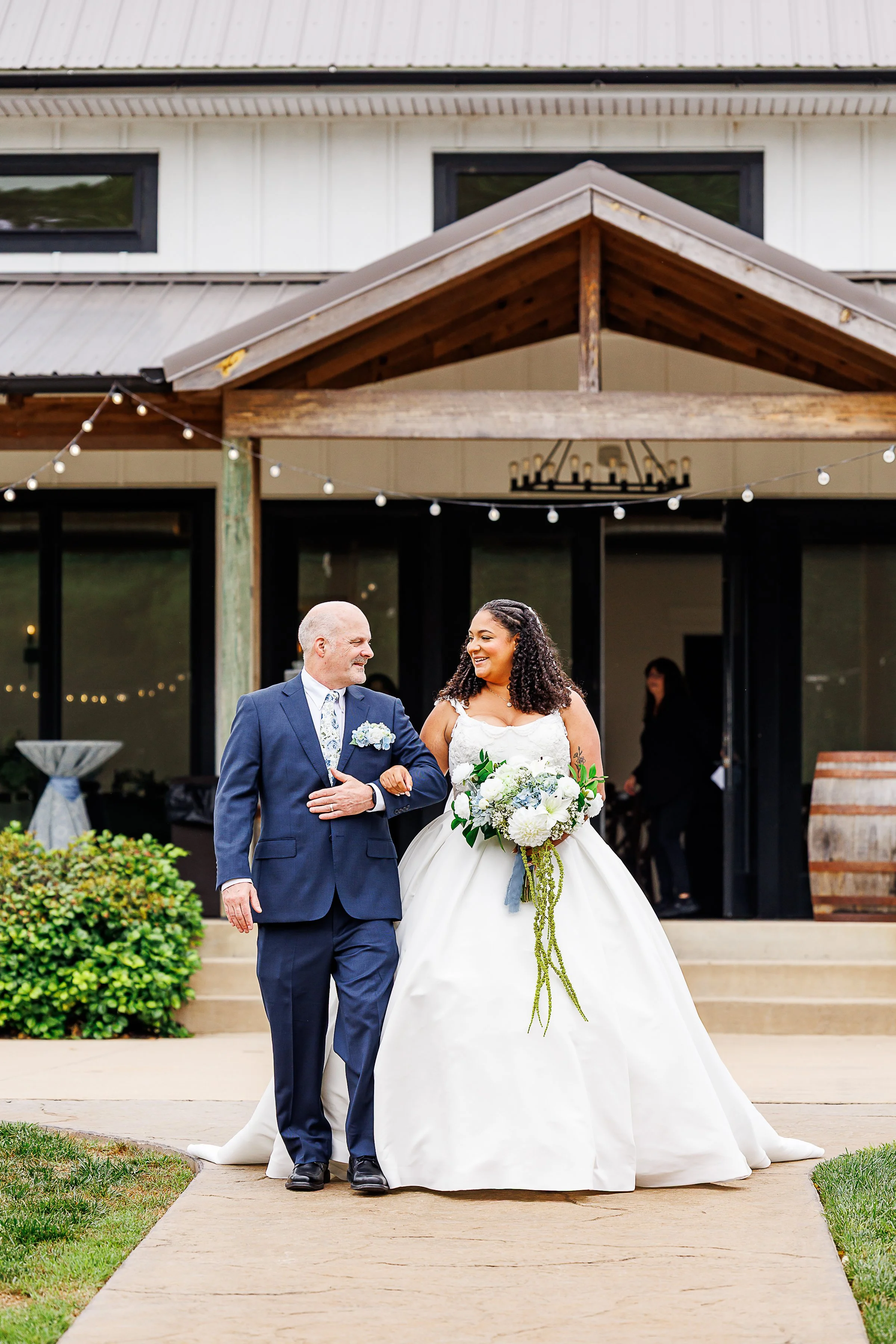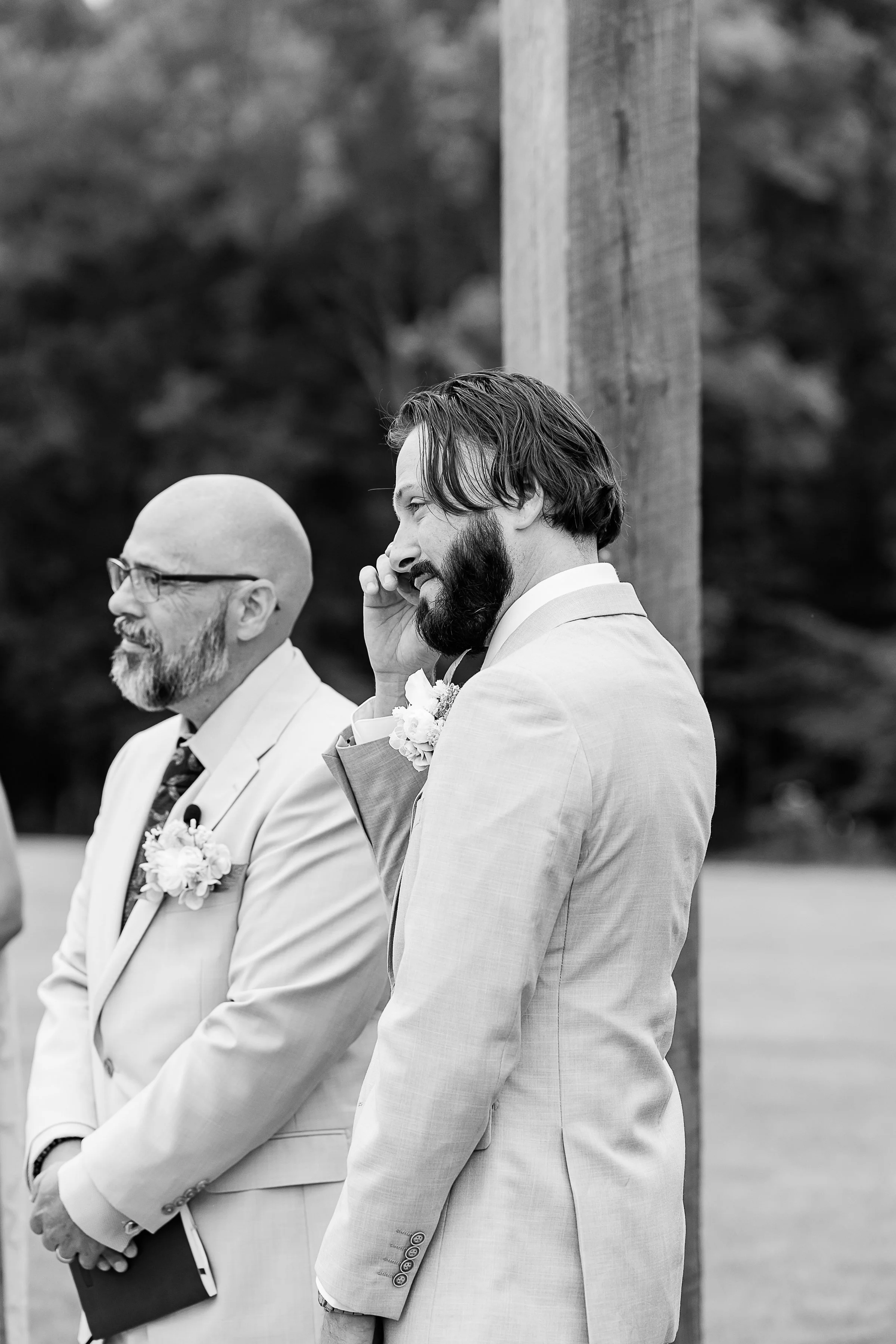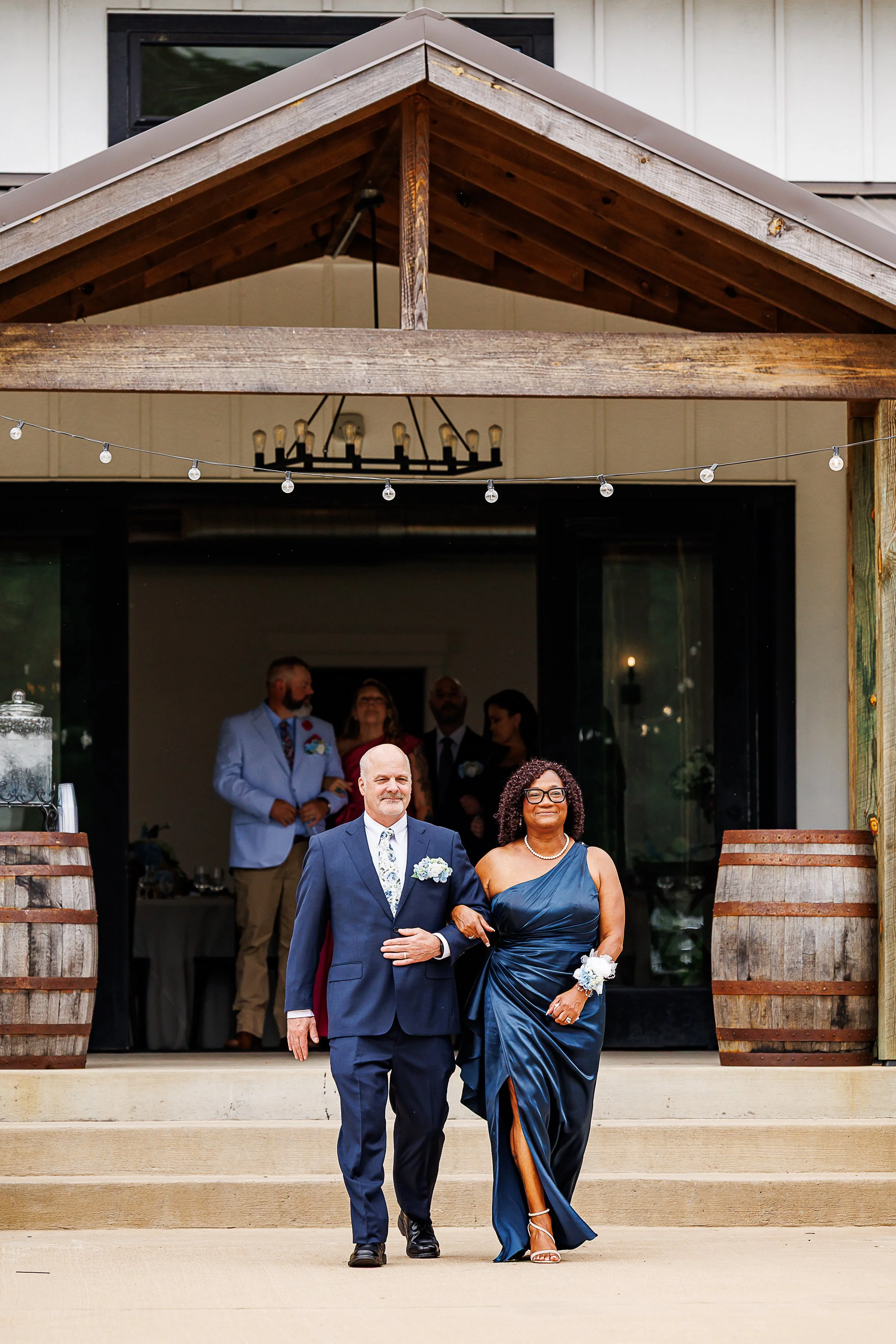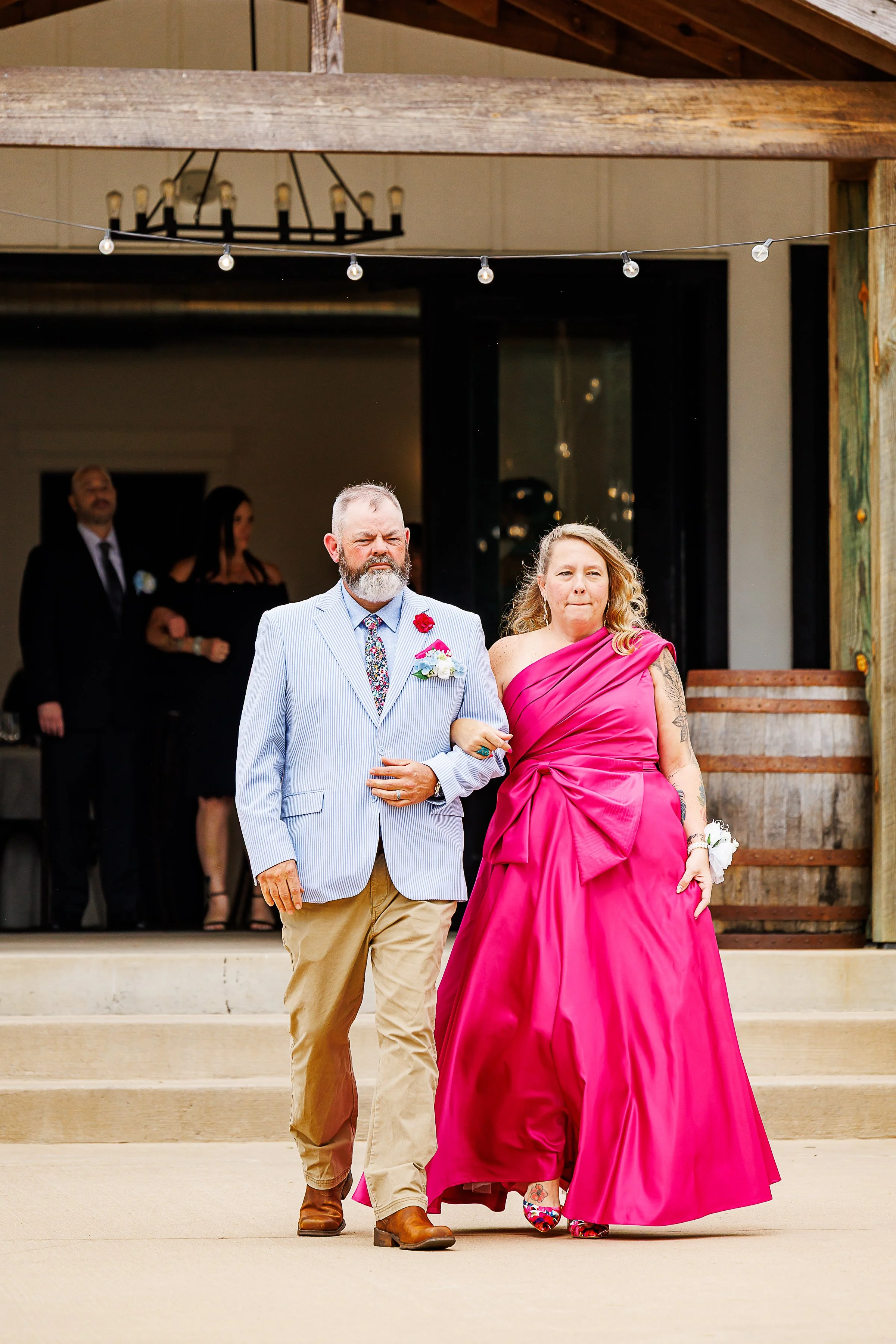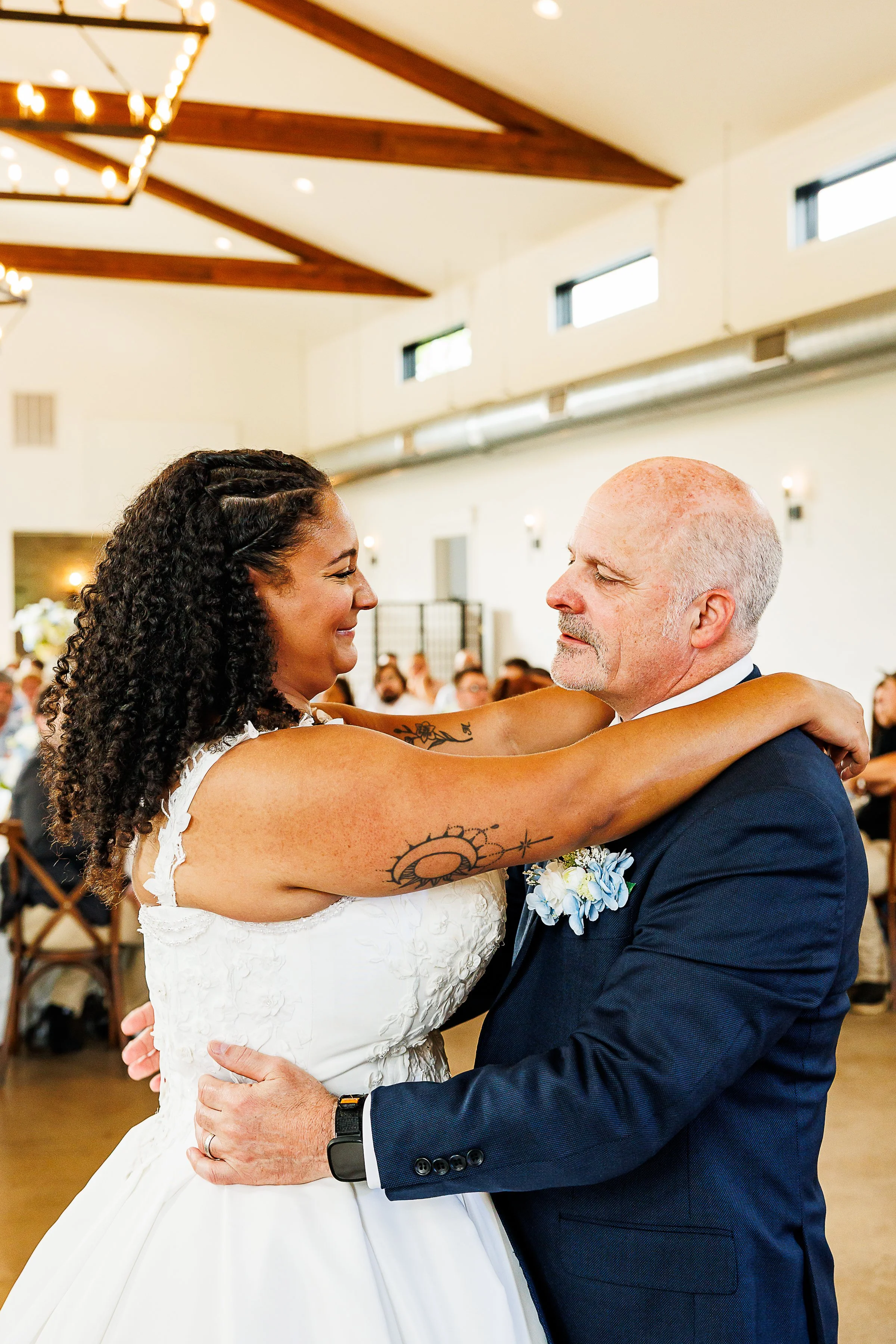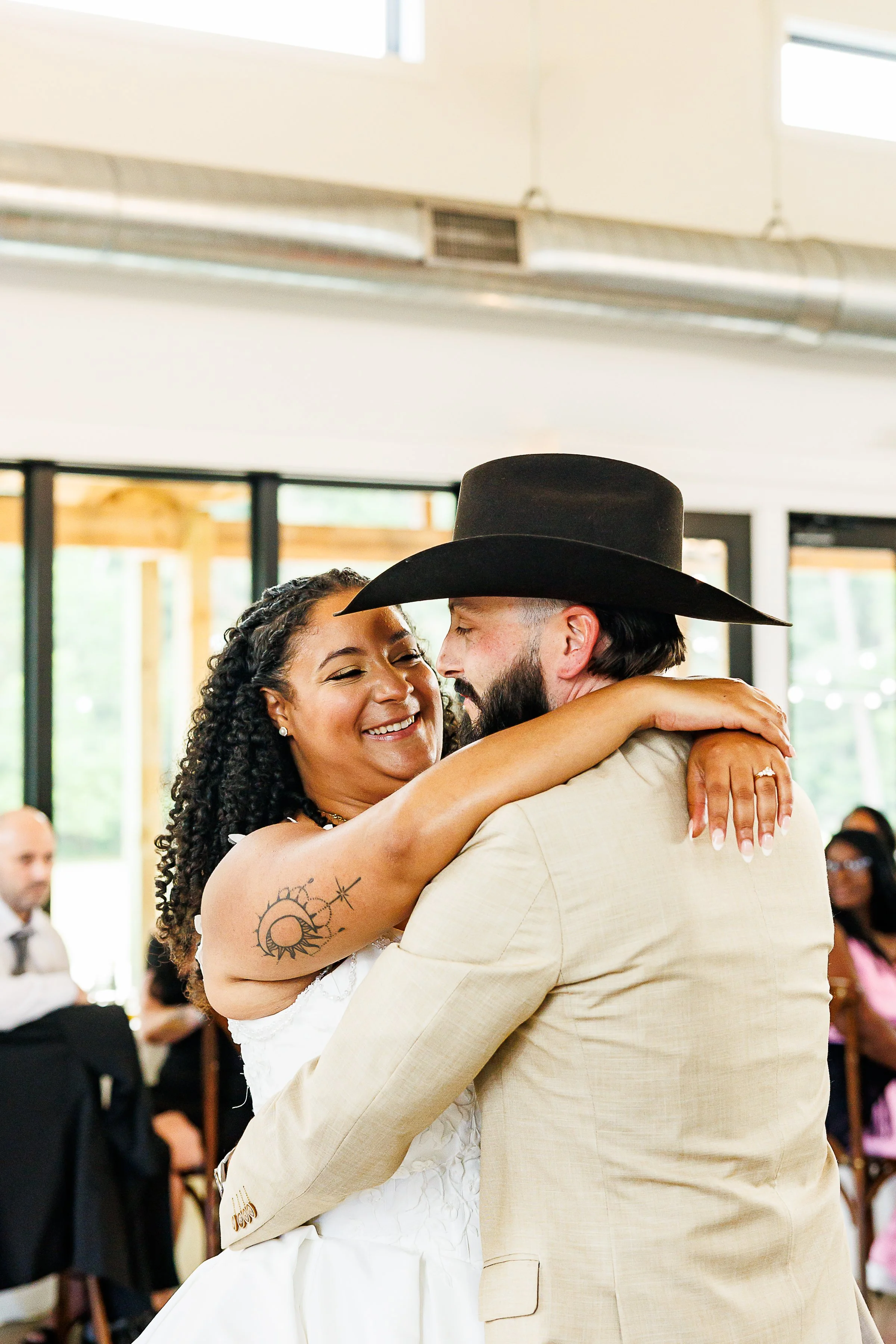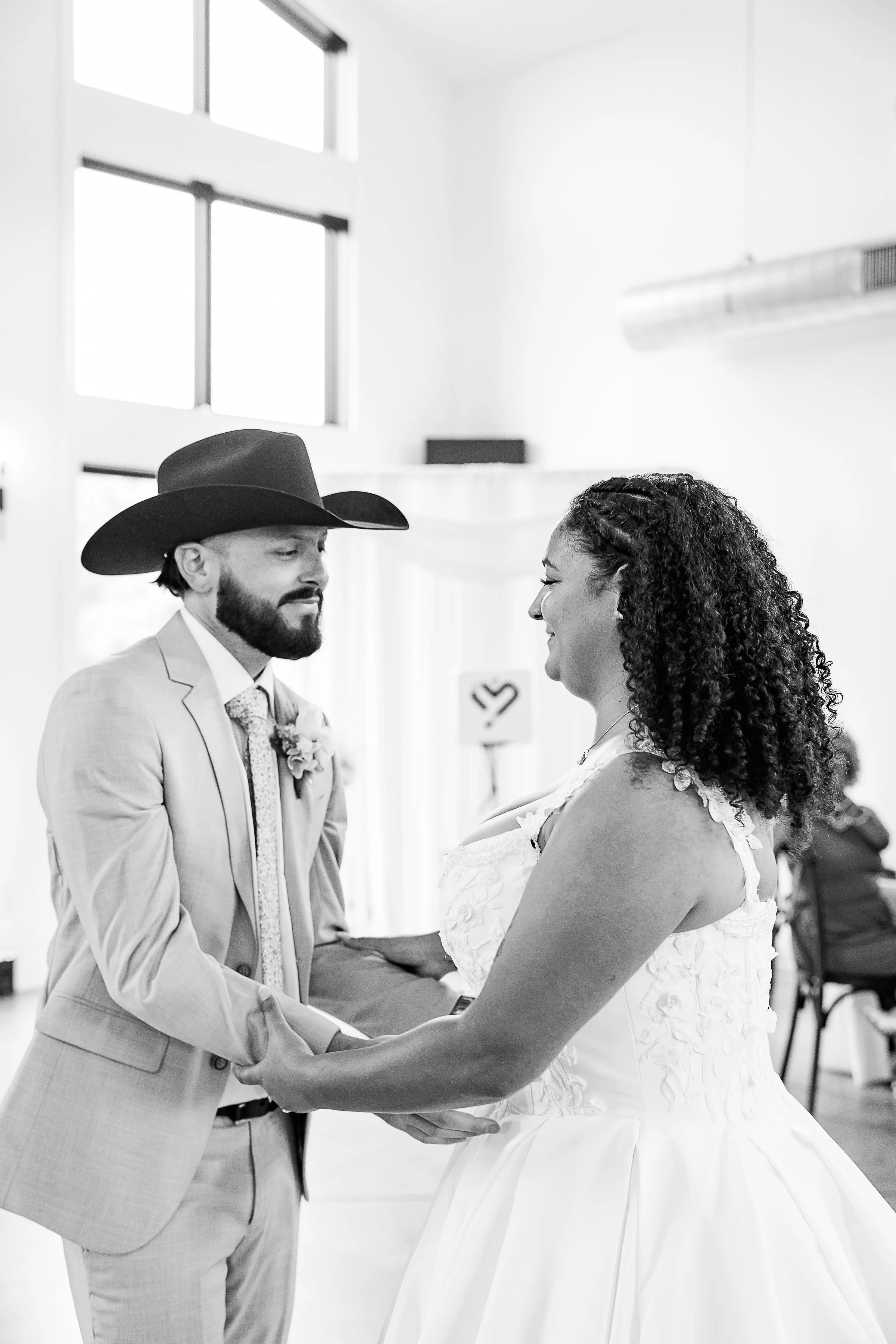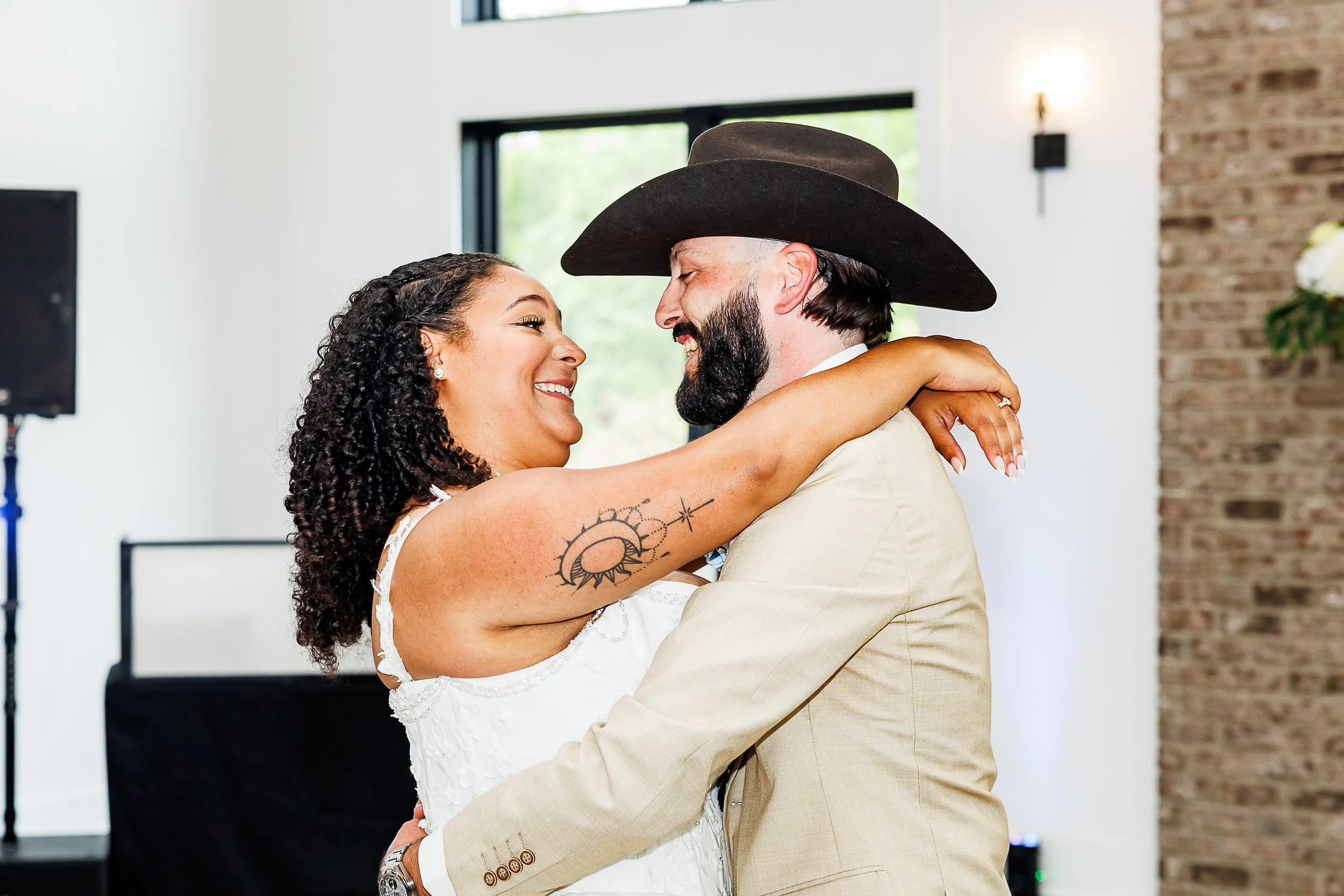
There's a conversation that happens in almost every editing session we do, and it rarely makes it into a "how we edit" blog post: what happens when two people standing right next to each other in the same frame have different skin tones?
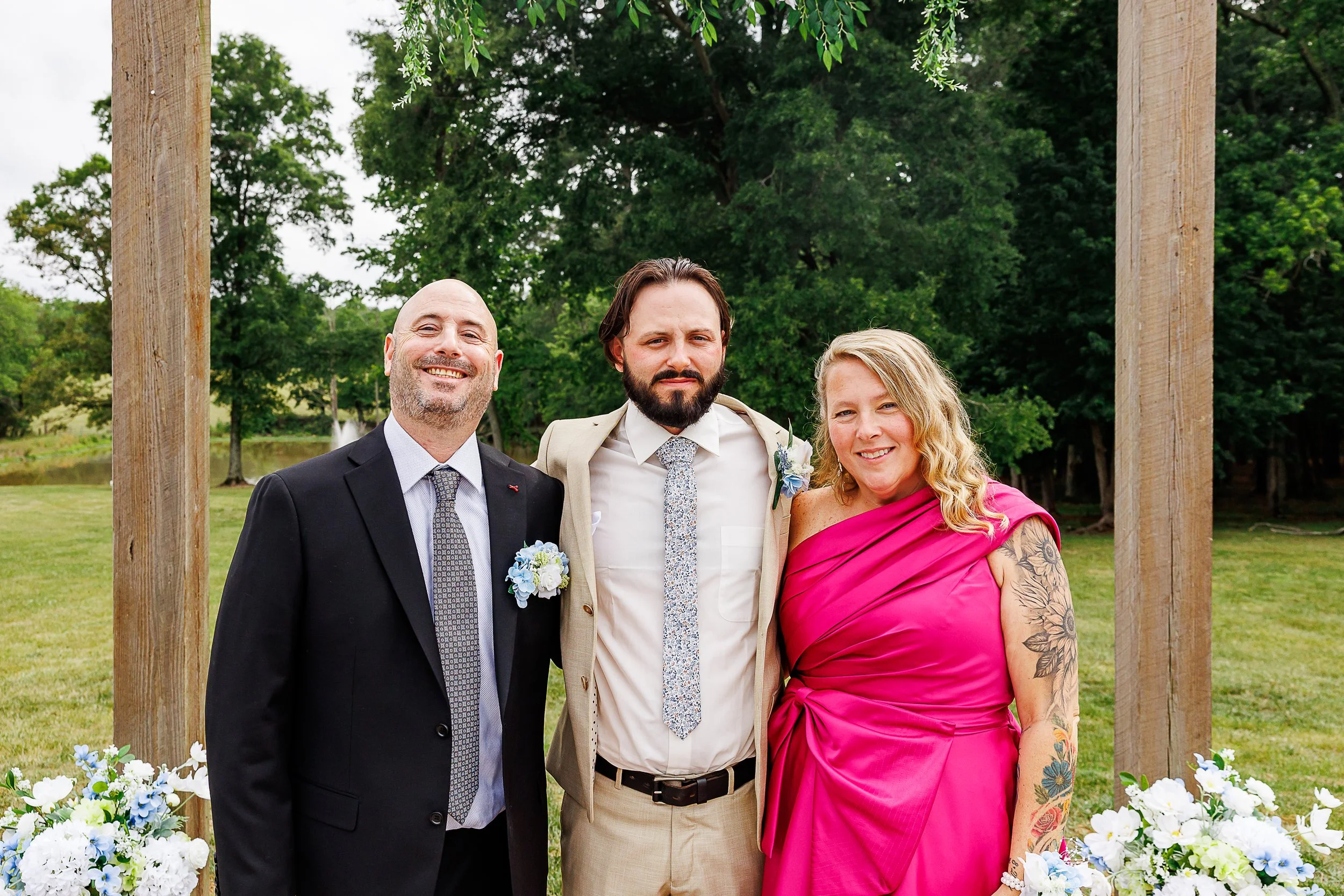
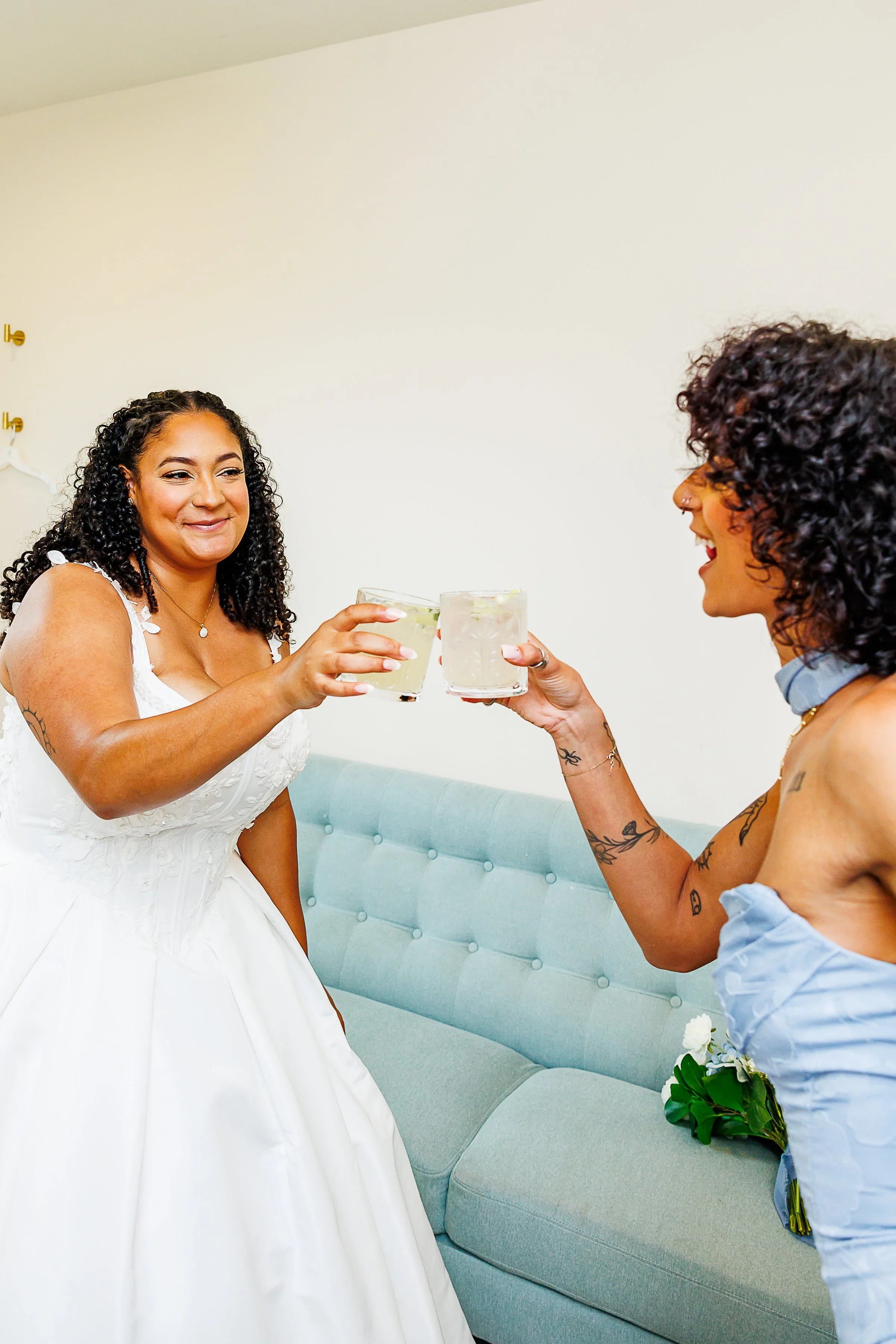
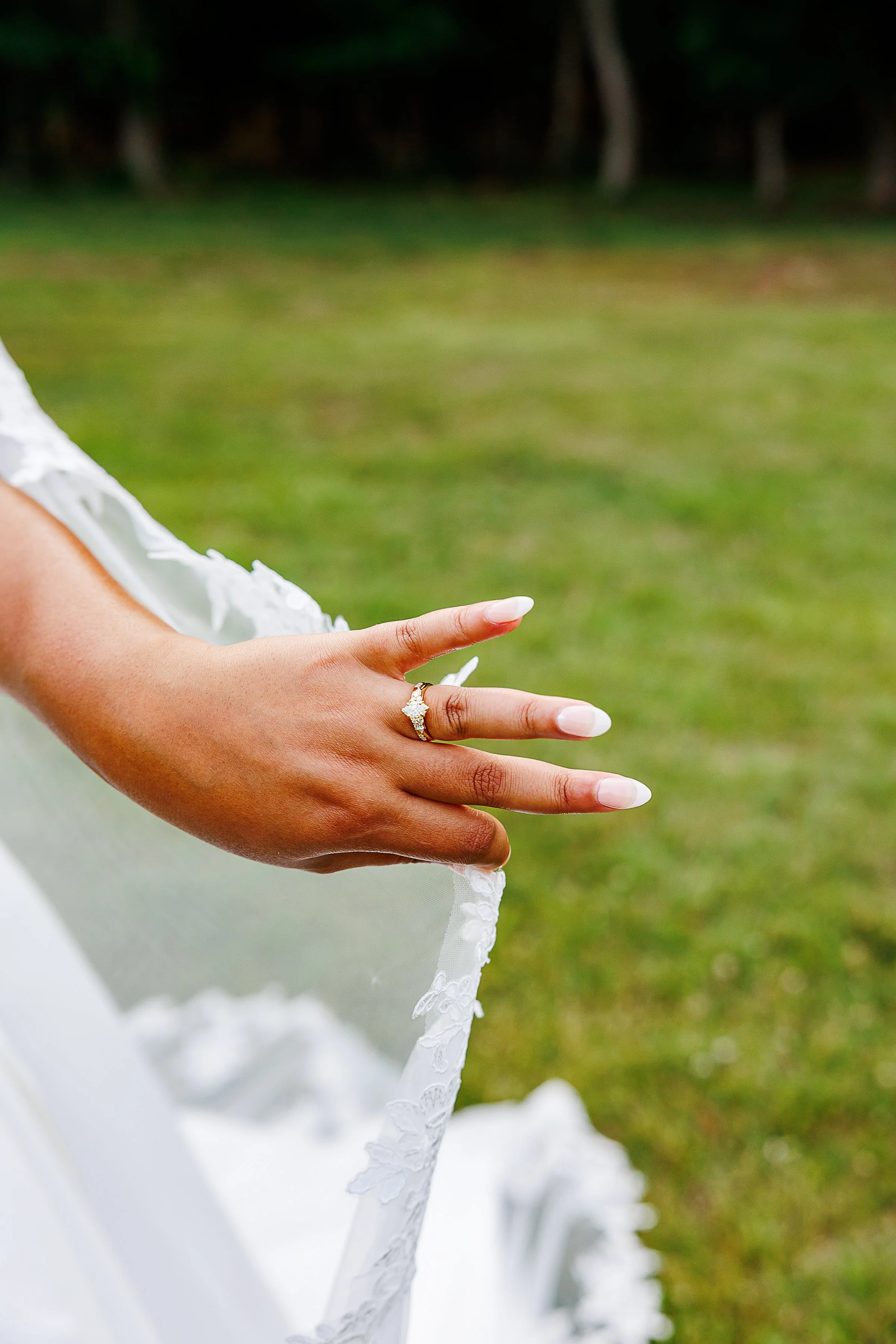
It sounds simple until you're the one behind the screen. Warm light that makes one person glow can wash the other out. A single color grade pulled across the whole photo can leave one partner looking accurate and the other looking slightly off - too orange, too gray, too flat. Most editing presets are built and tested on one skin tone at a time. They were never built with two different skin tones occupying the same frame, in the same light, at the same time. For a lot of interracial and multicultural couples, that's every single photo from their wedding day.
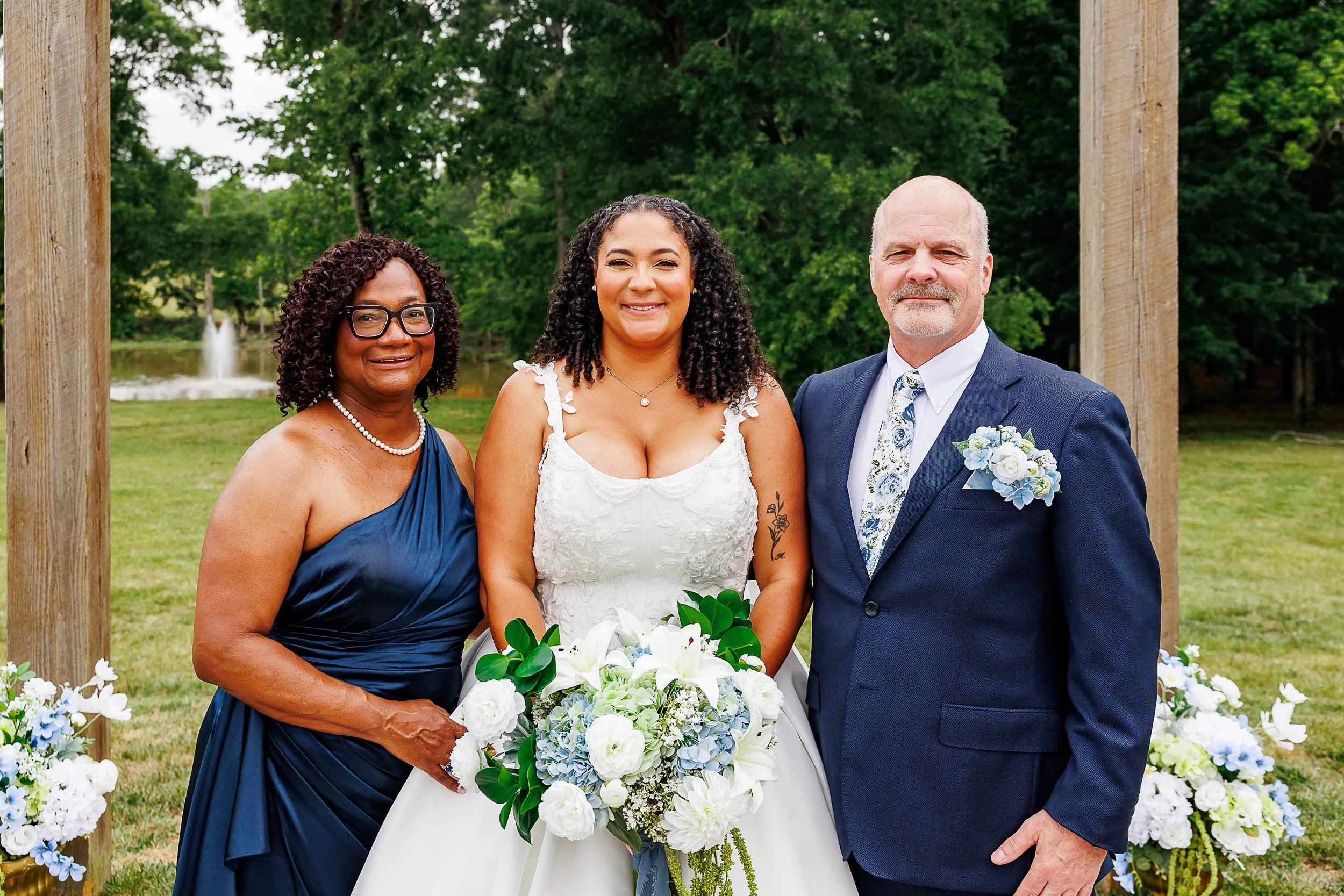
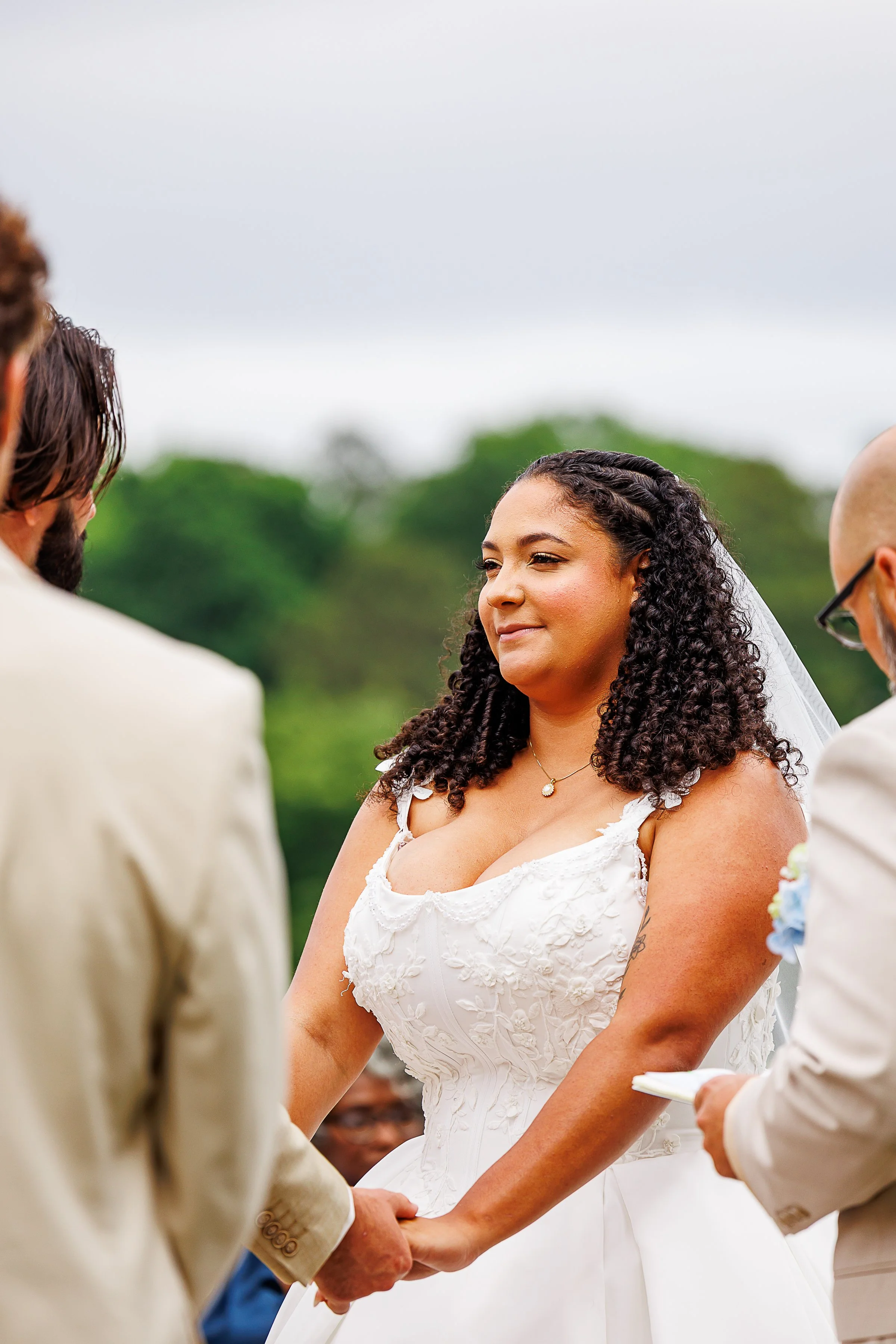
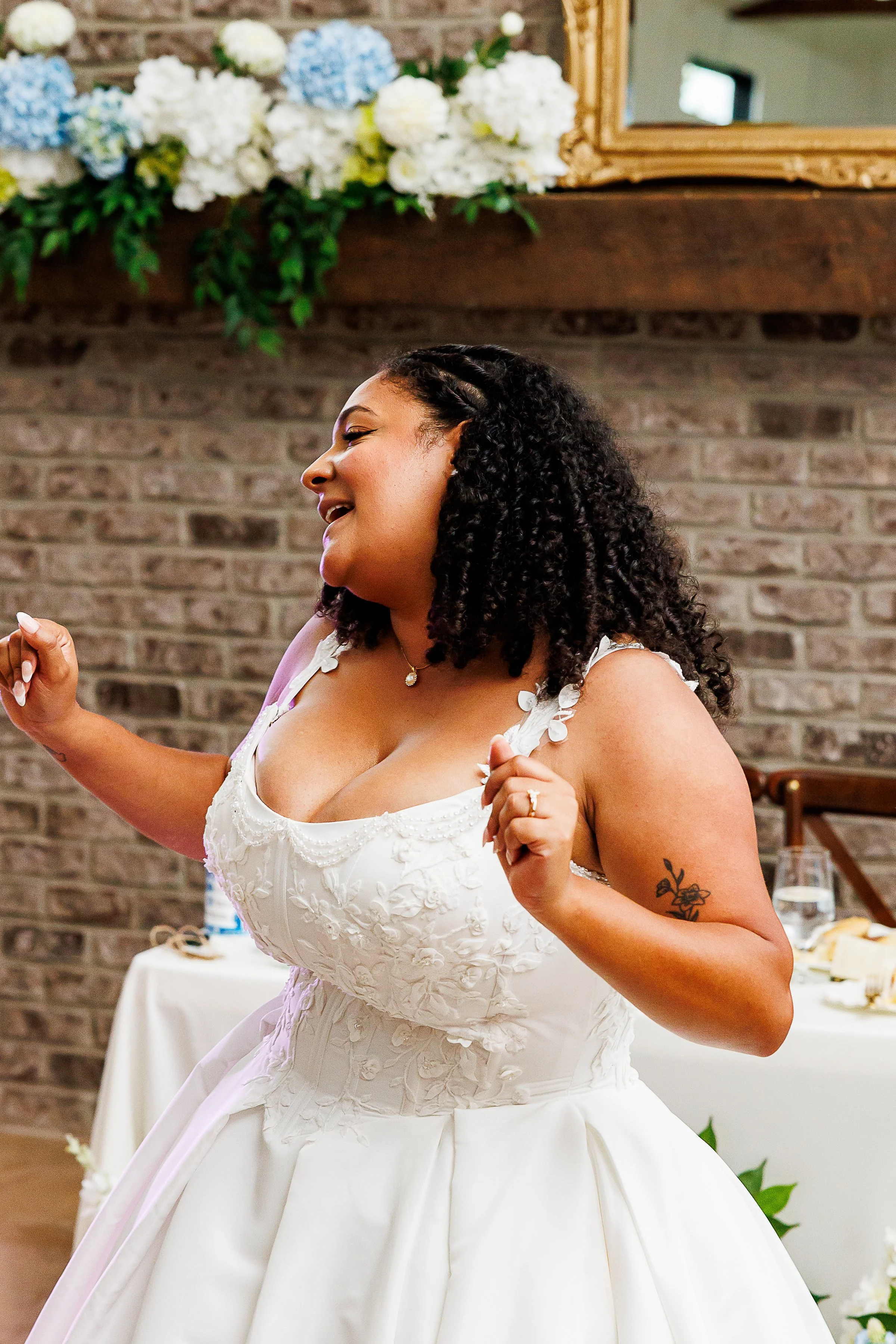
We think about this a lot, because it's not a one-time fix - it's a decision we make in almost every photo. Getting both of you to look like yourselves, at the same time, in the same light, is the actual job. Not a filter. Not a preset. A real decision, frame by frame, about what true color looks like on each of you.
Why this is harder than it sounds
Cameras don't "see" skin tone the way our eyes do. A sensor reads light and color temperature, and from there, editing software makes assumptions - about where skin should fall, how warm or cool it should read, what counts as "correct." Those assumptions get built around whatever skin tones were used to train and test the tools in the first place, and for a long time, that wasn't a very wide range. So when you put two people with meaningfully different skin tones into one photo - especially under mixed or warm light, like string lights at golden hour or a dim reception room - a single global edit almost always favors one person over the other.
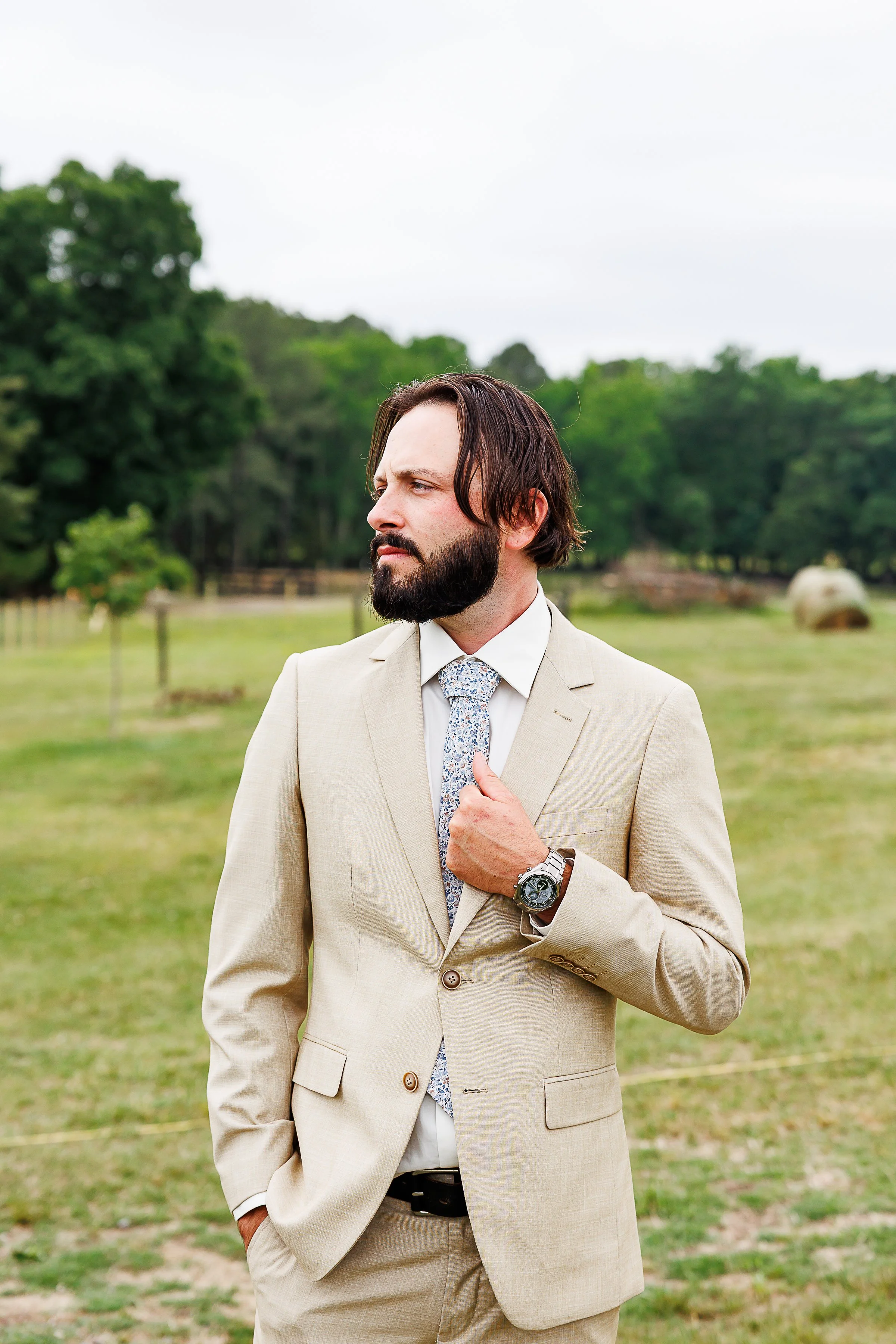
Our editing philosophy is candid, documentary, and vibrant. True-to-color is the backbone of all three. Greens stay green. Skin stays skin. That means we're not editing a photo once and calling it done - we're editing for both of you, in the same photo, so neither of you ever looks like an afterthought in your own wedding gallery.
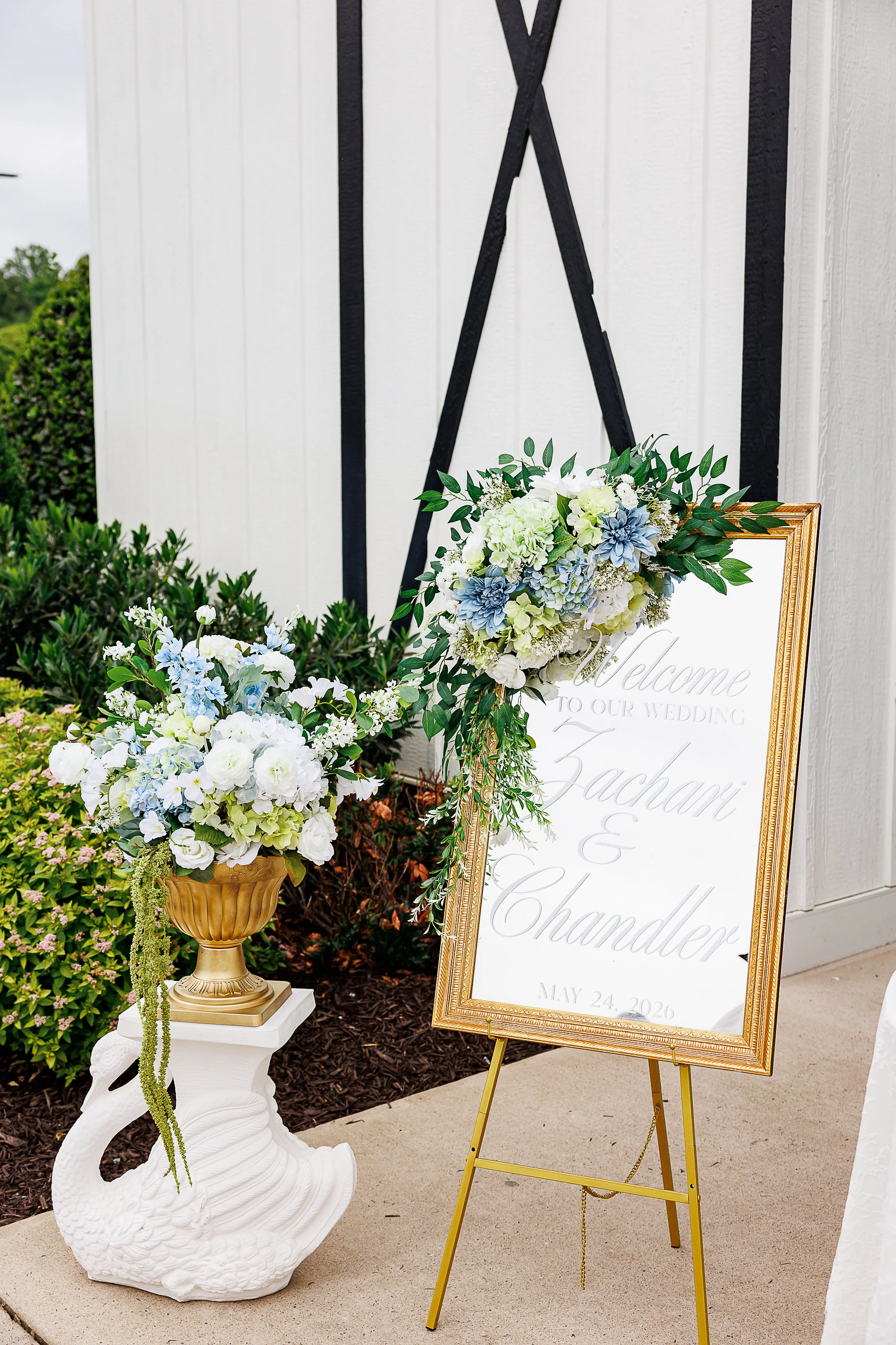
Zachari + Chandler, Oakdale RVA - Ashland, VA
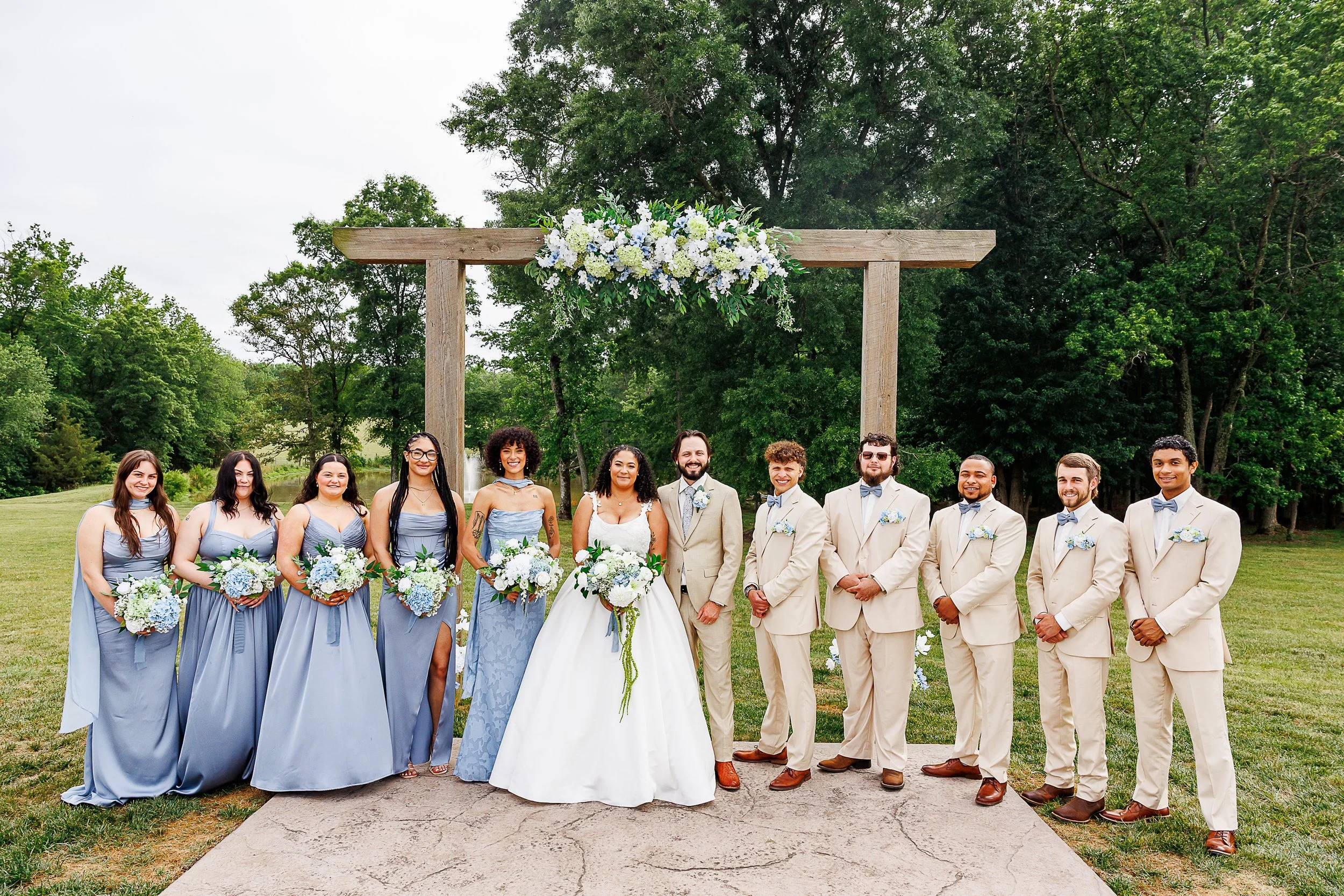
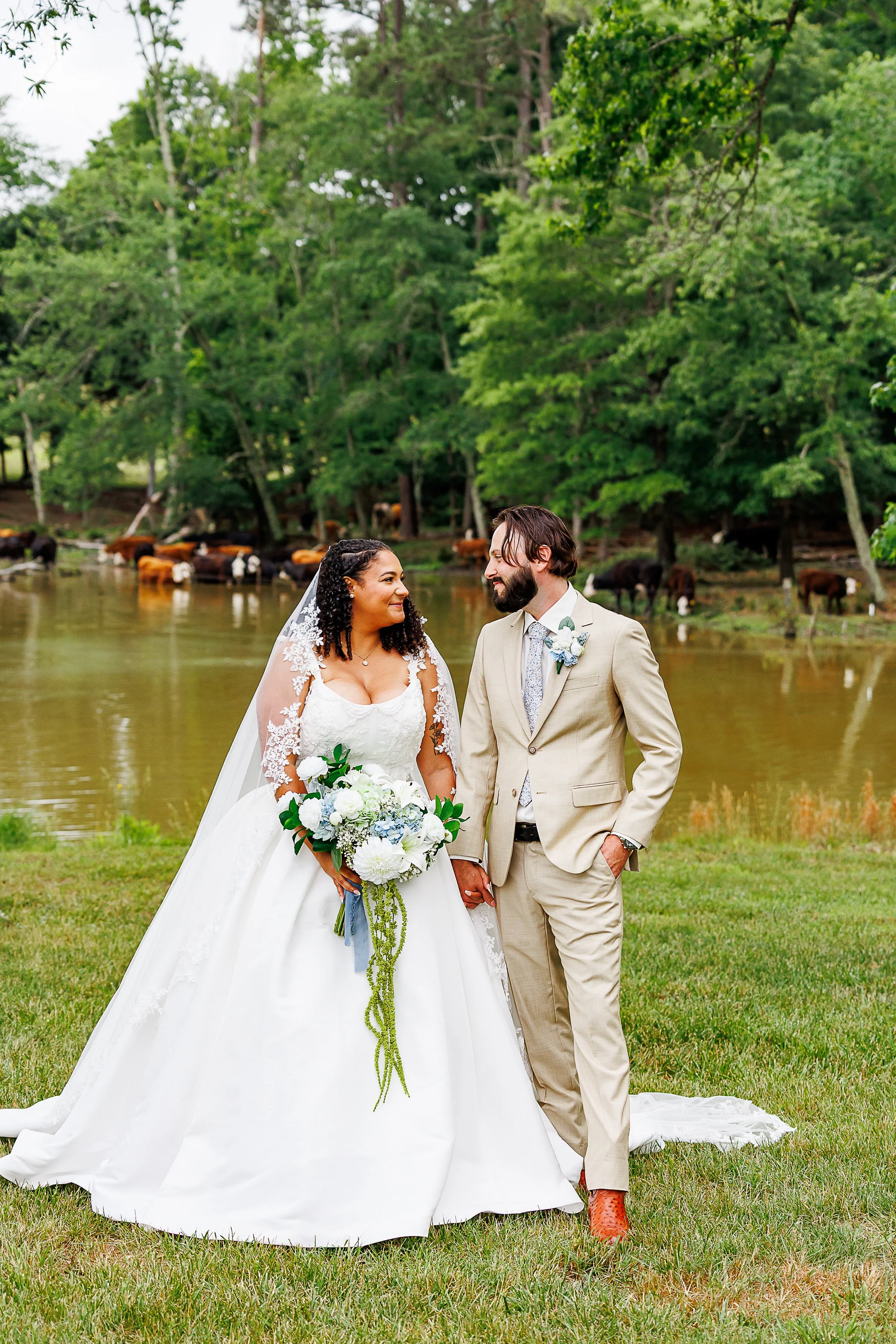
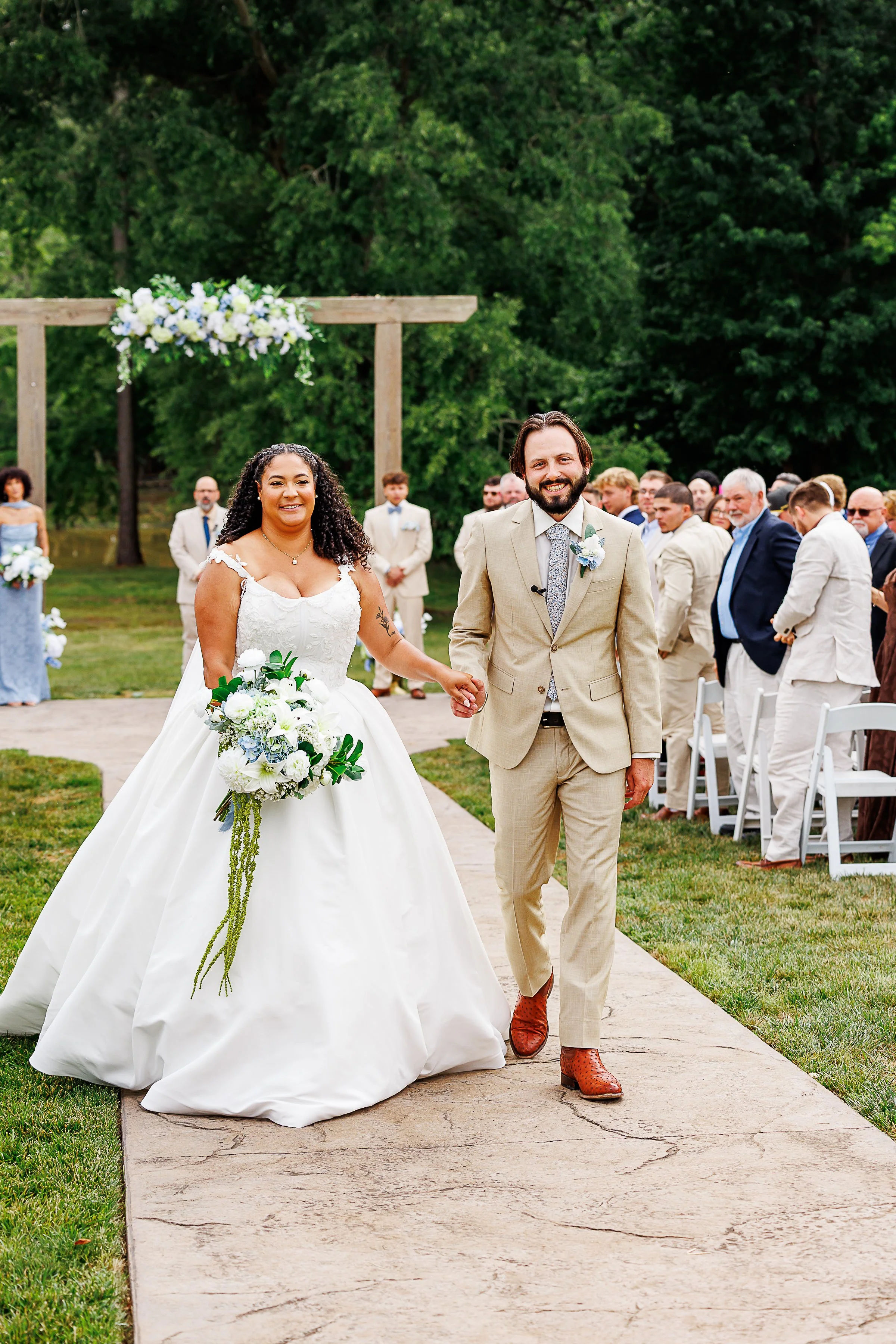
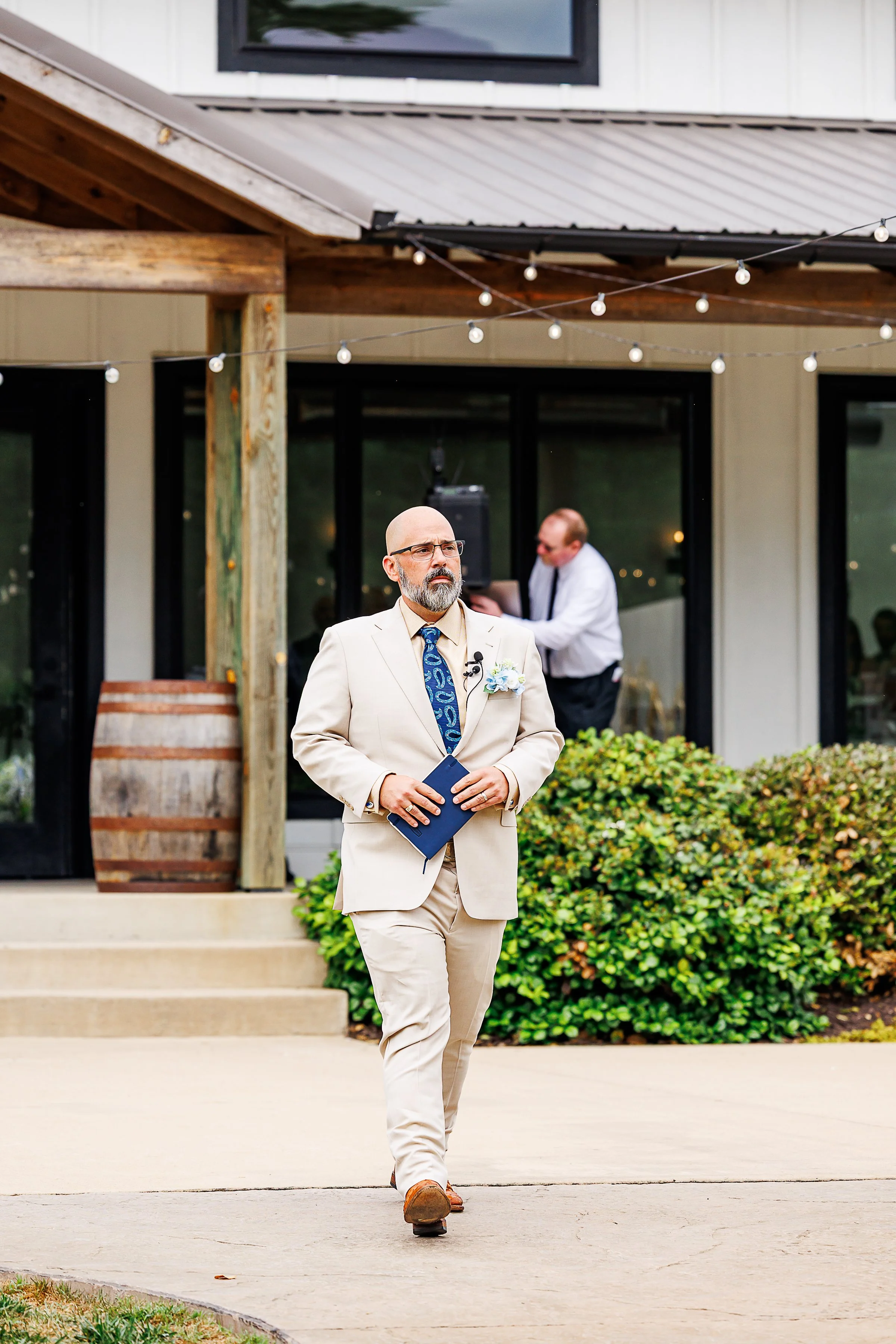
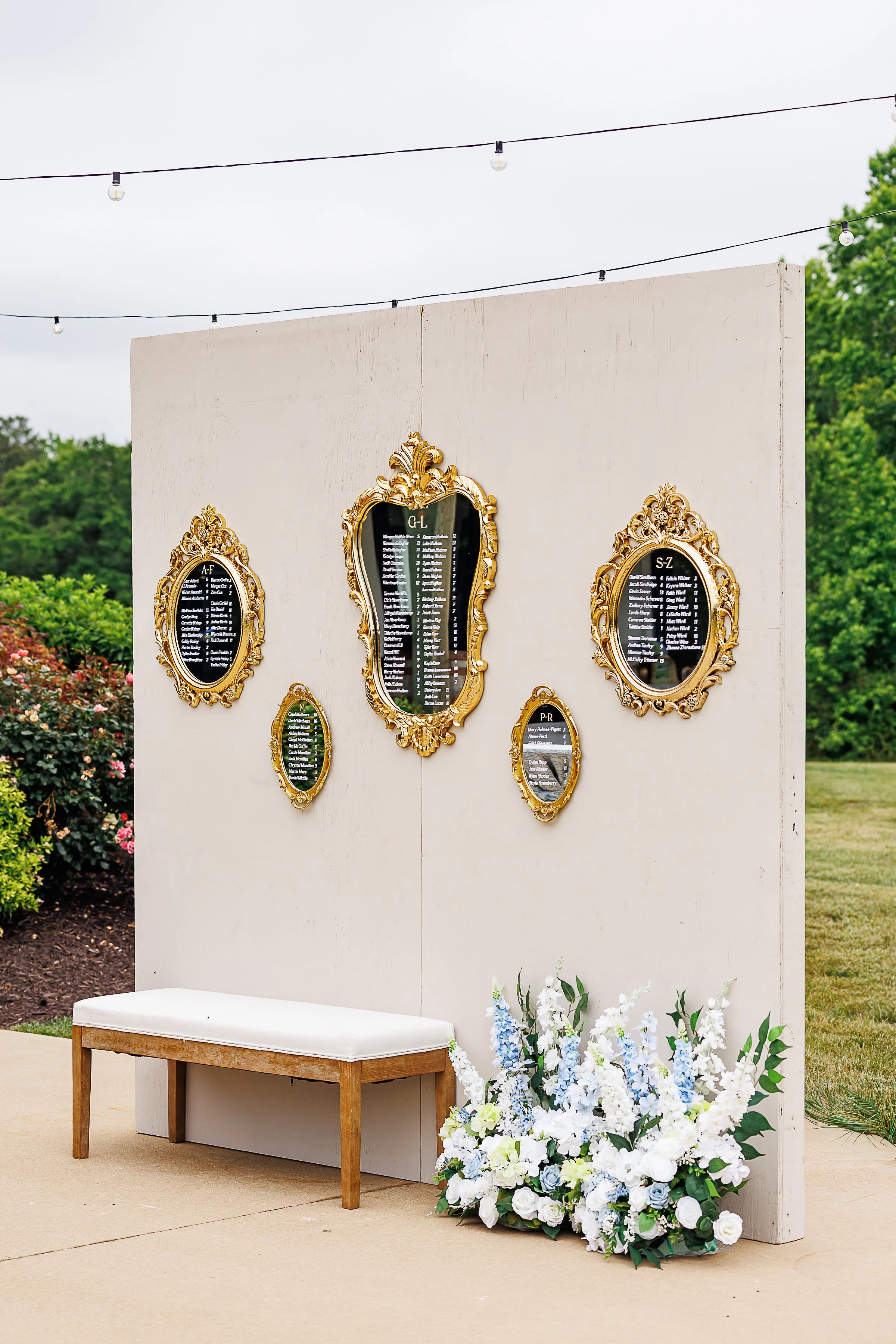
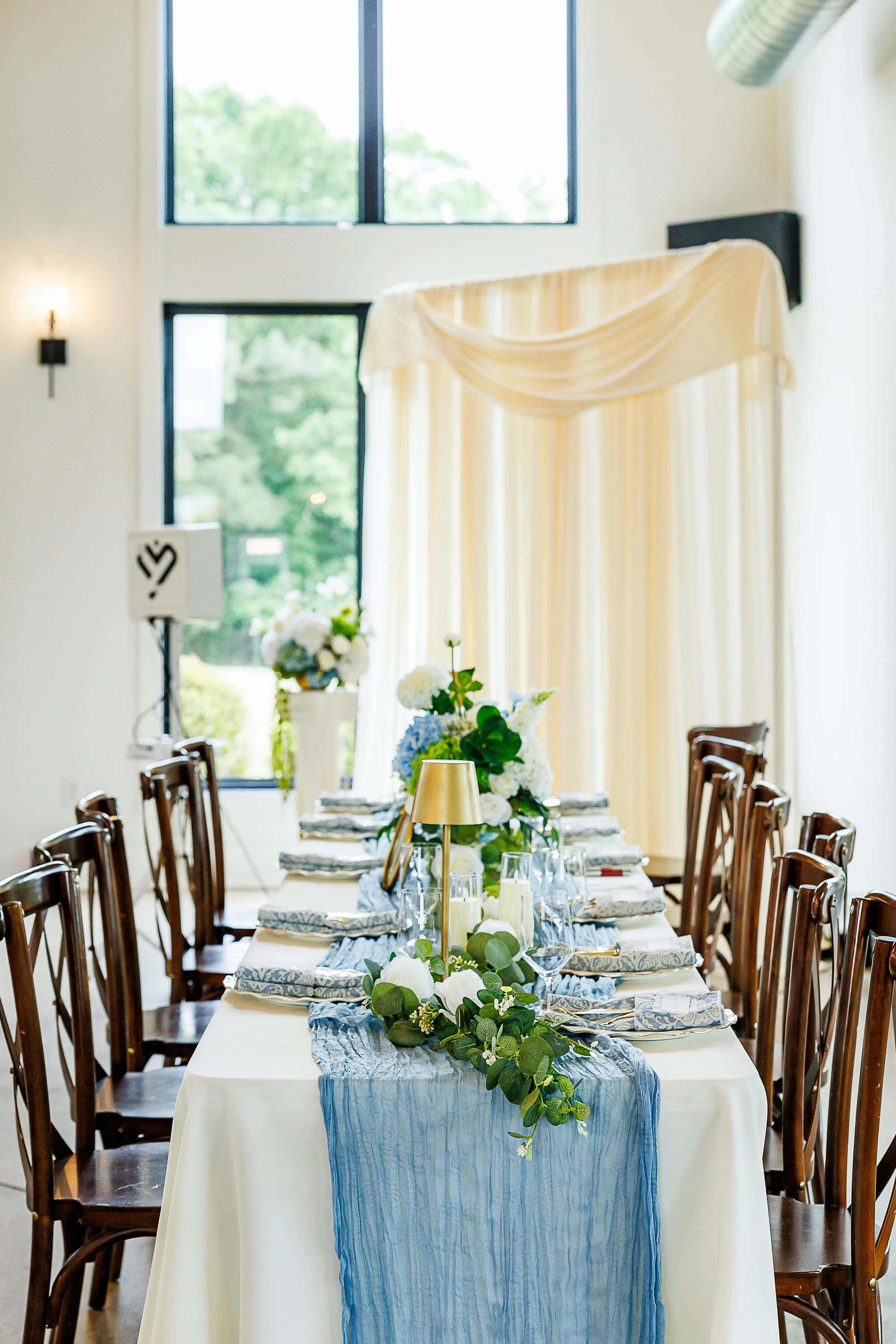
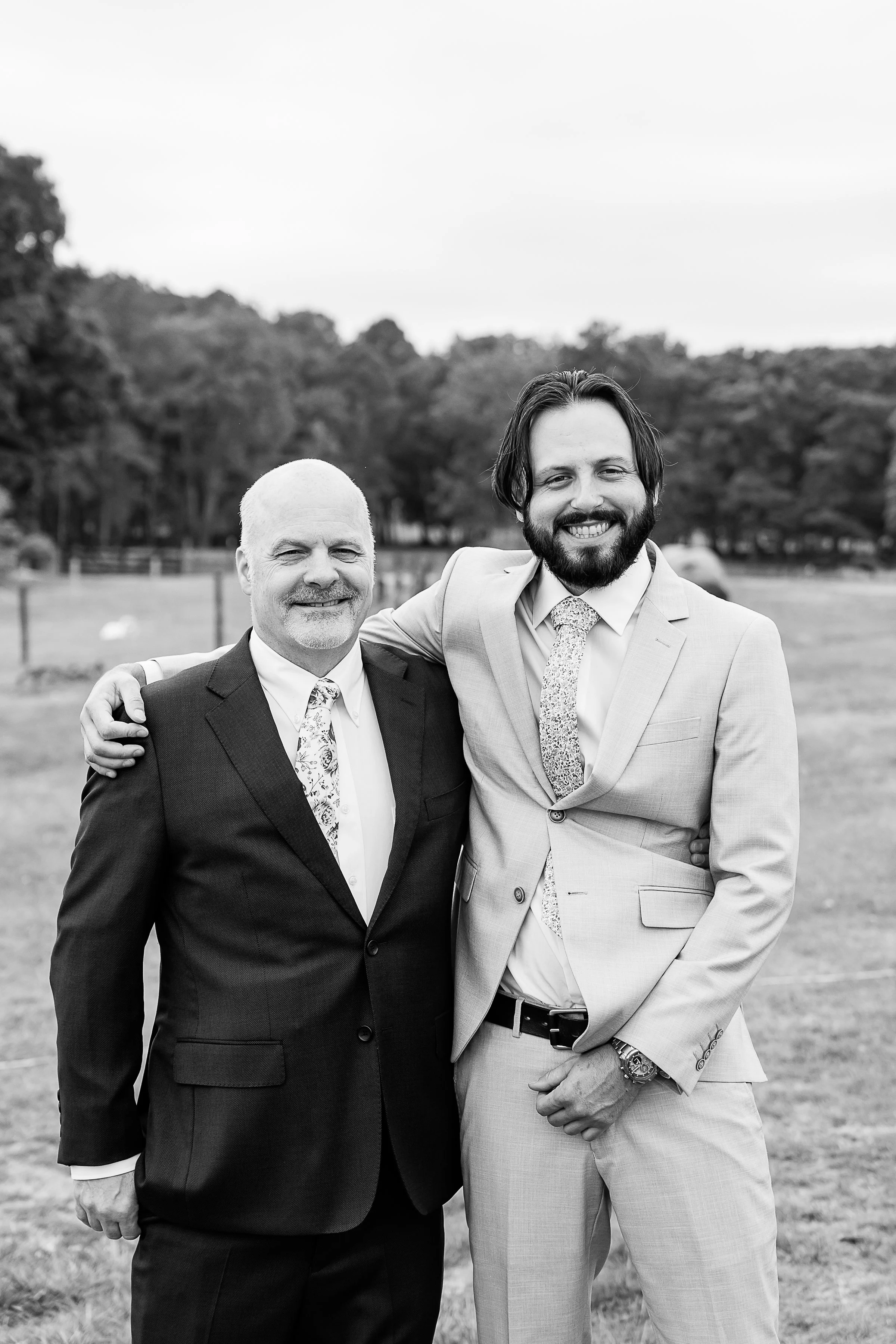
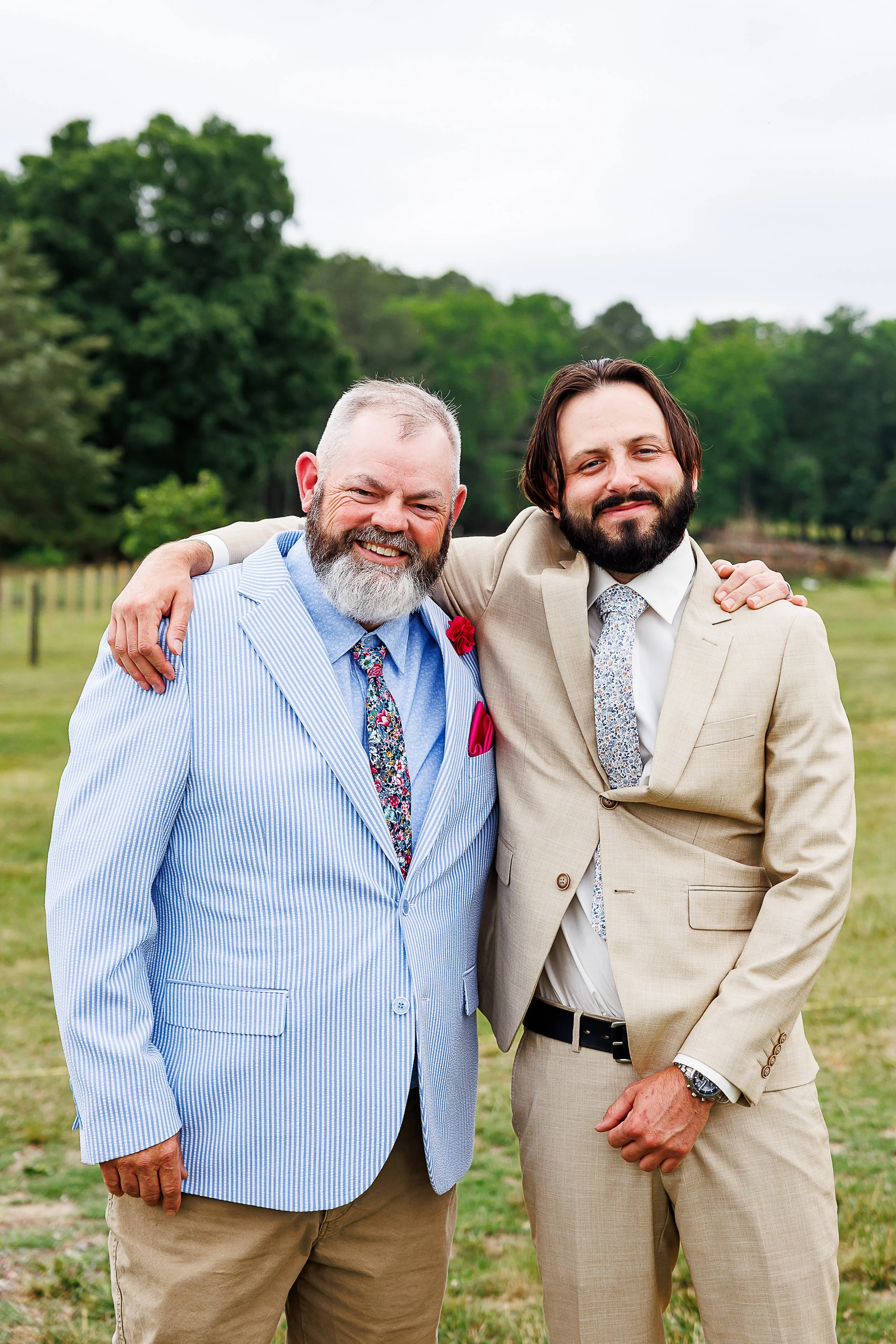
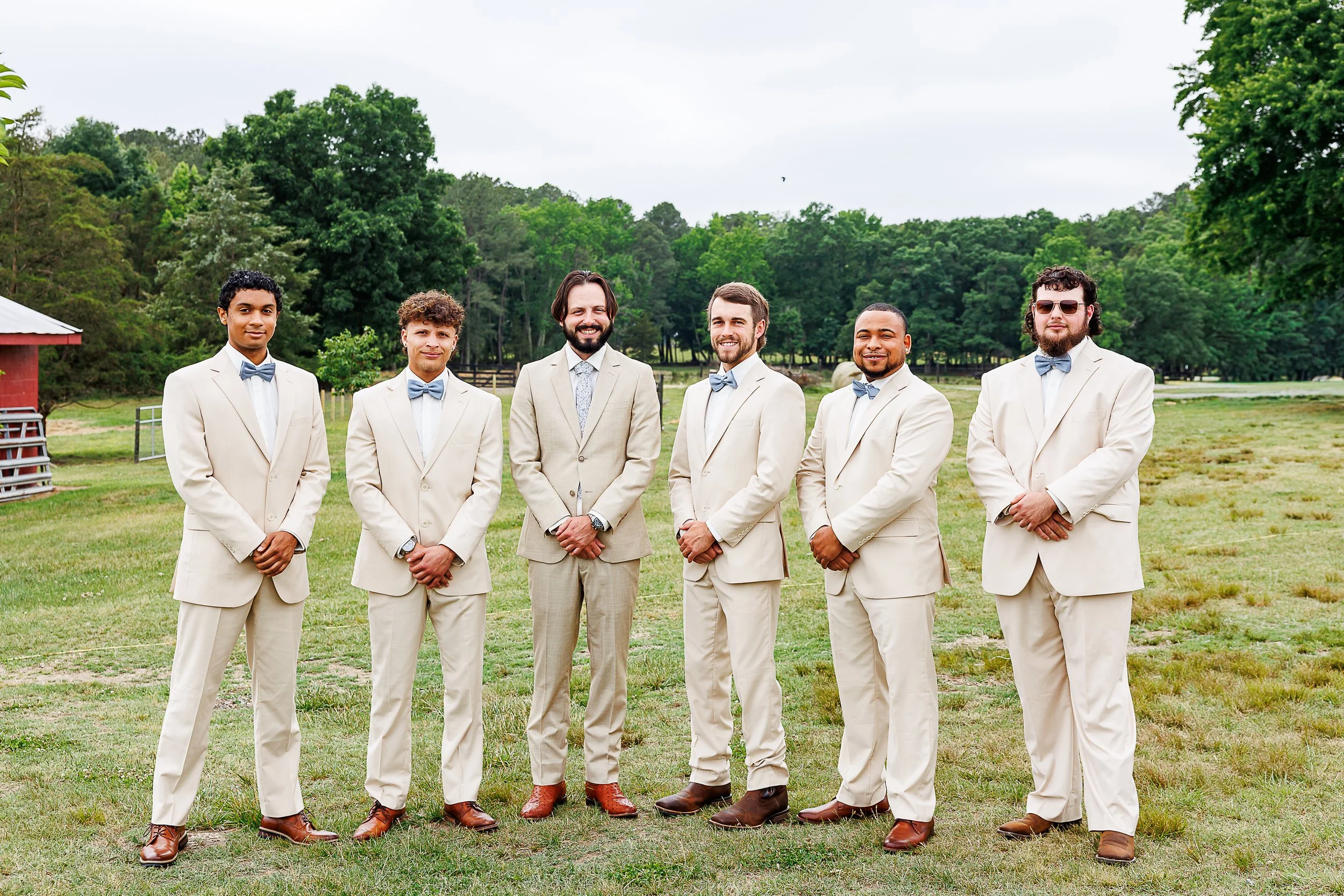
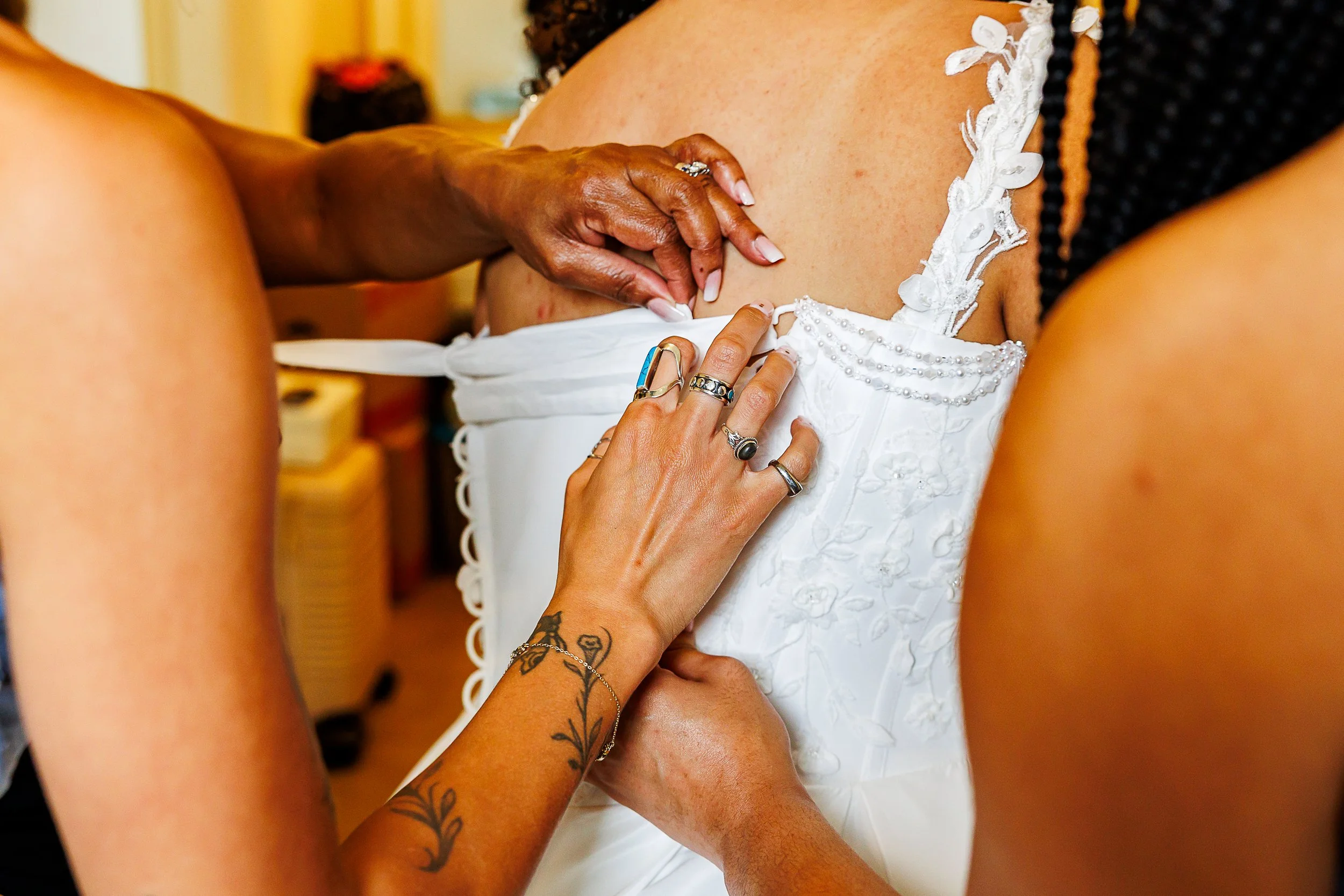
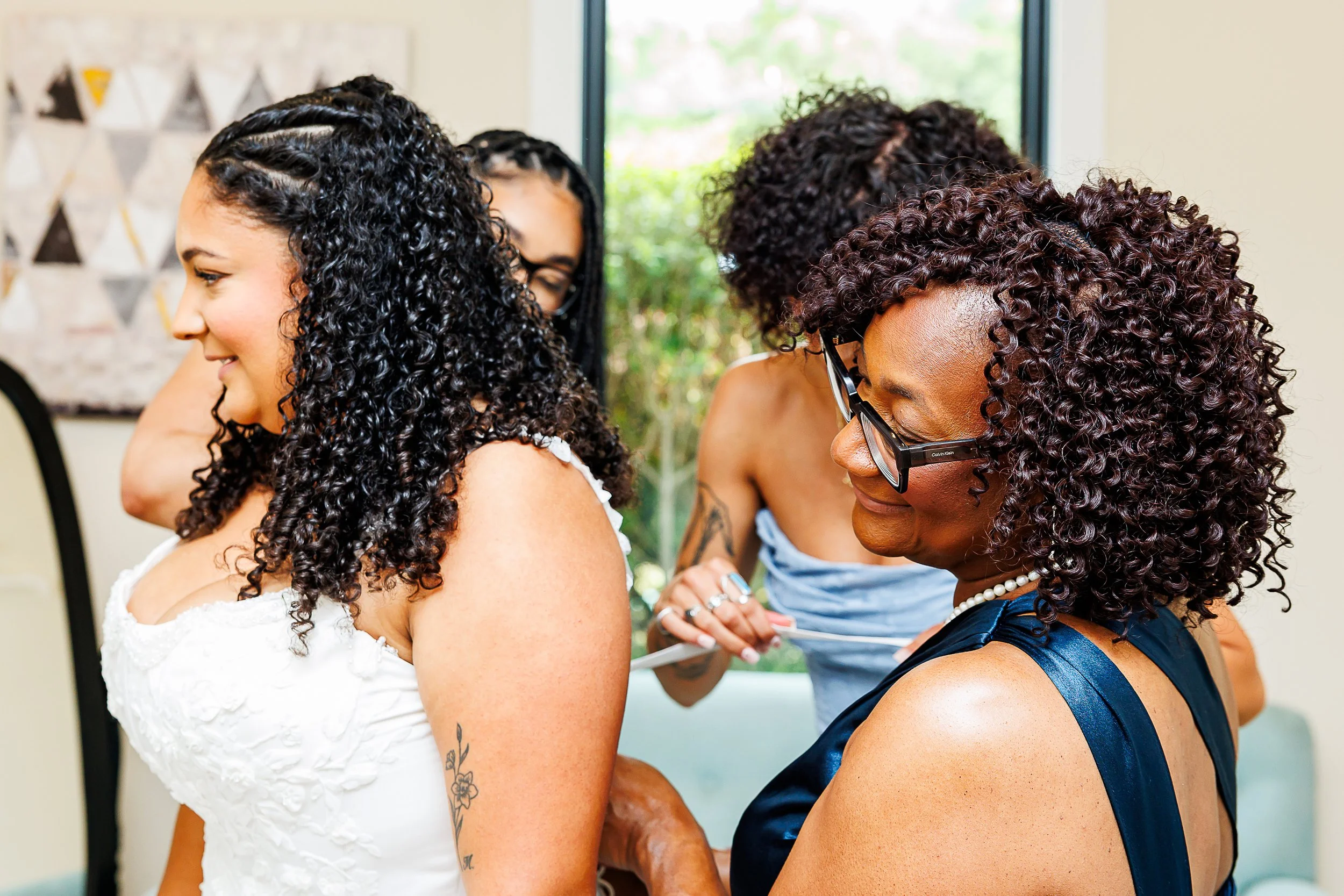
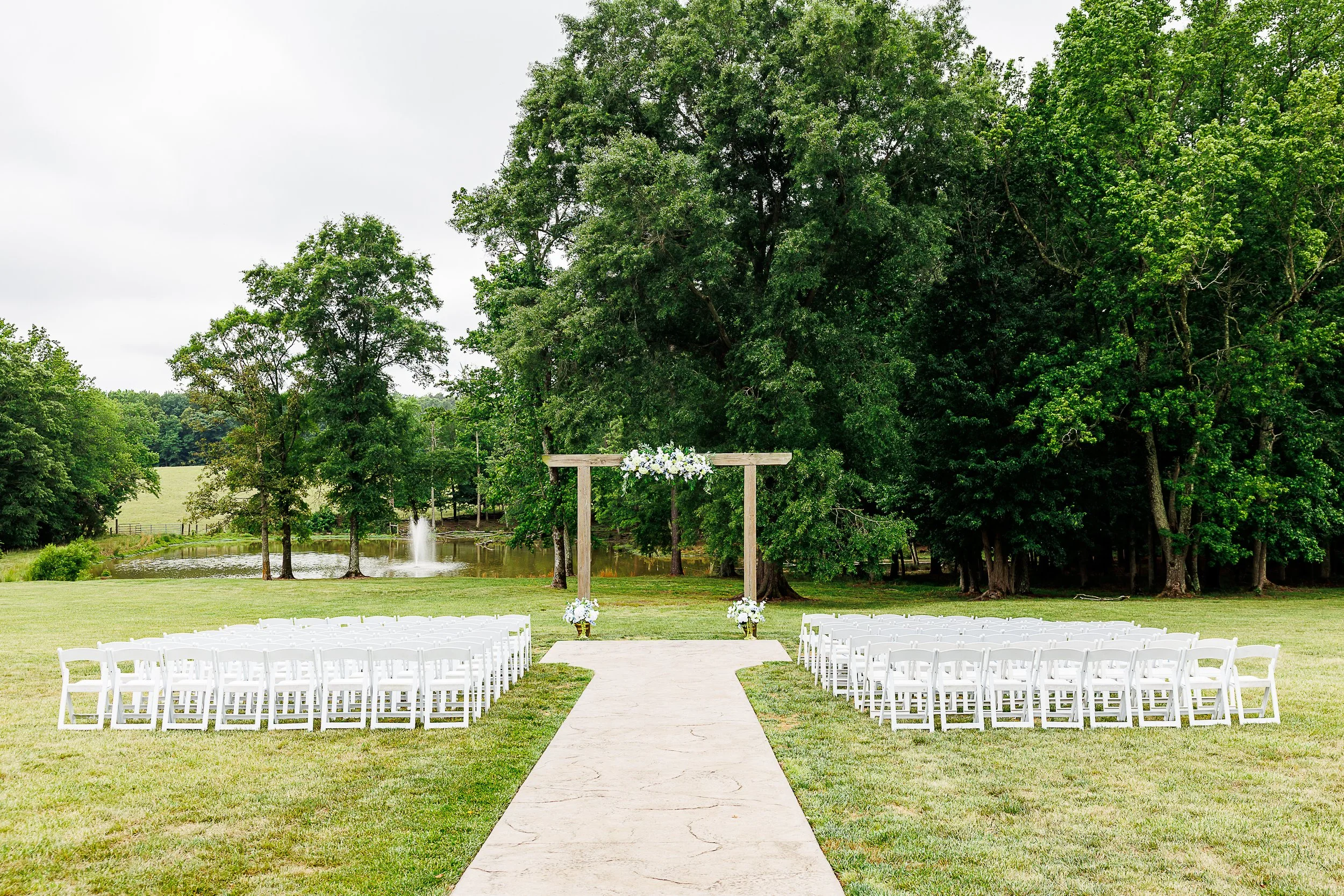
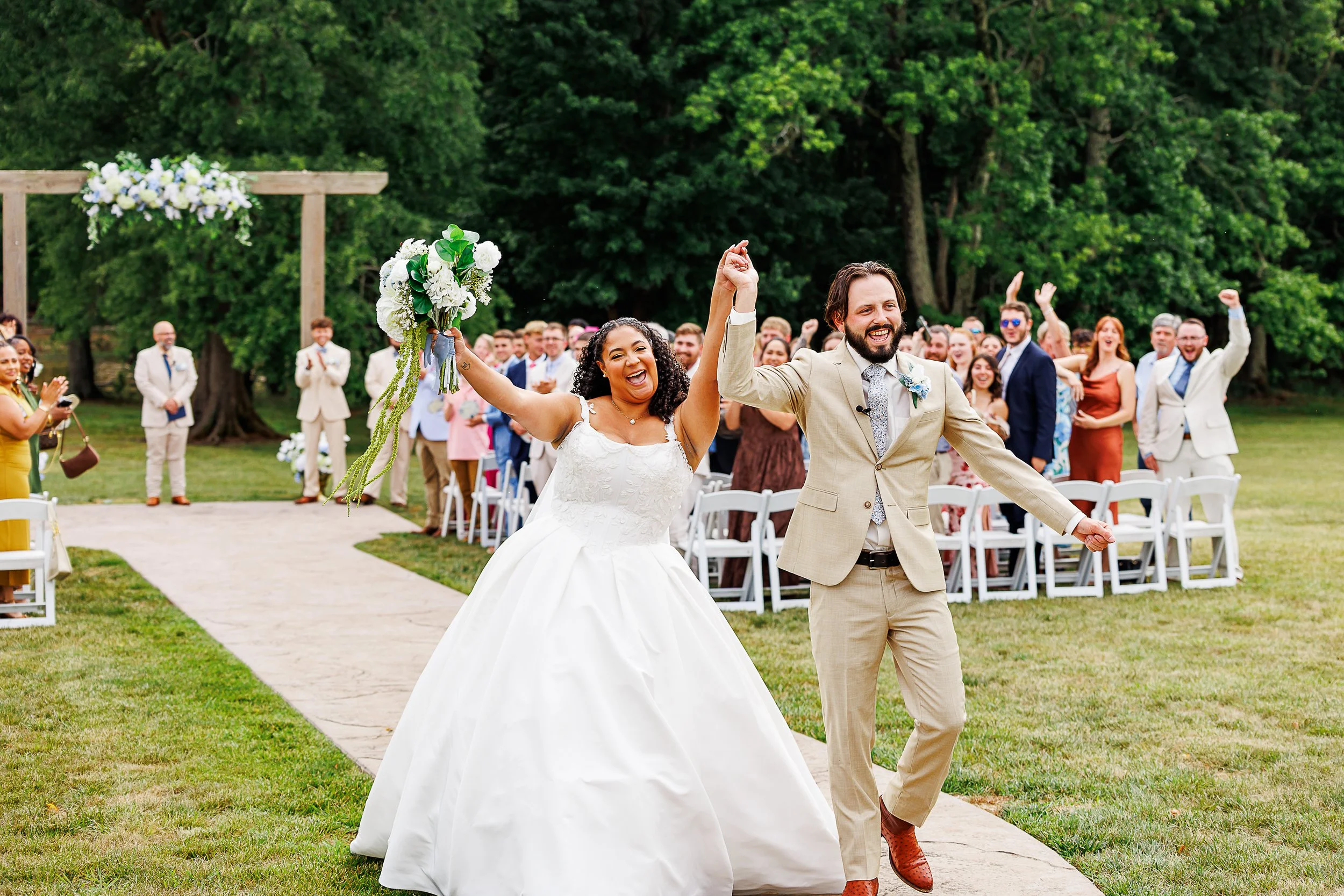
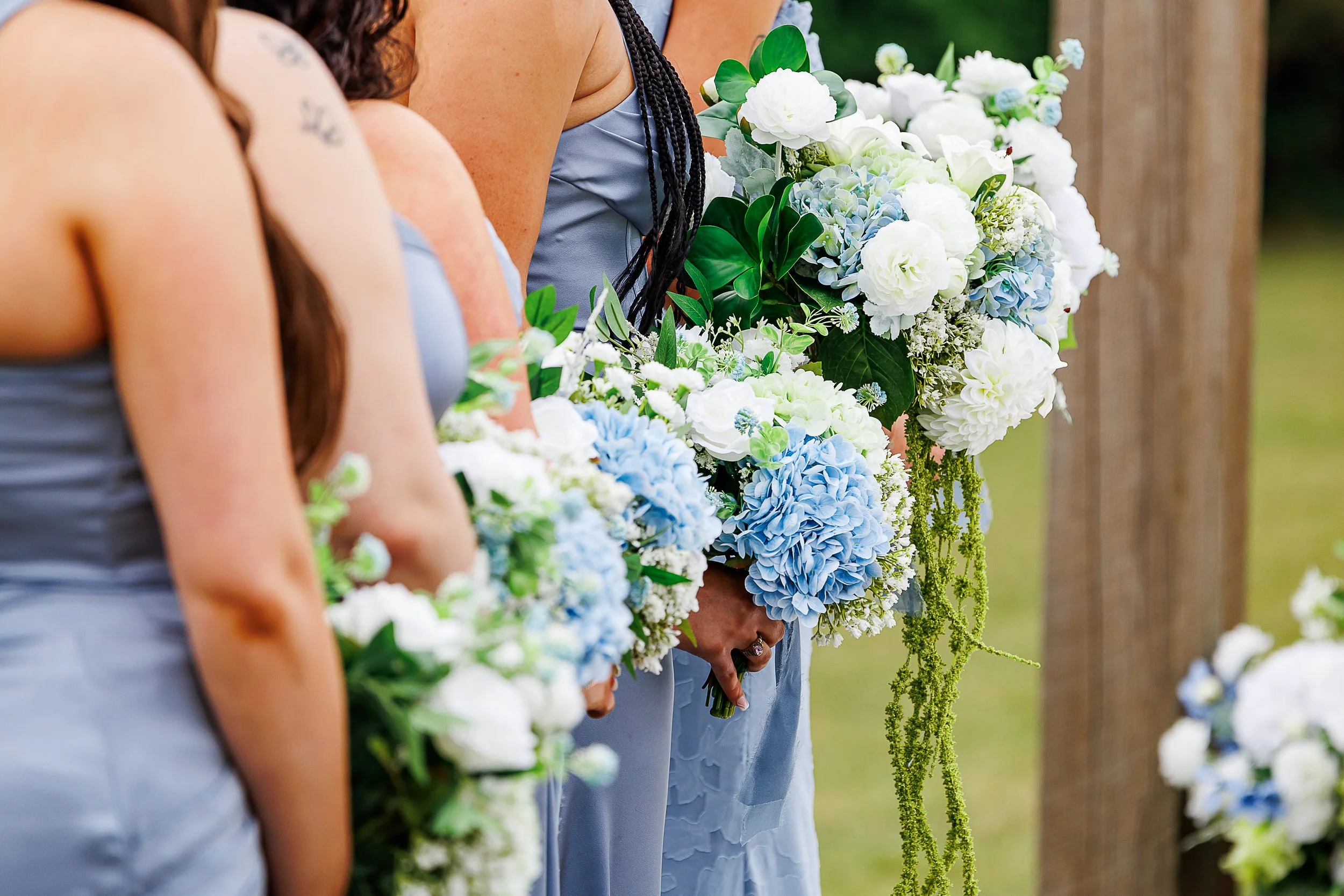
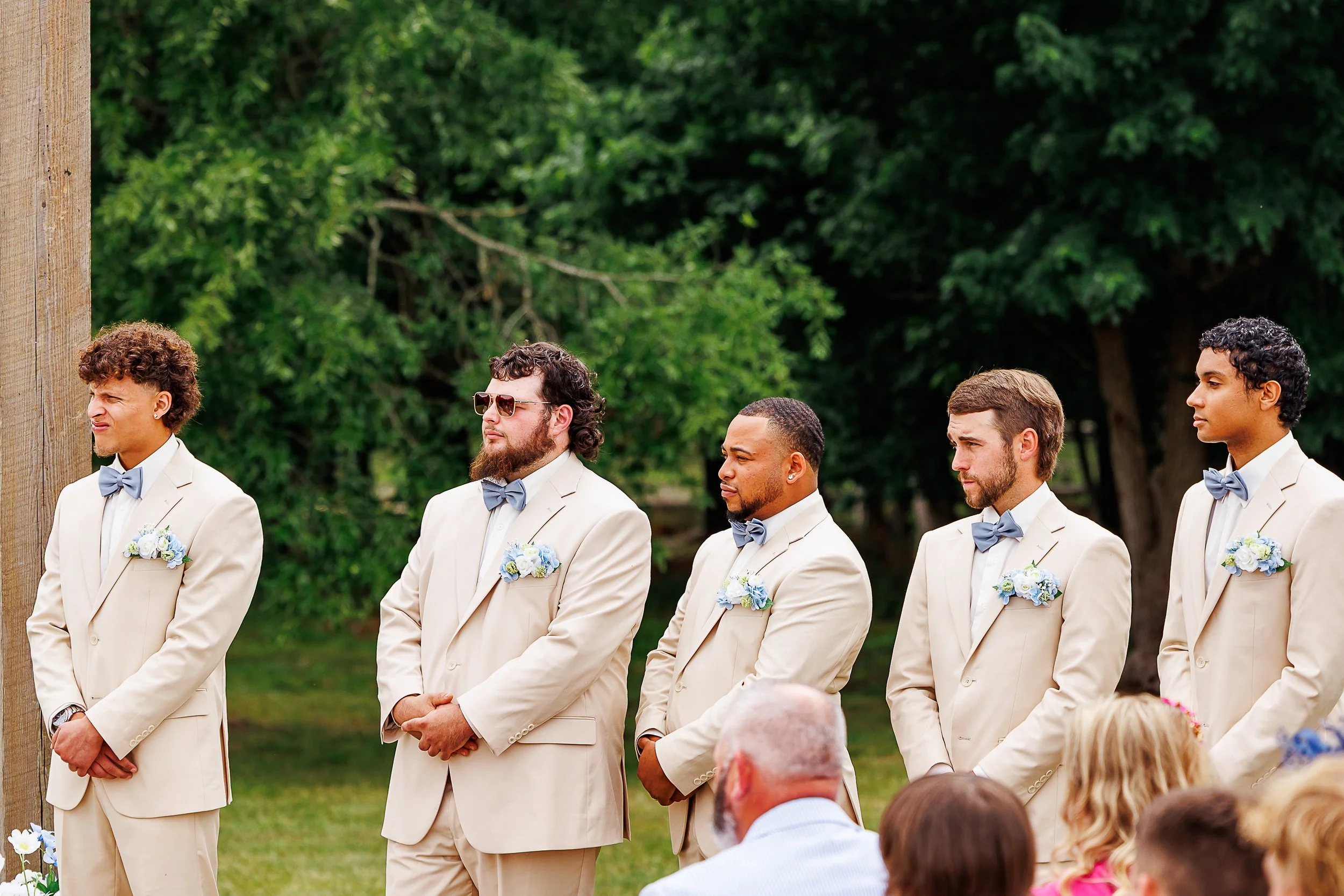
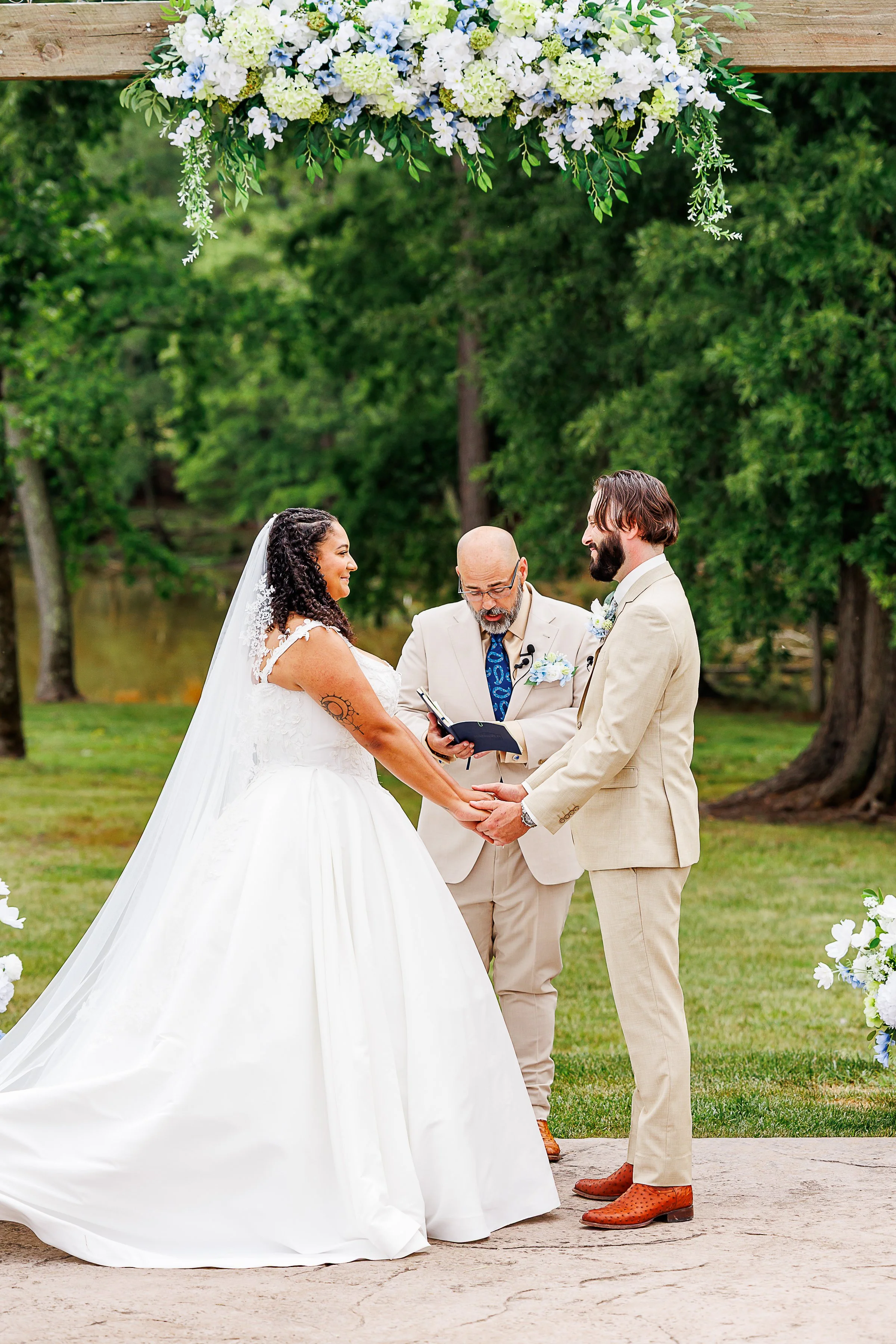
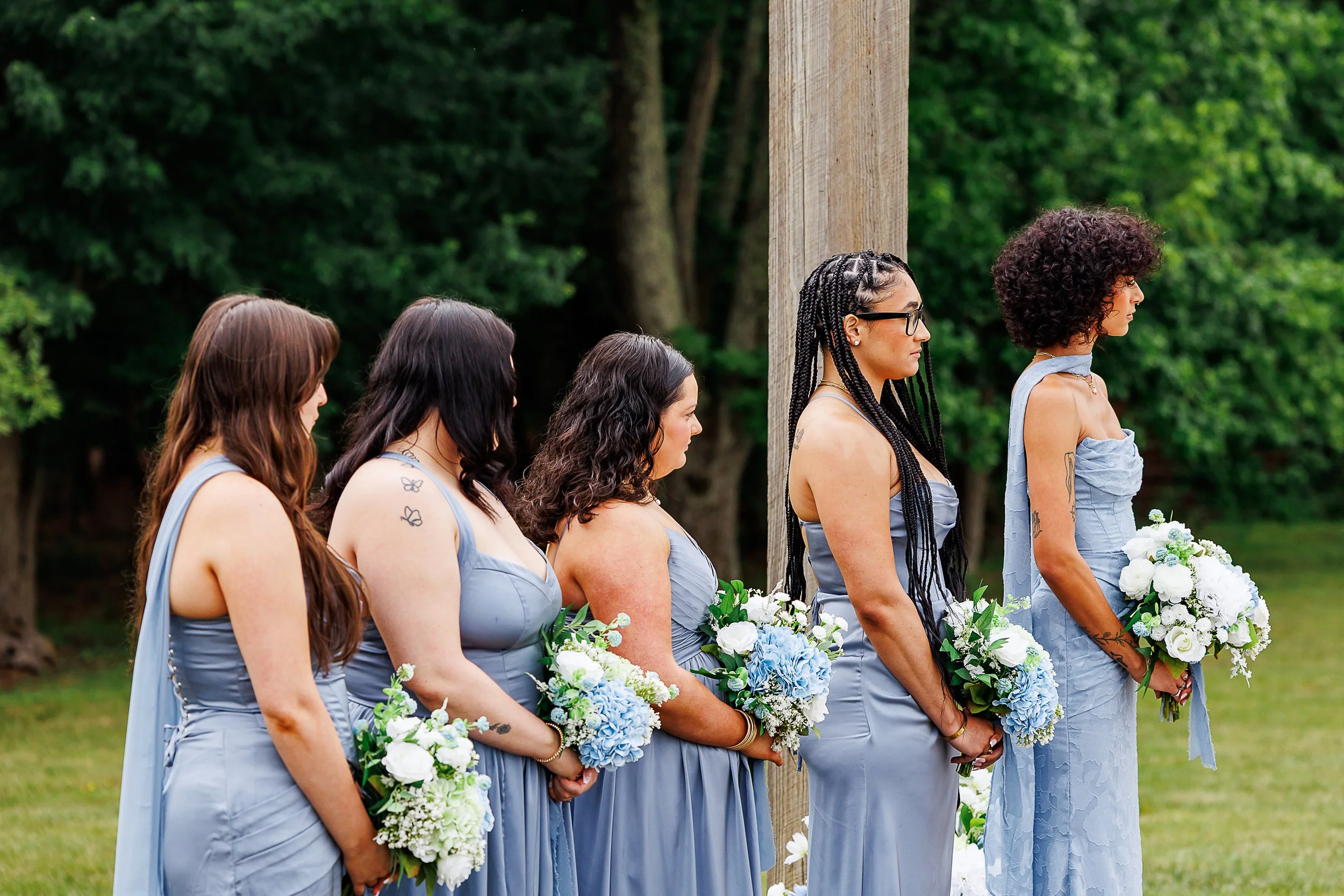
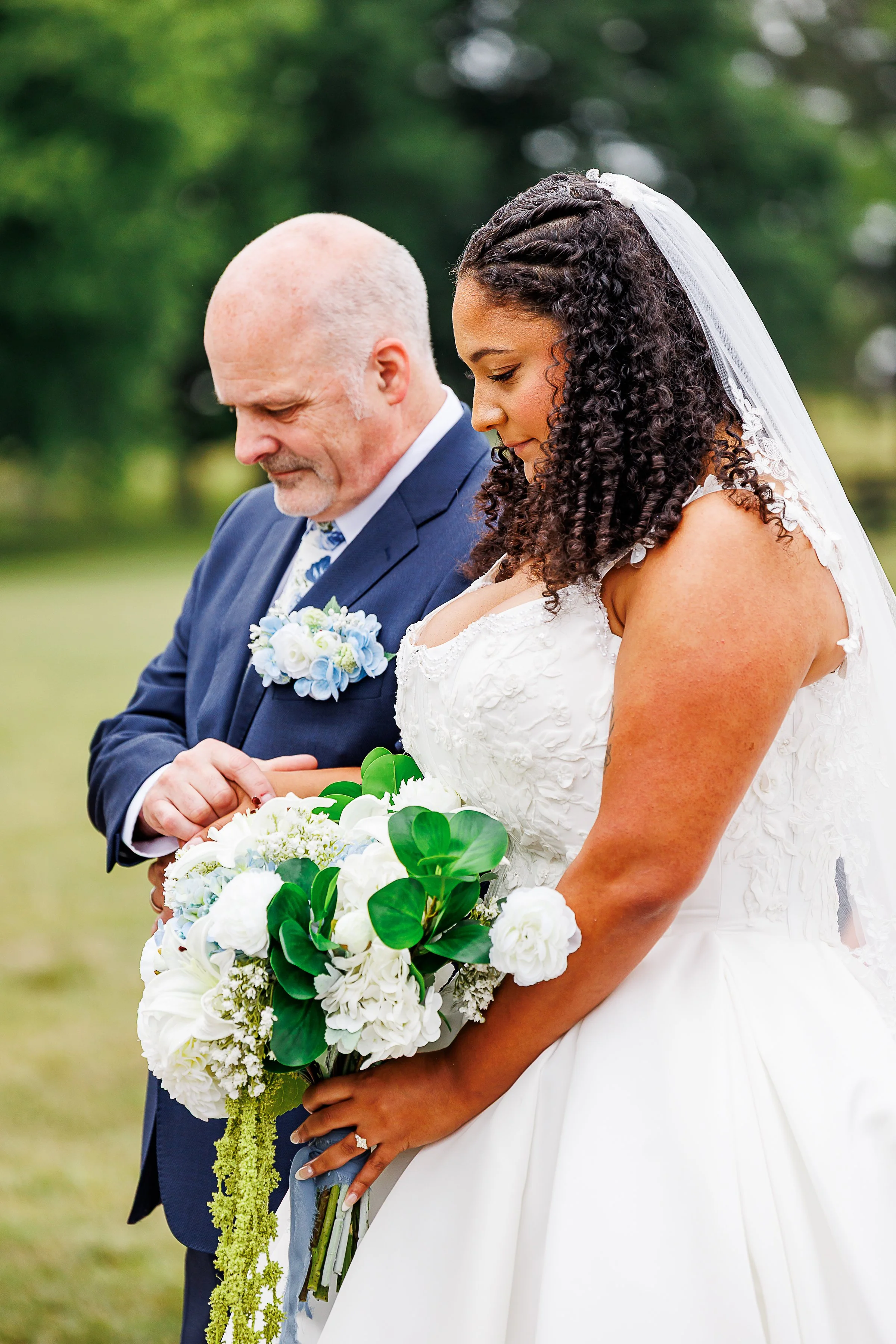
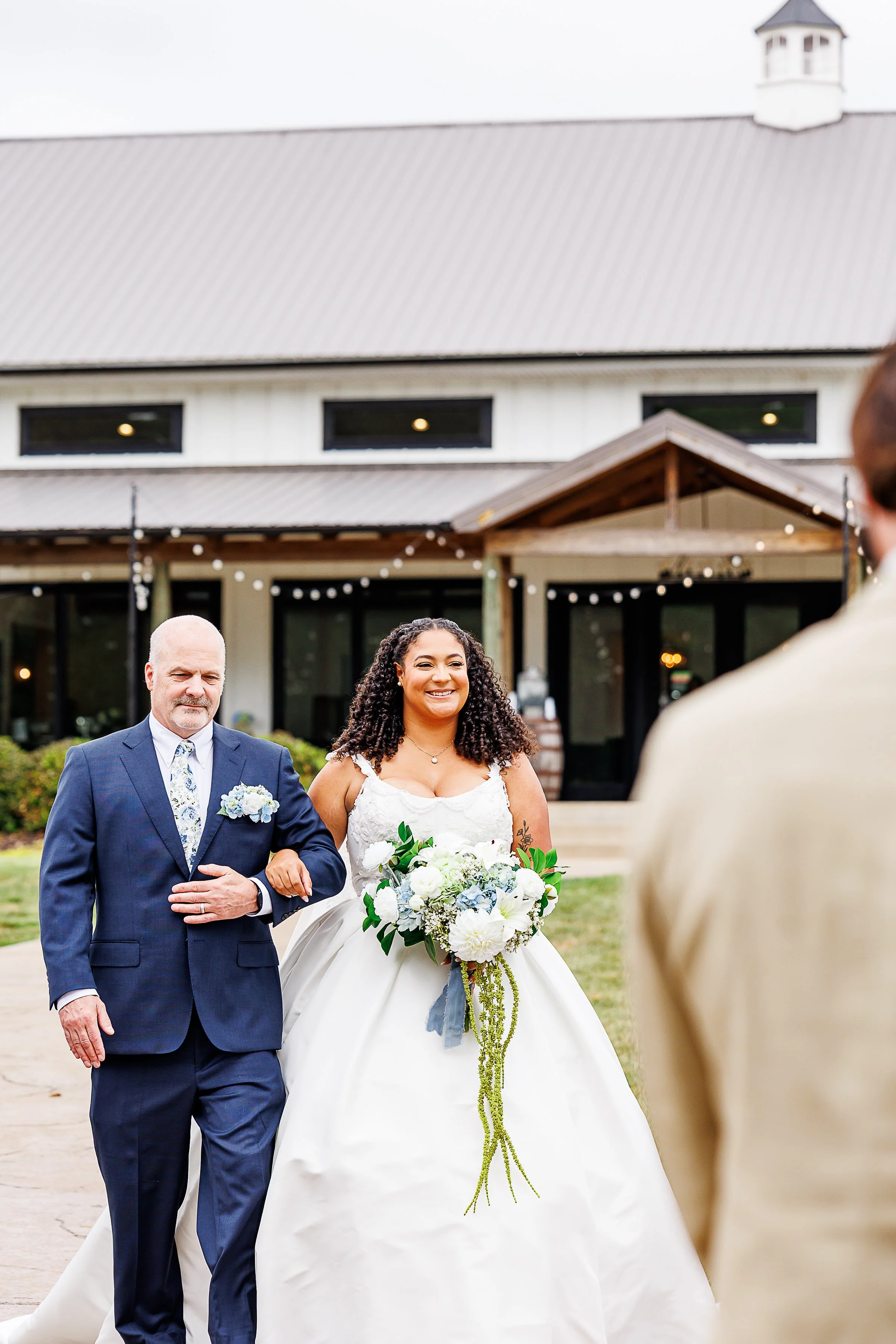
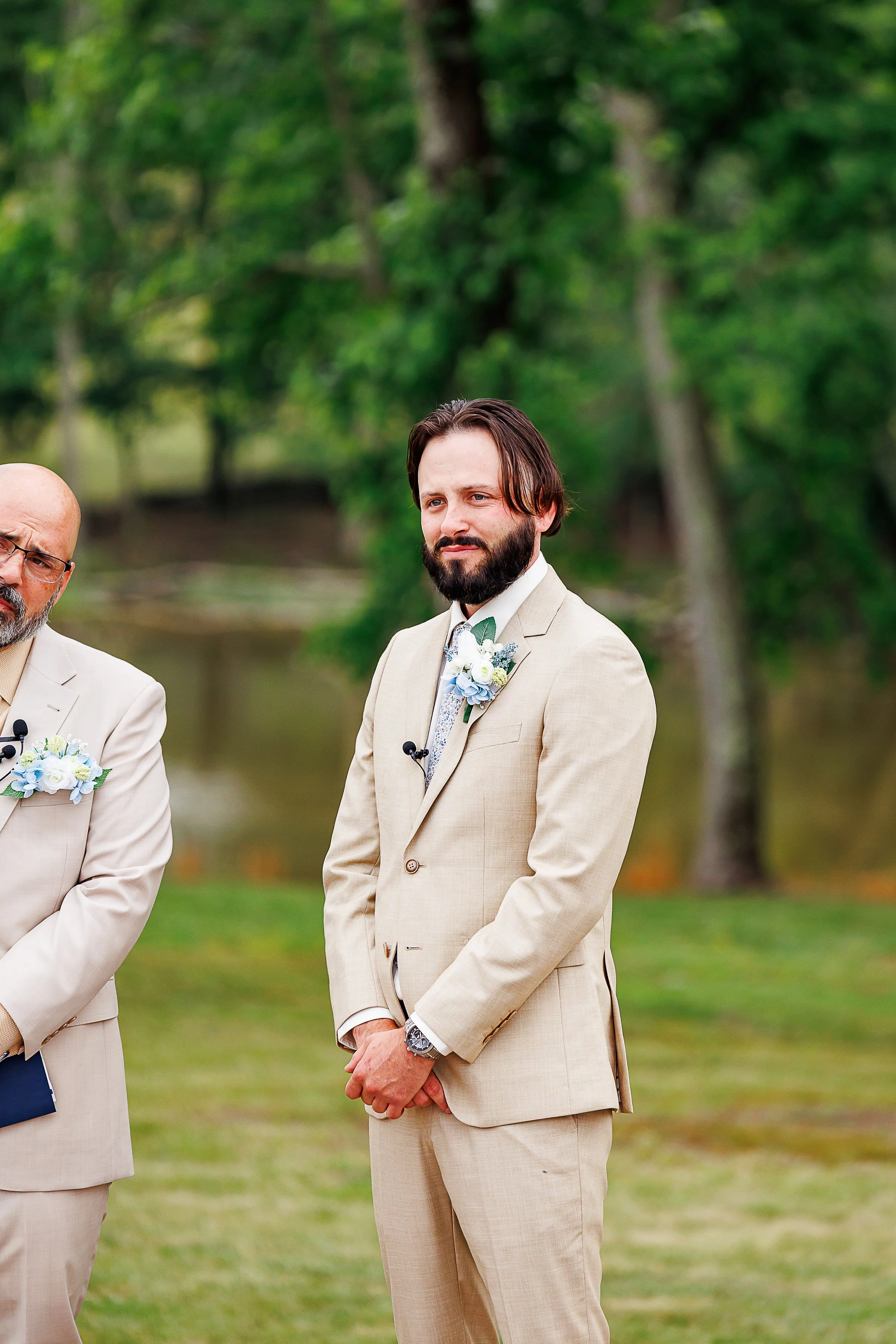
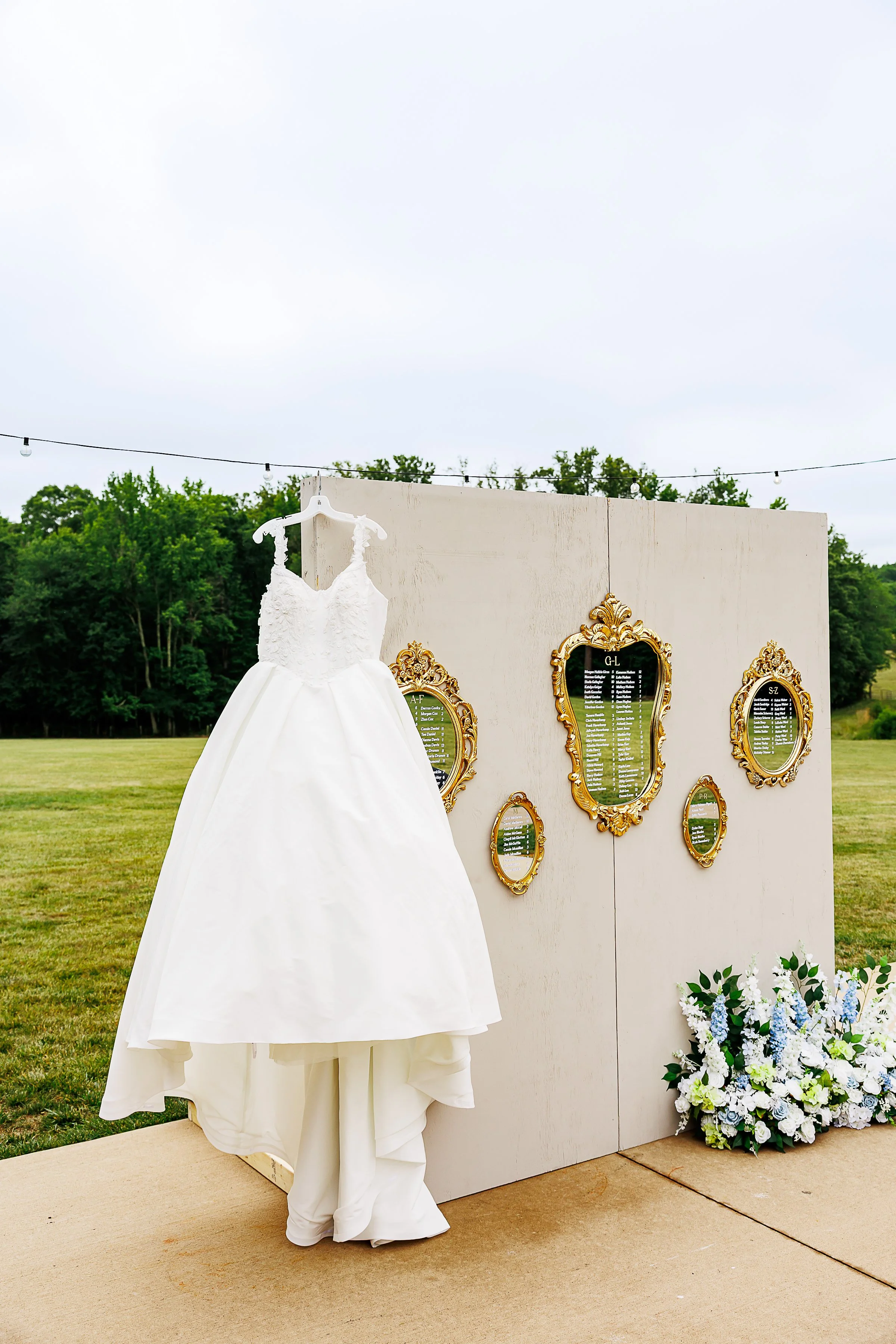
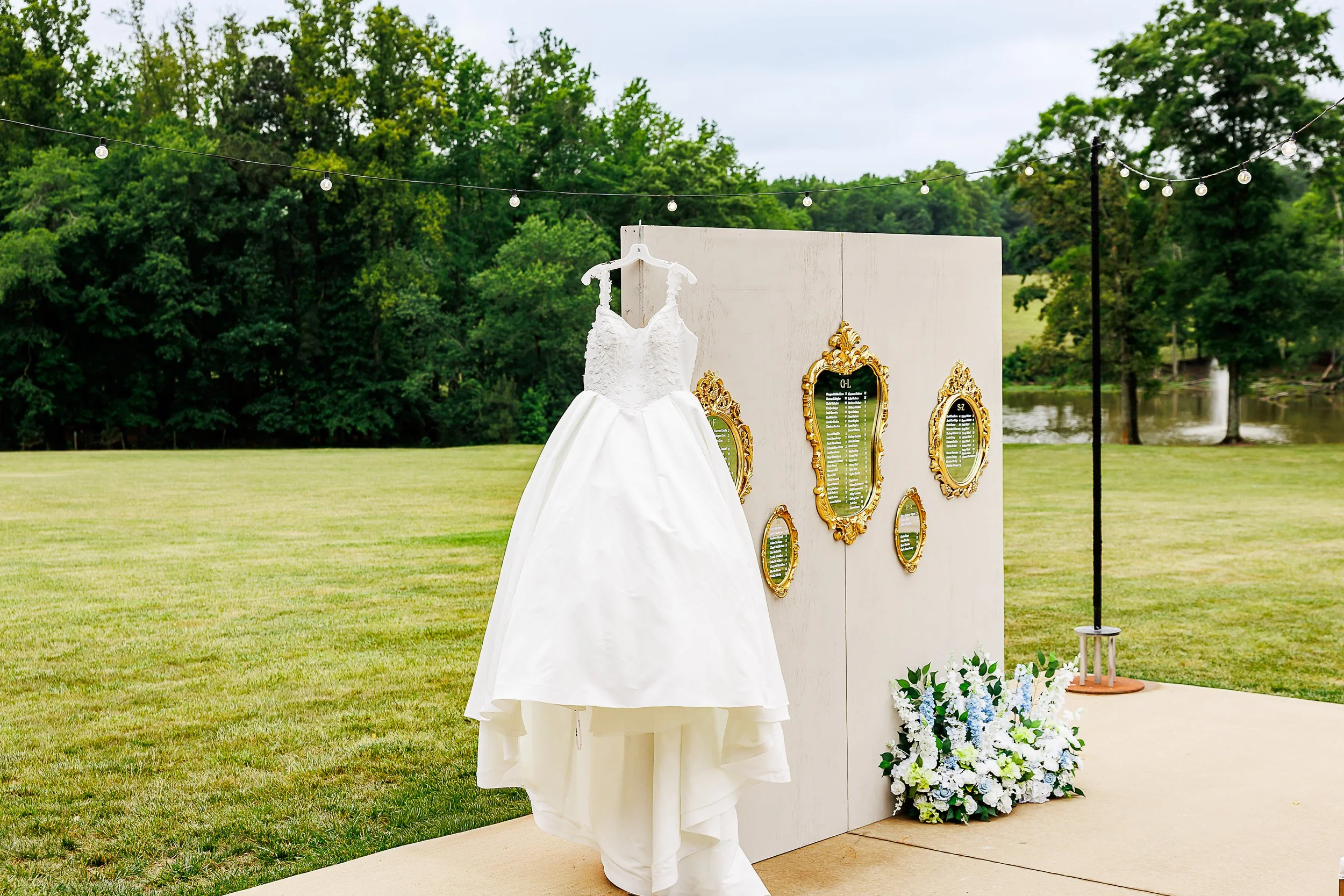
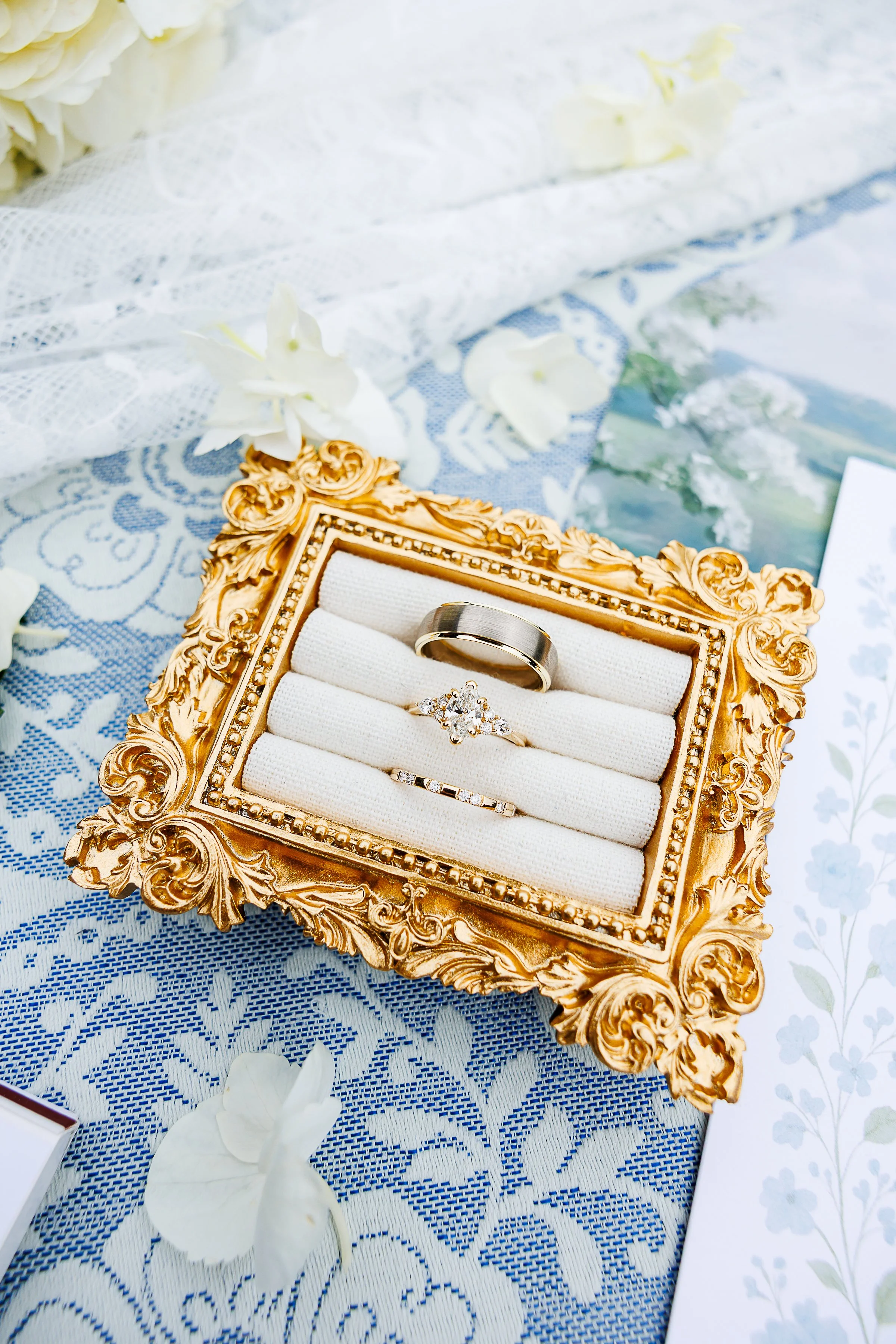
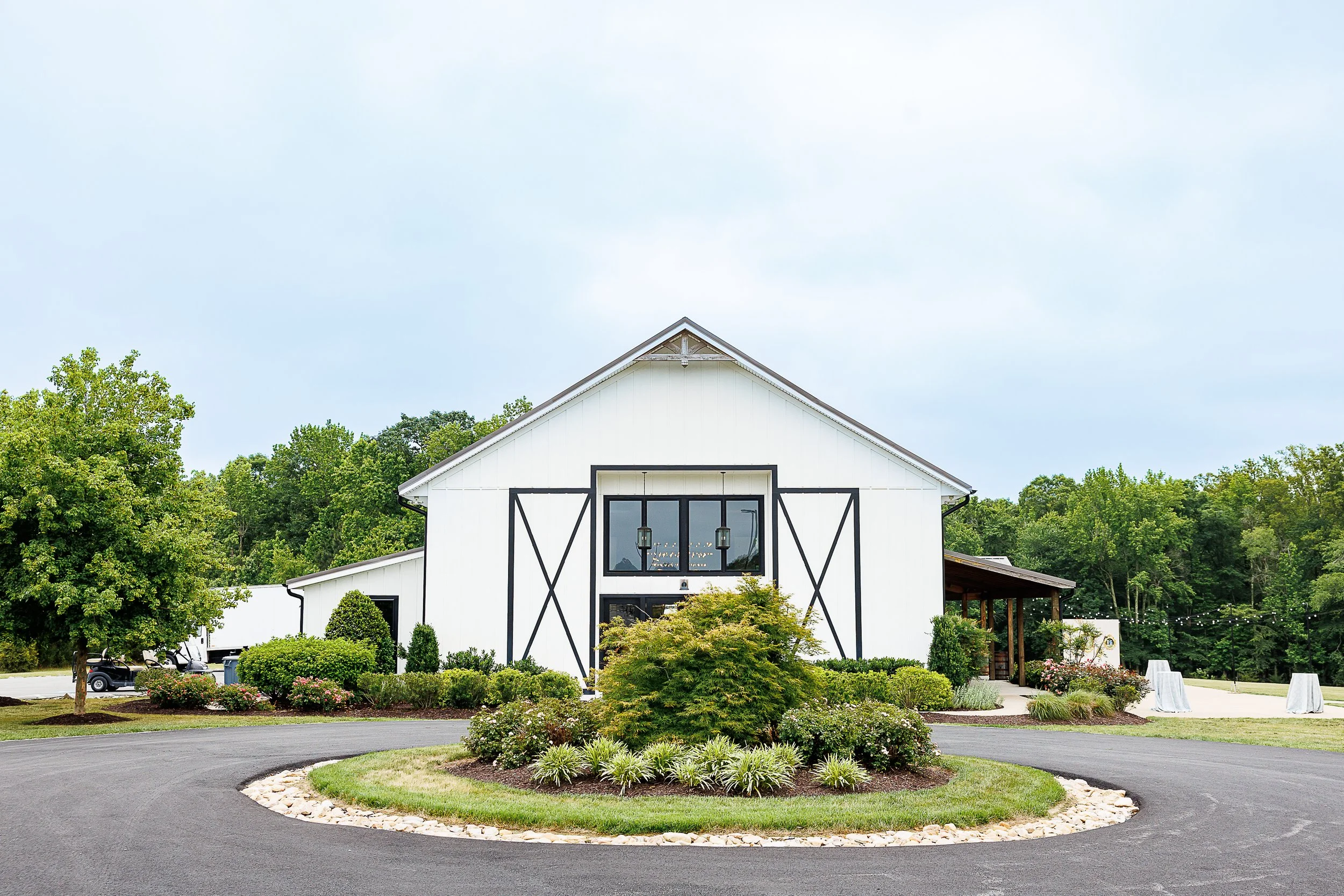
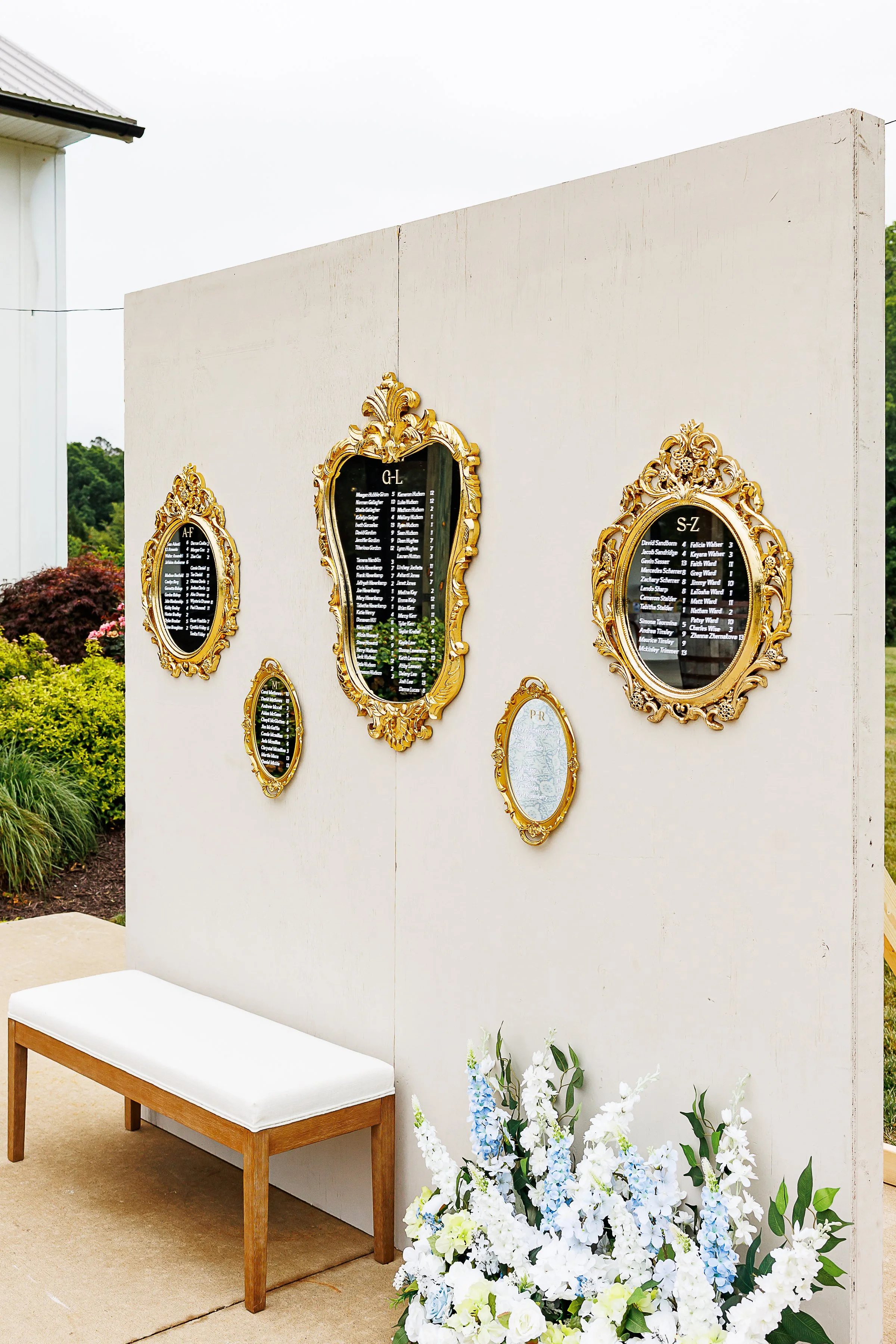
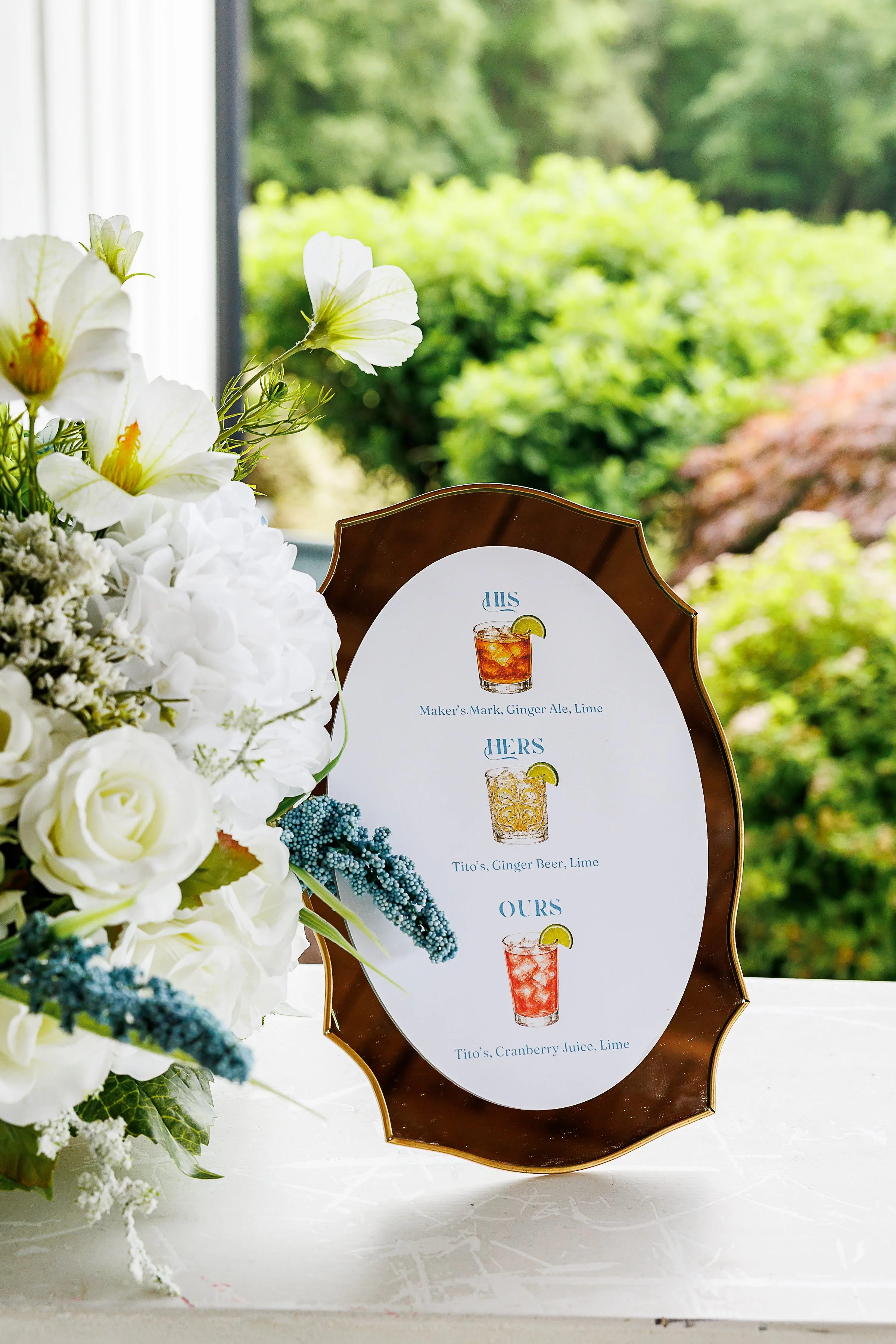
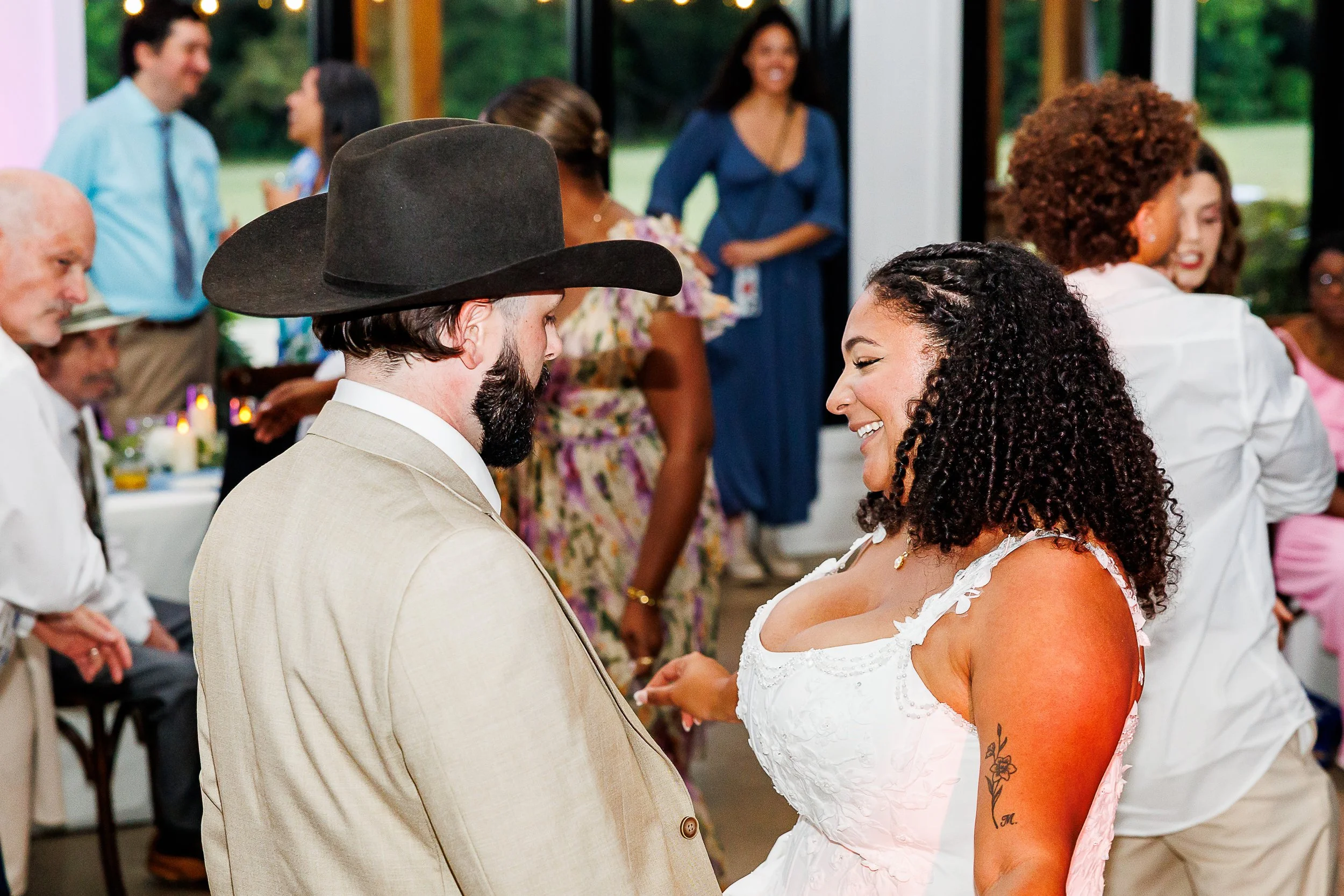
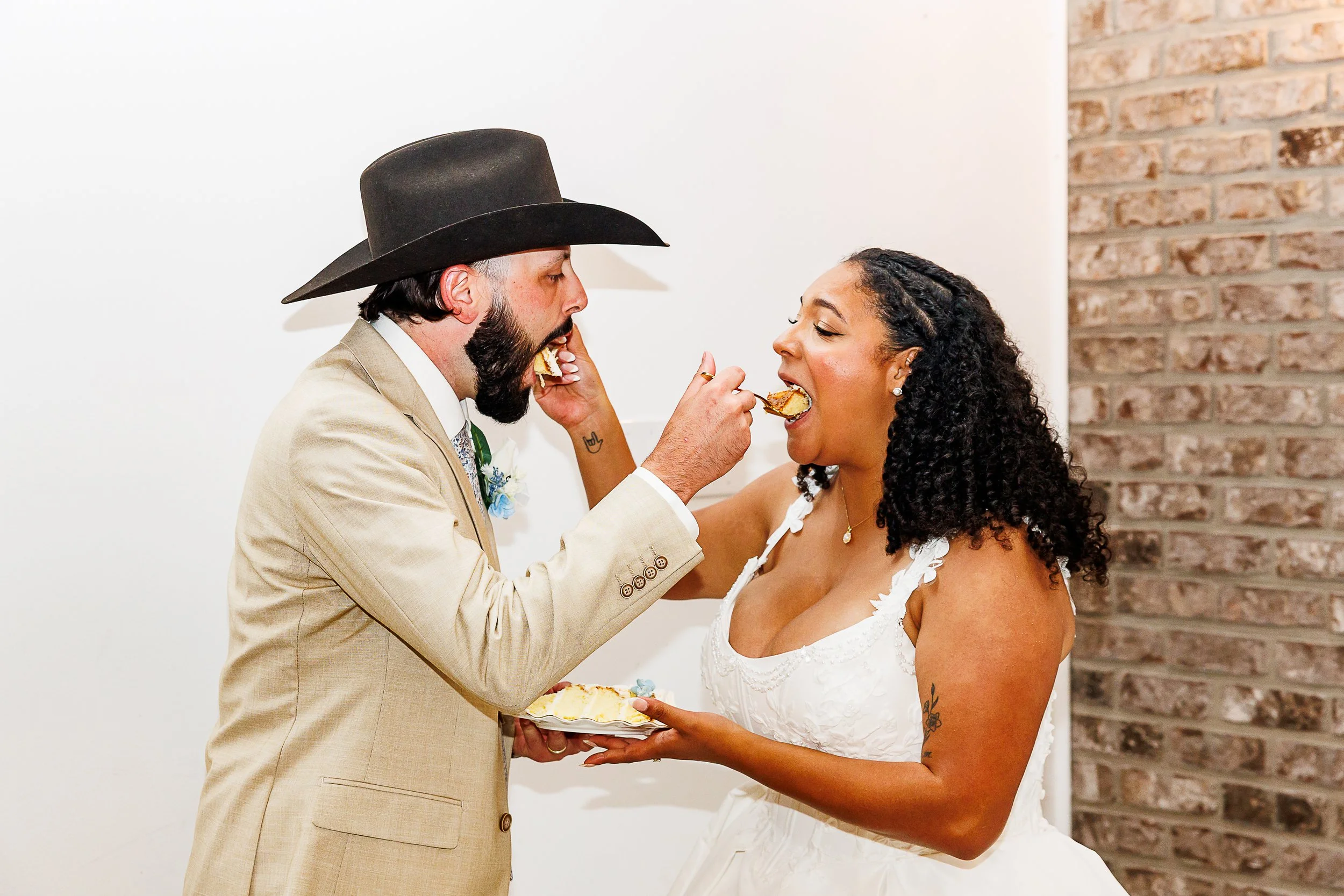
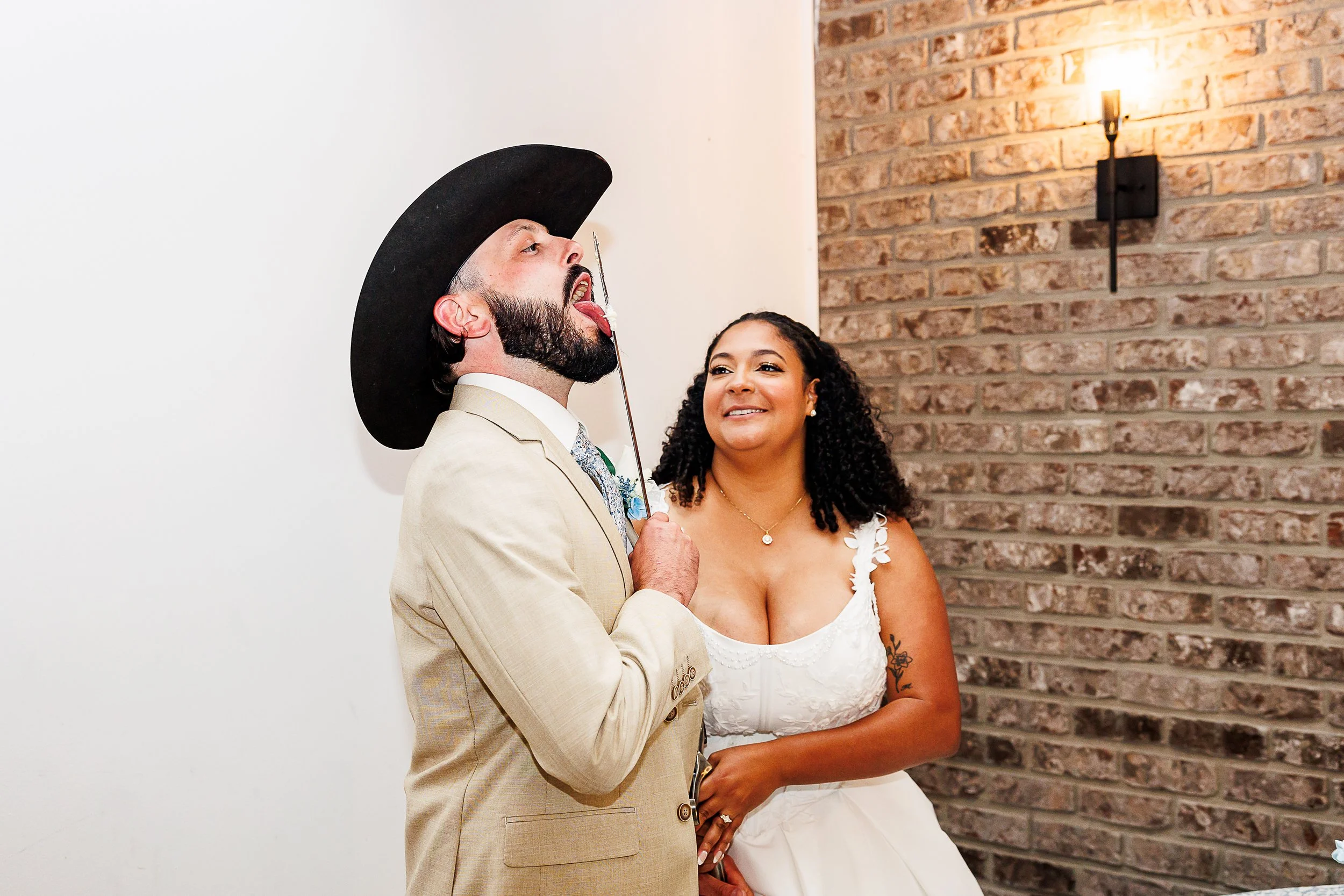
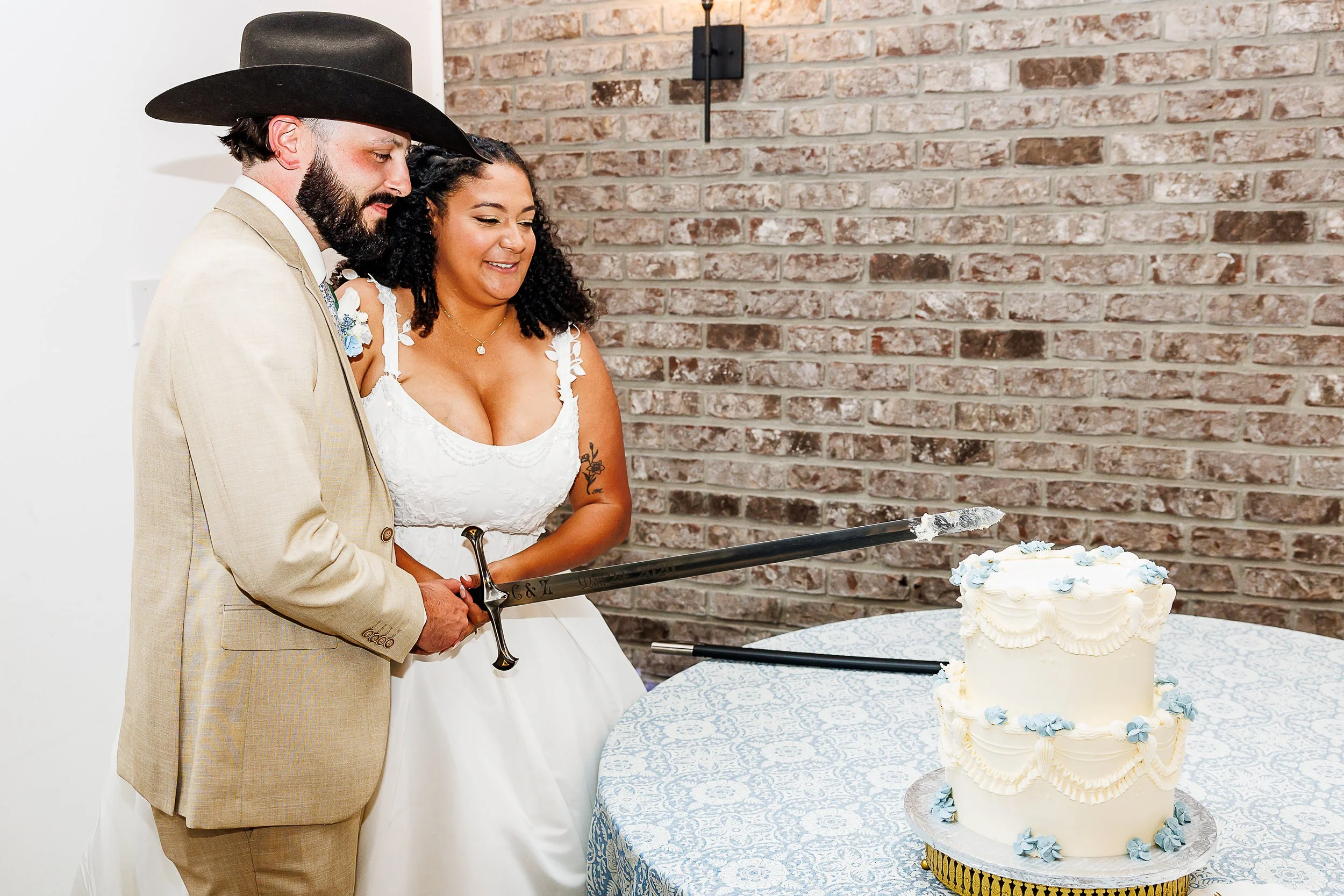
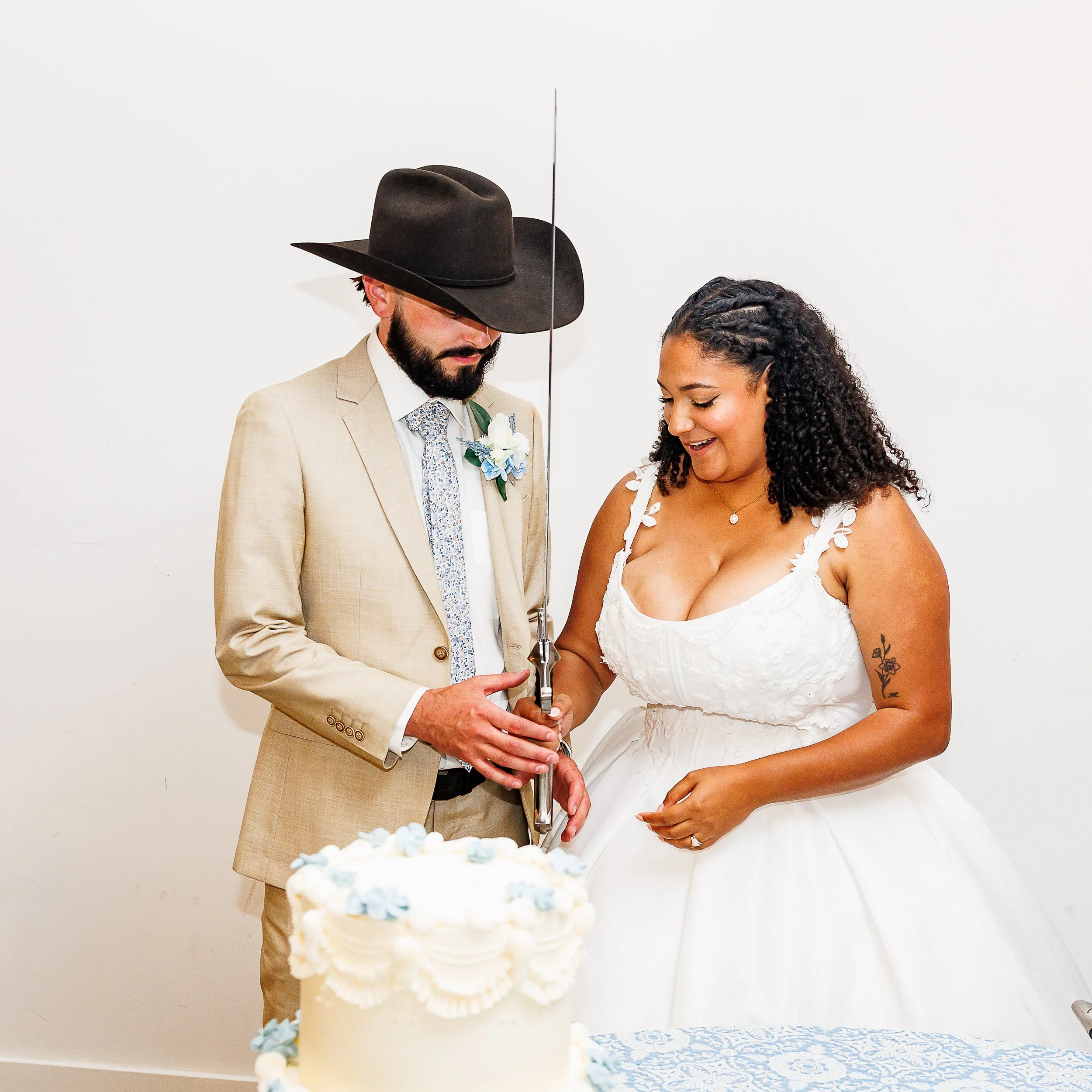
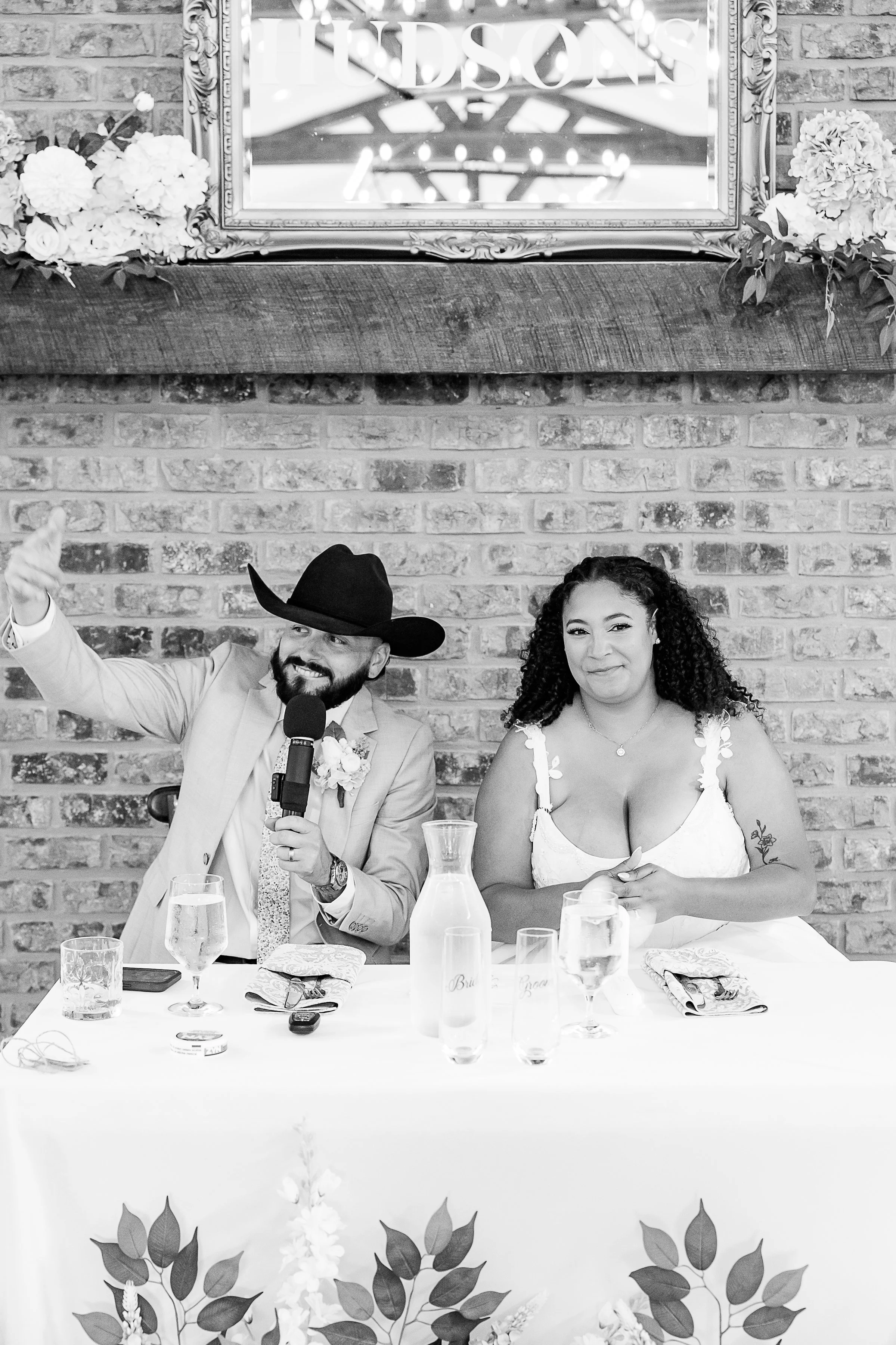
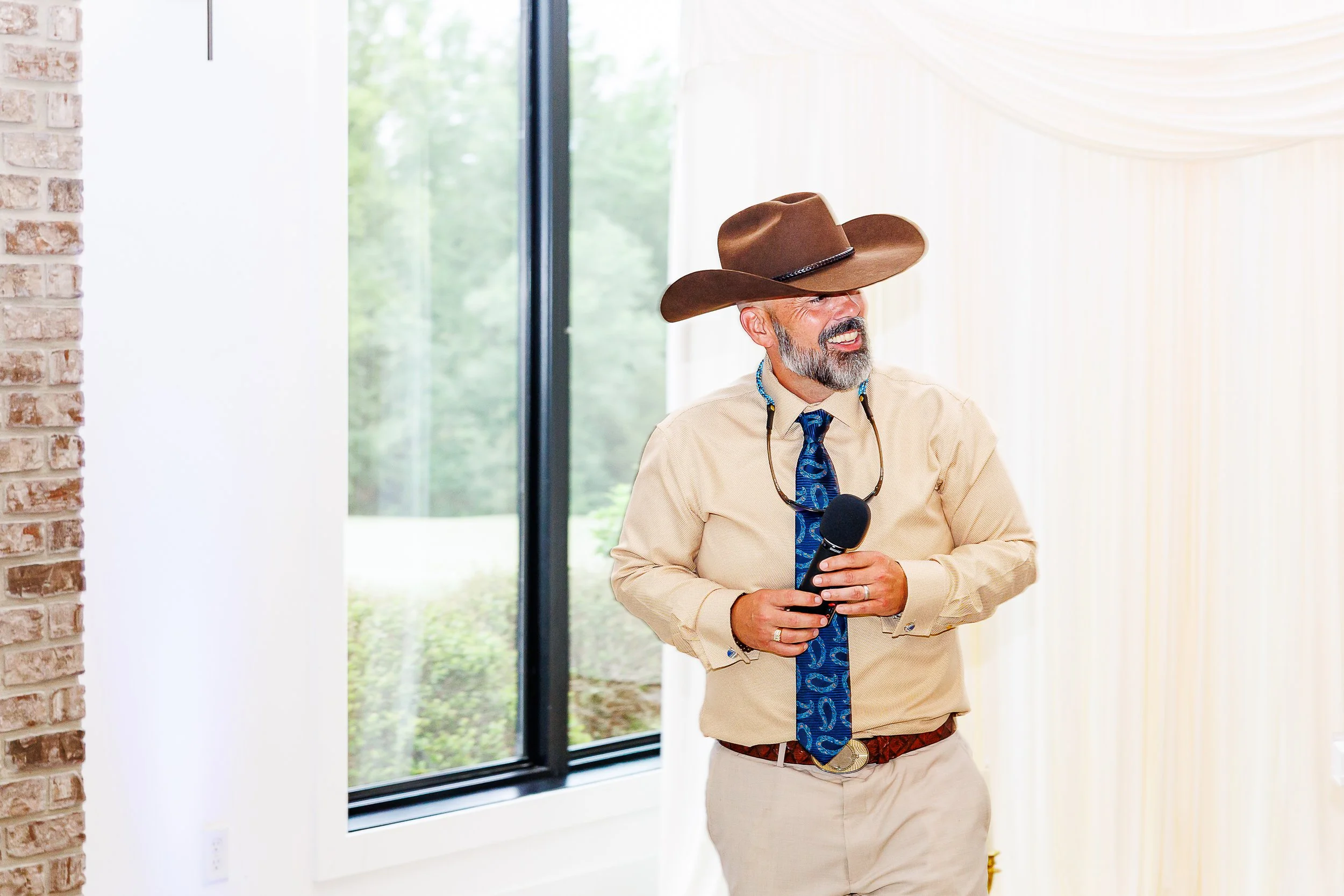
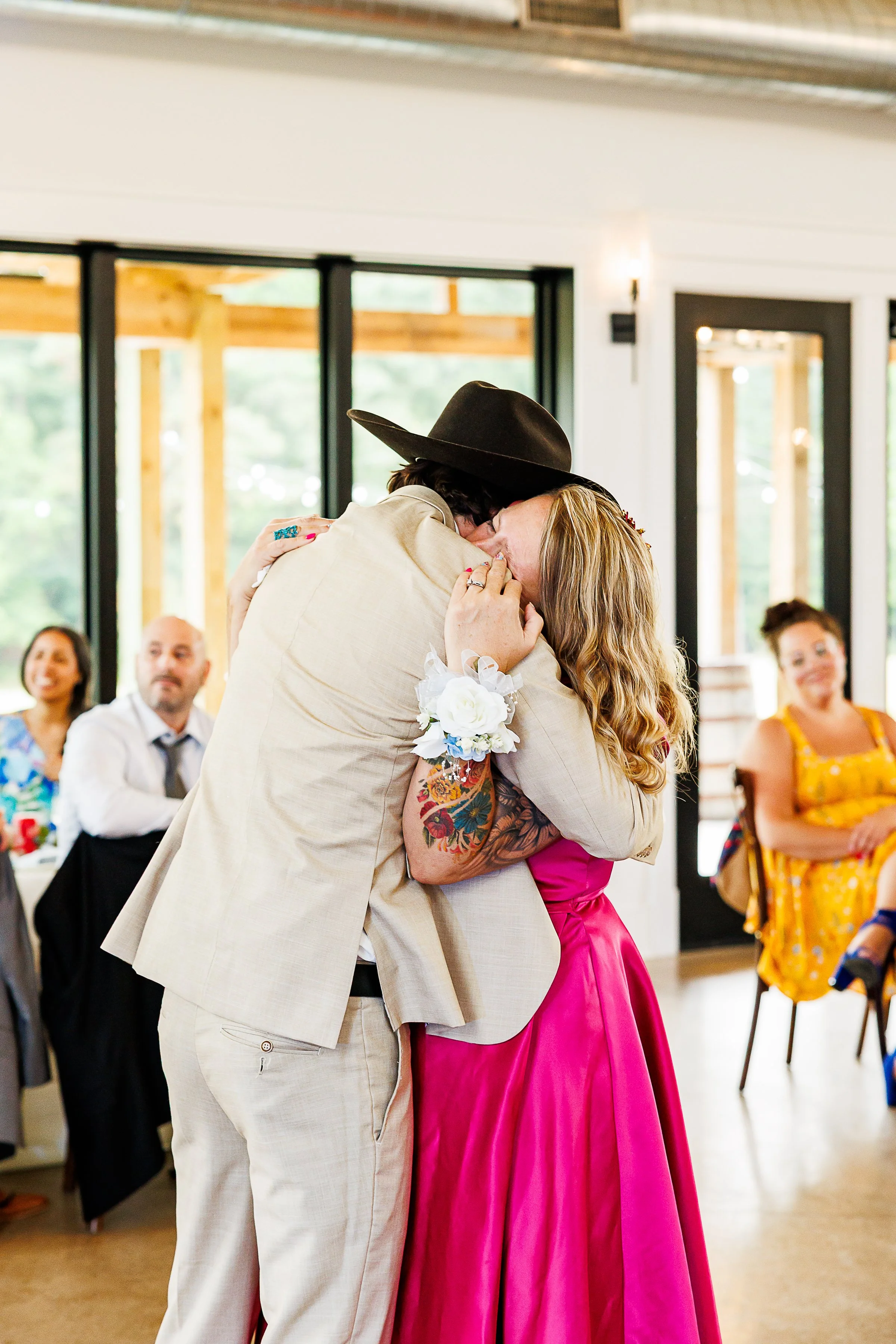
One of the clearest examples of this from our own work this year is Zachari and Chandler's wedding at Oakdale in Ashland, just outside Richmond, this past May. Early on, Zachari flagged something to us directly: they were planning a private, just-the-two-of-them last dance out on the venue's patio, lit almost entirely by string lights - gorgeous, but low and warm, exactly the kind of light that makes accurate color the hardest to get right. We told them the truth we tell every couple who asks: it's no problem, and it's also exactly the kind of light we think about the most.
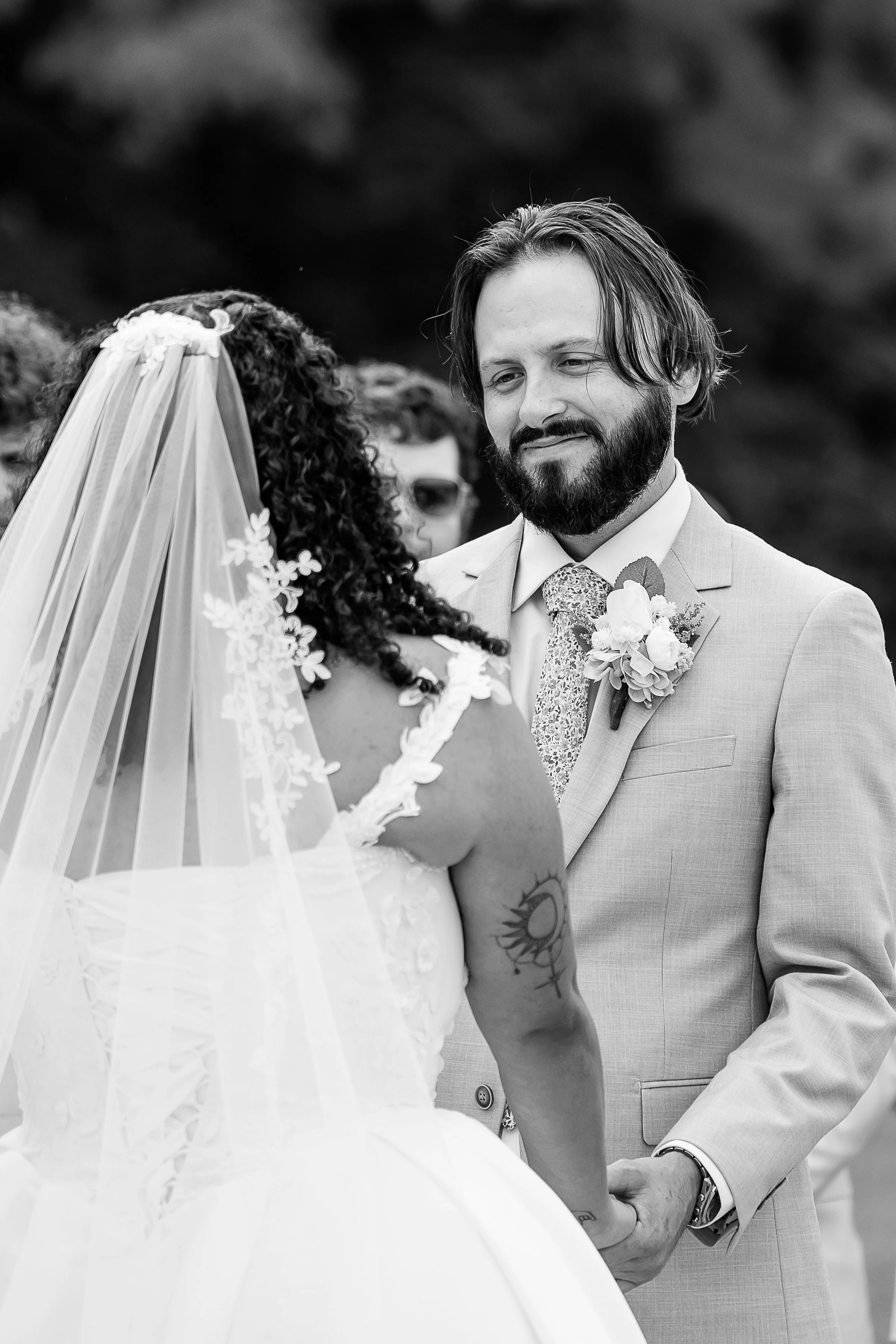
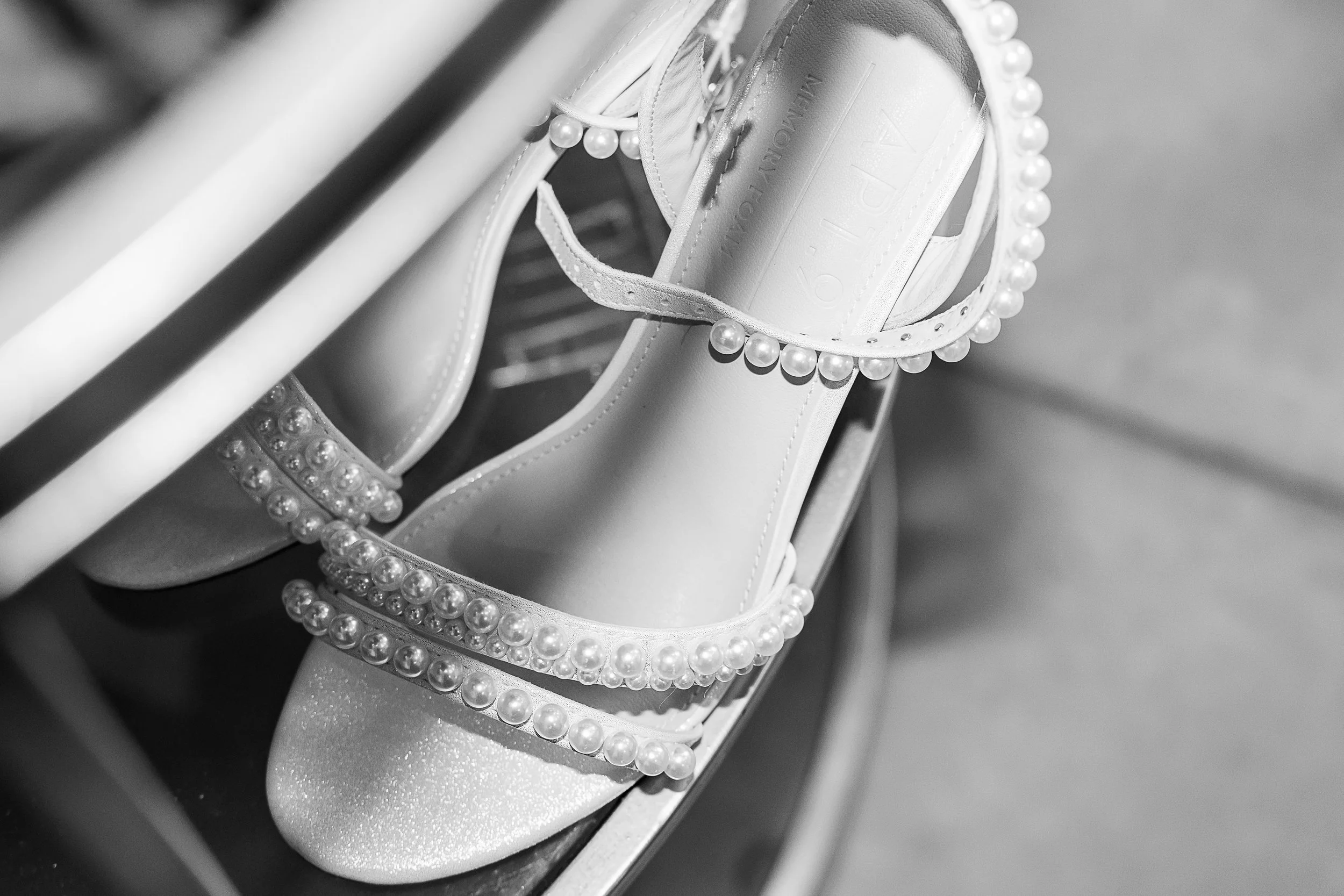
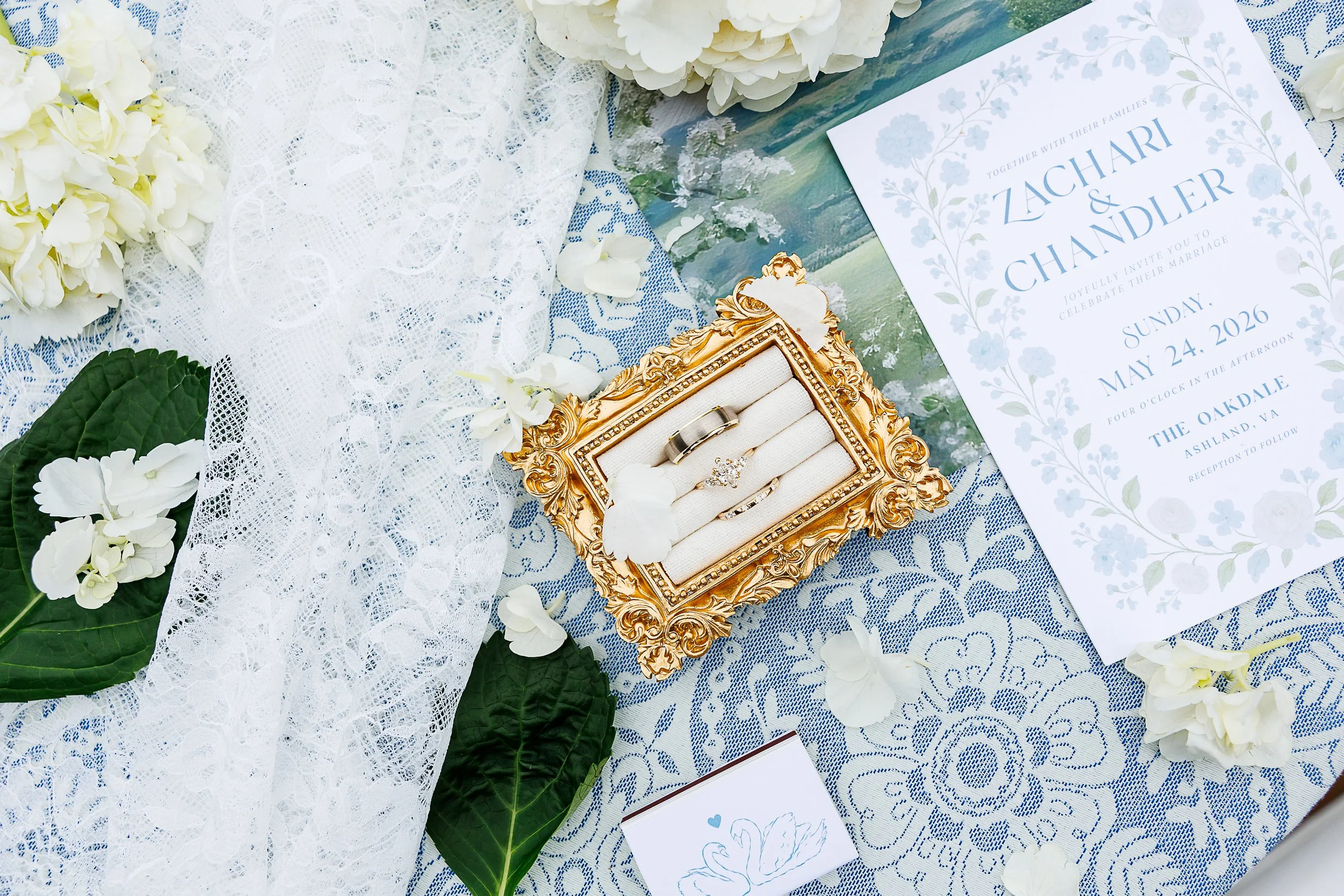
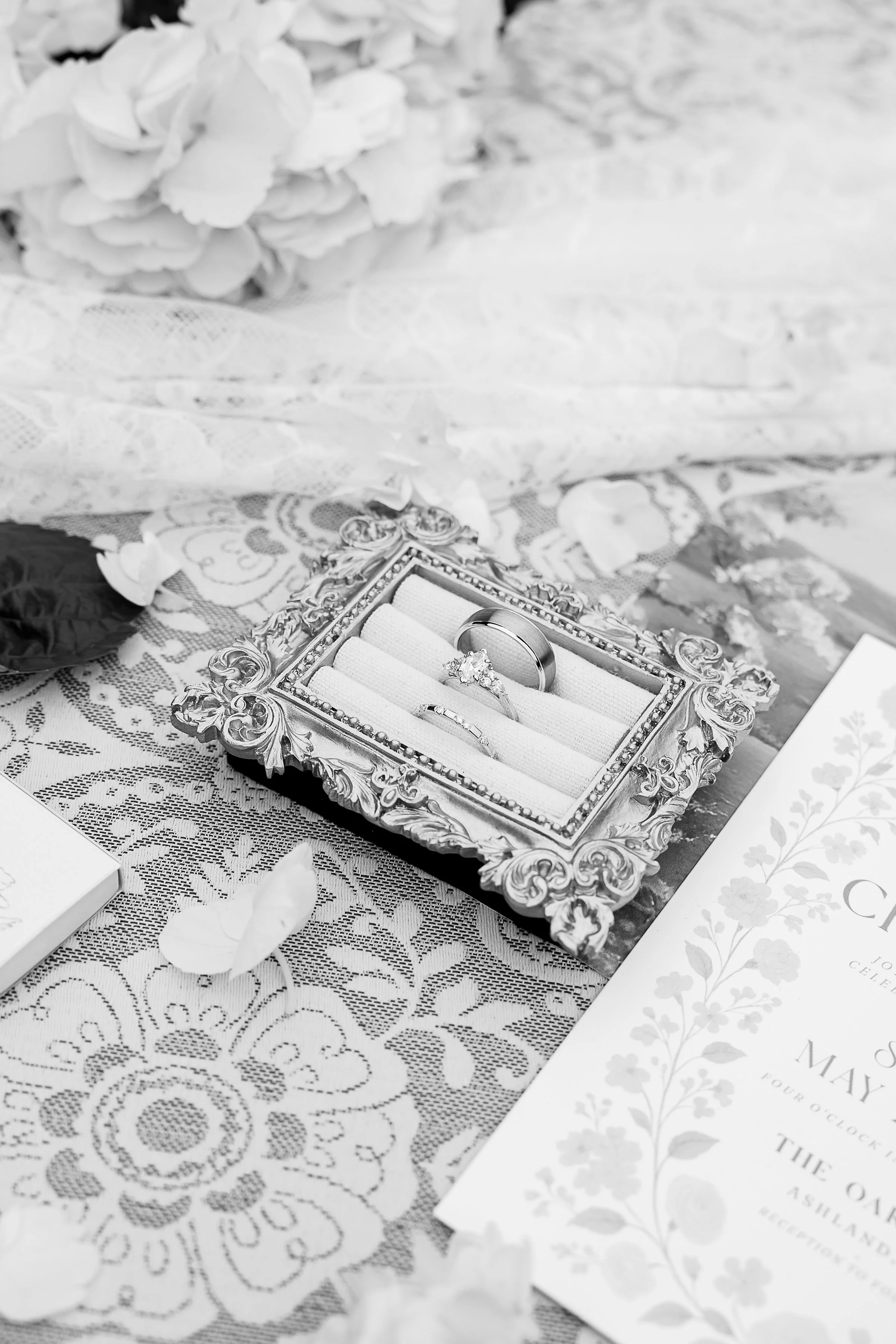
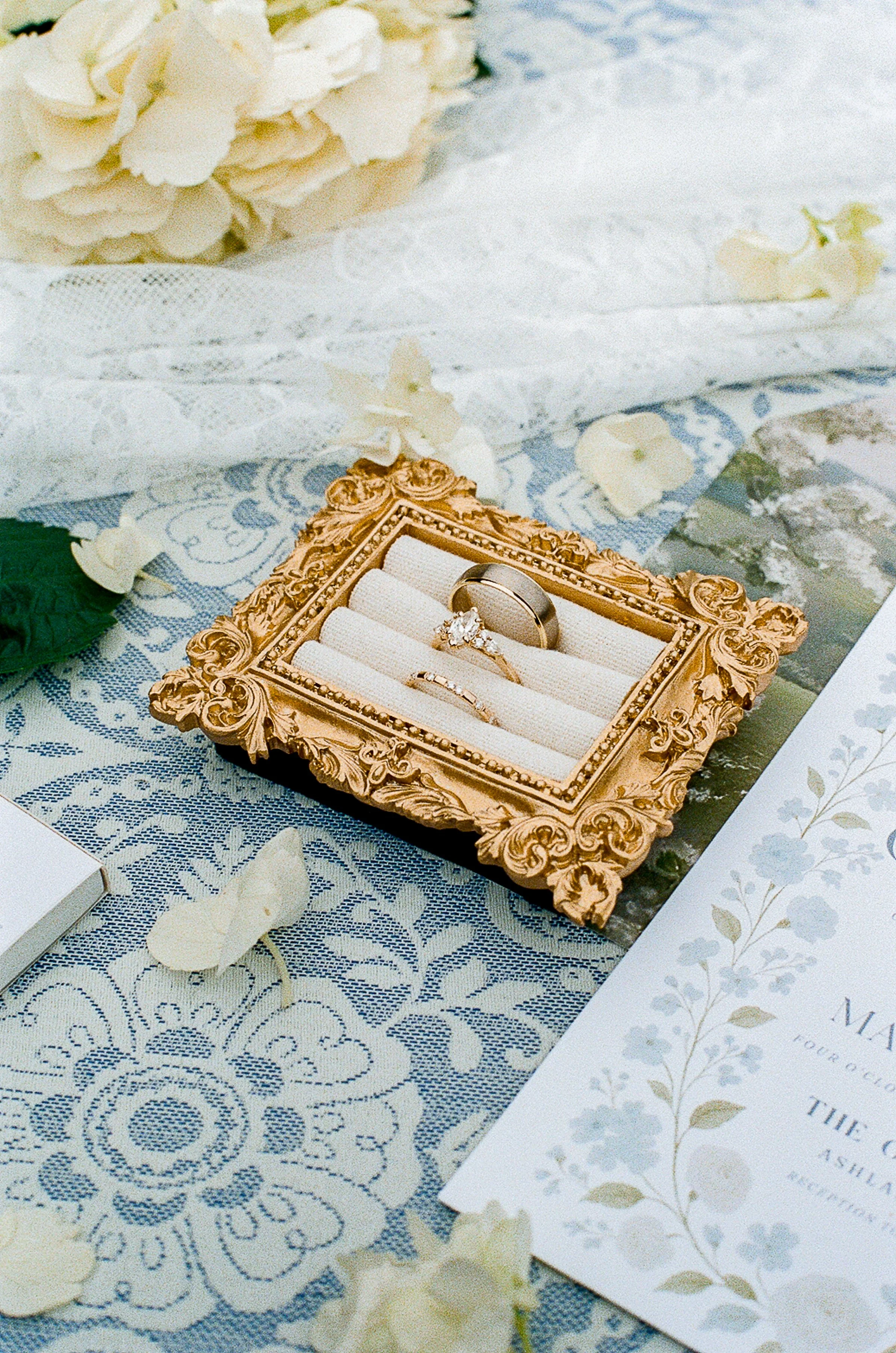
Their wedding was also a true side-by-side of our two formats - 35mm film on my 1972 Olympus OM-1 (Kodak Portra 800) alongside digital on the Canon R6 Mark II, shooting the same moments on both. Film and digital don't render skin the same way by default; part of our job is making sure both formats tell the truth about both of you, not just one or the other. Their engagement session, a few months earlier at Libby Hill Park in Richmond, was the first test of that - golden hour over the James River, two people, one frame, one honest color story. The photos below show some of our frames from my film camera.
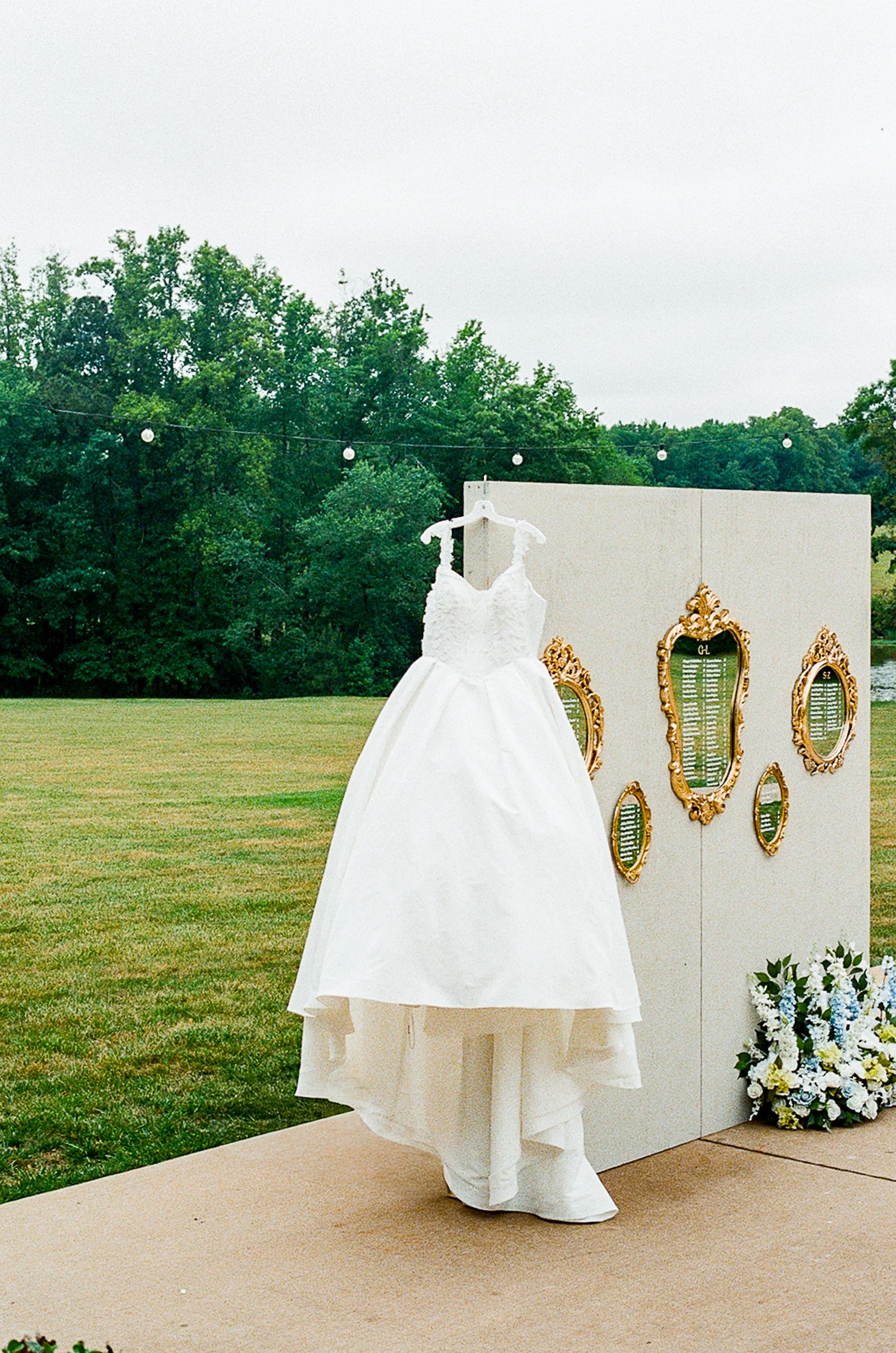
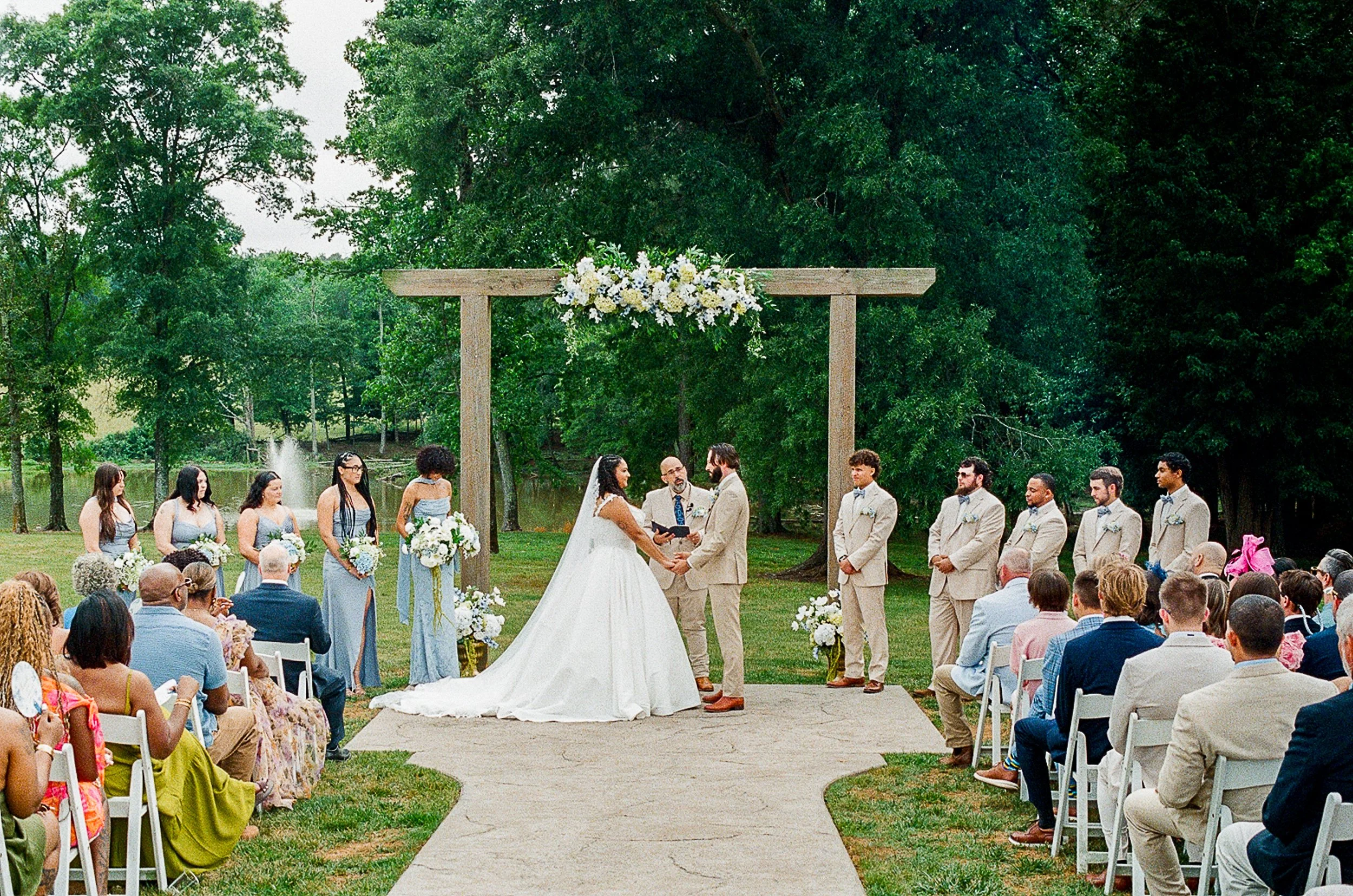
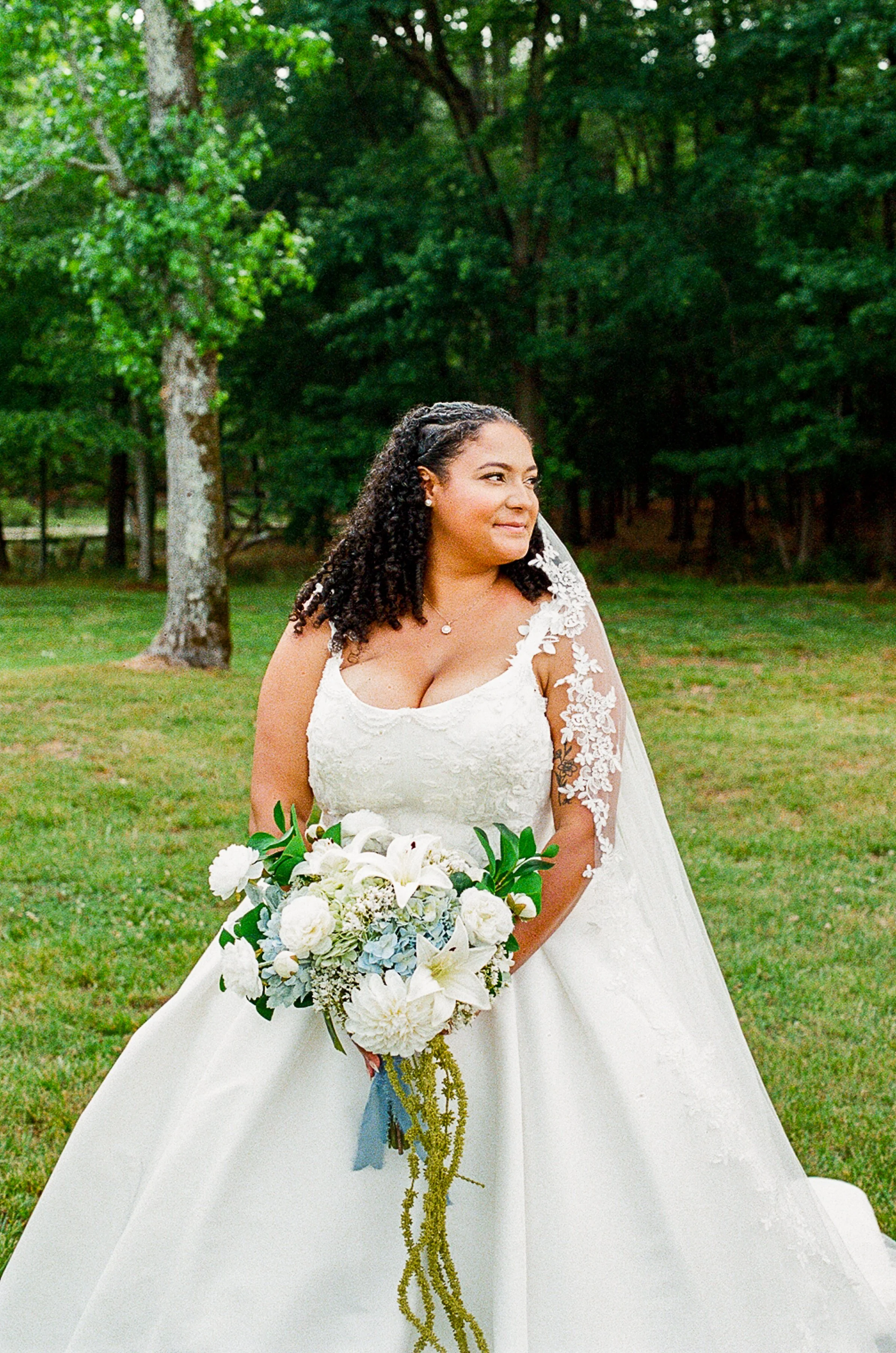
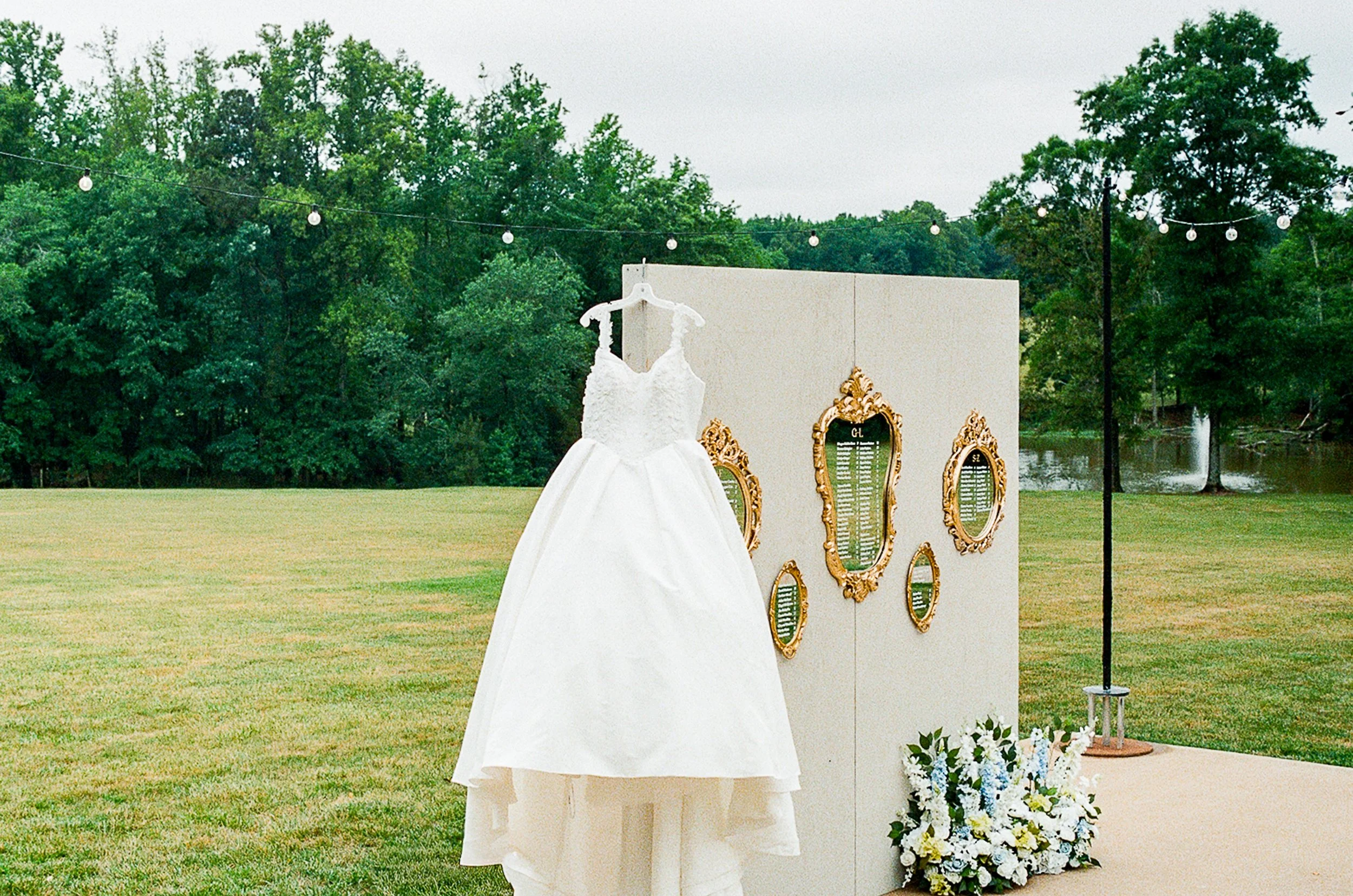
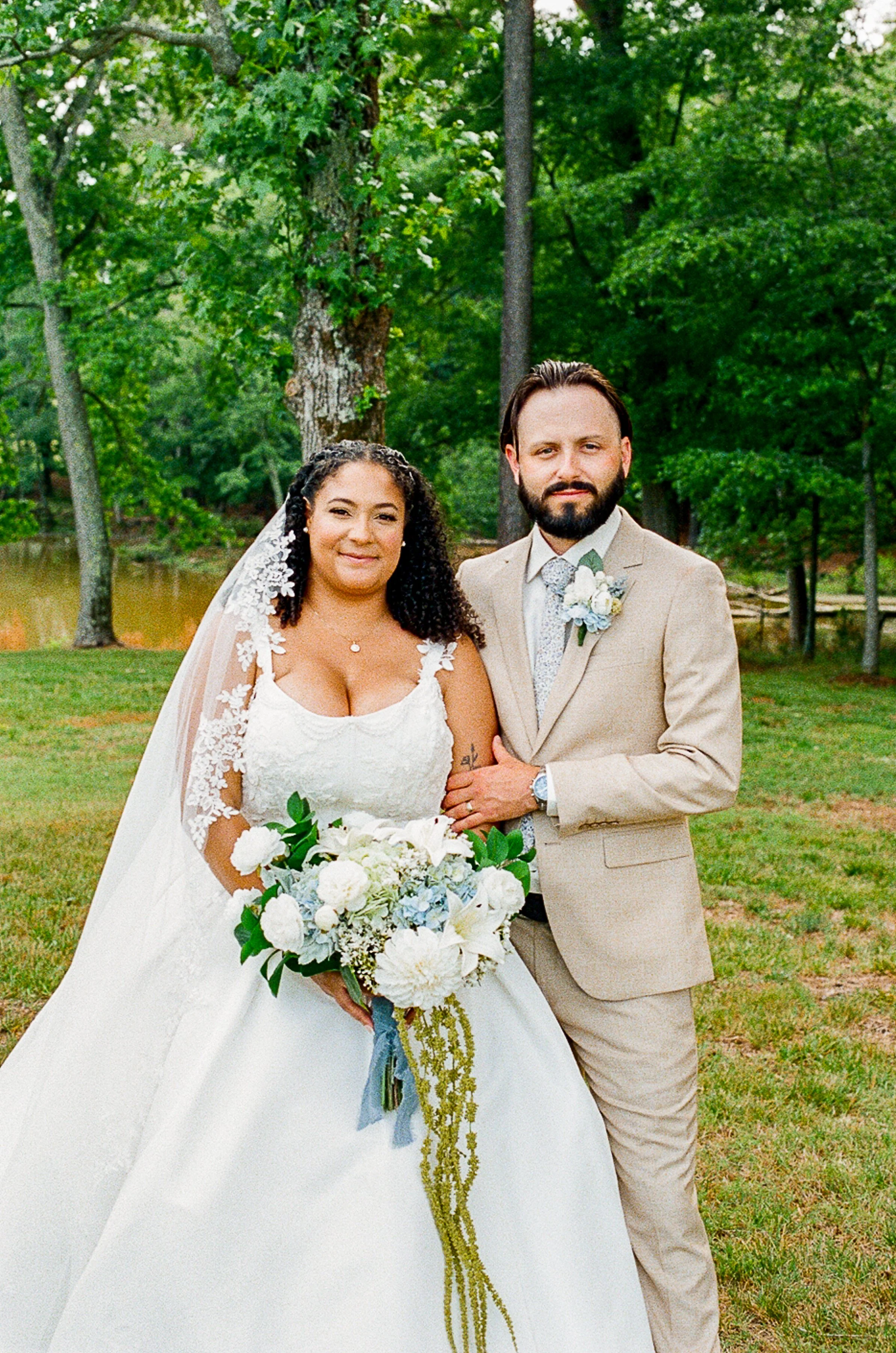
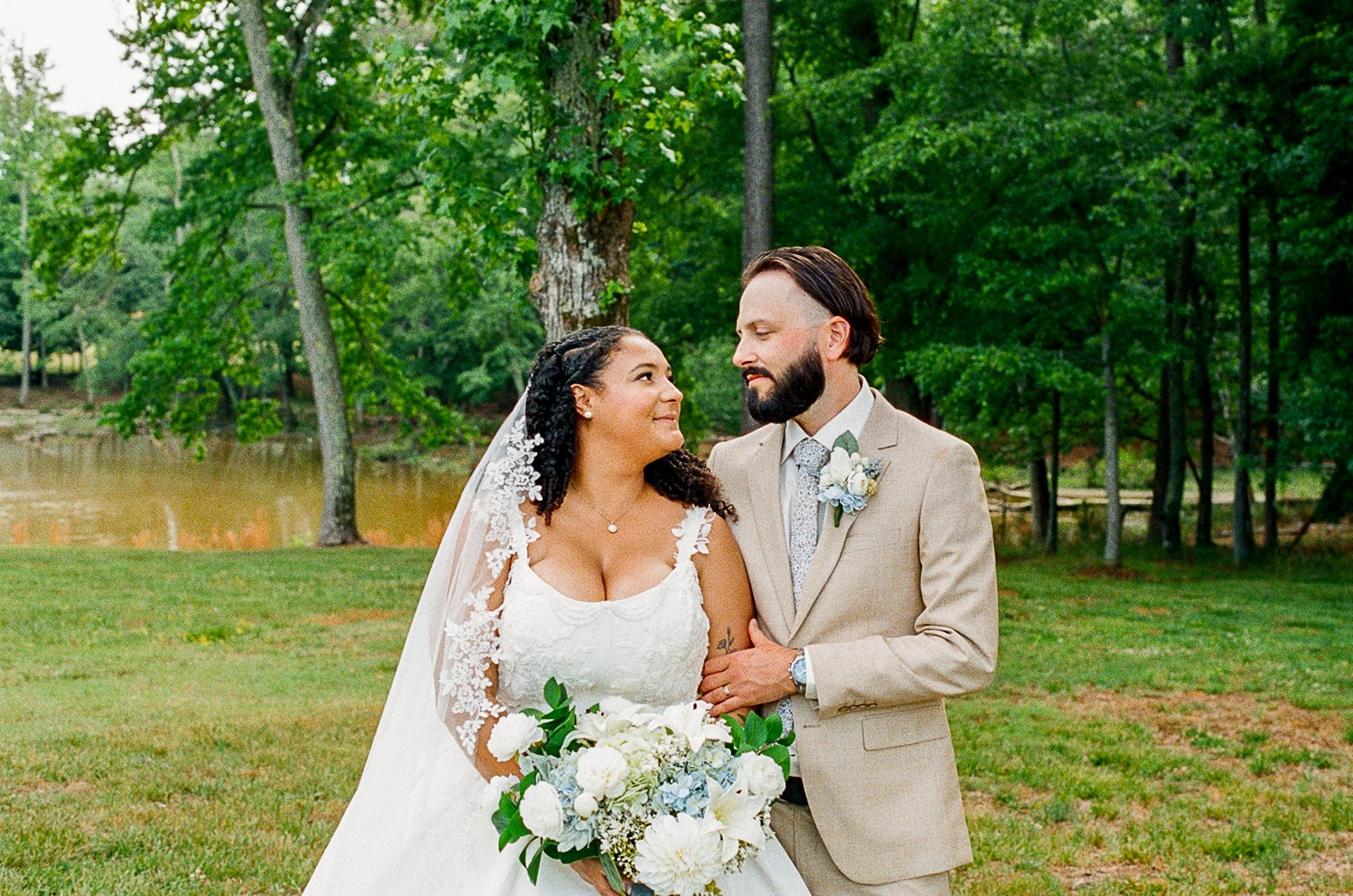
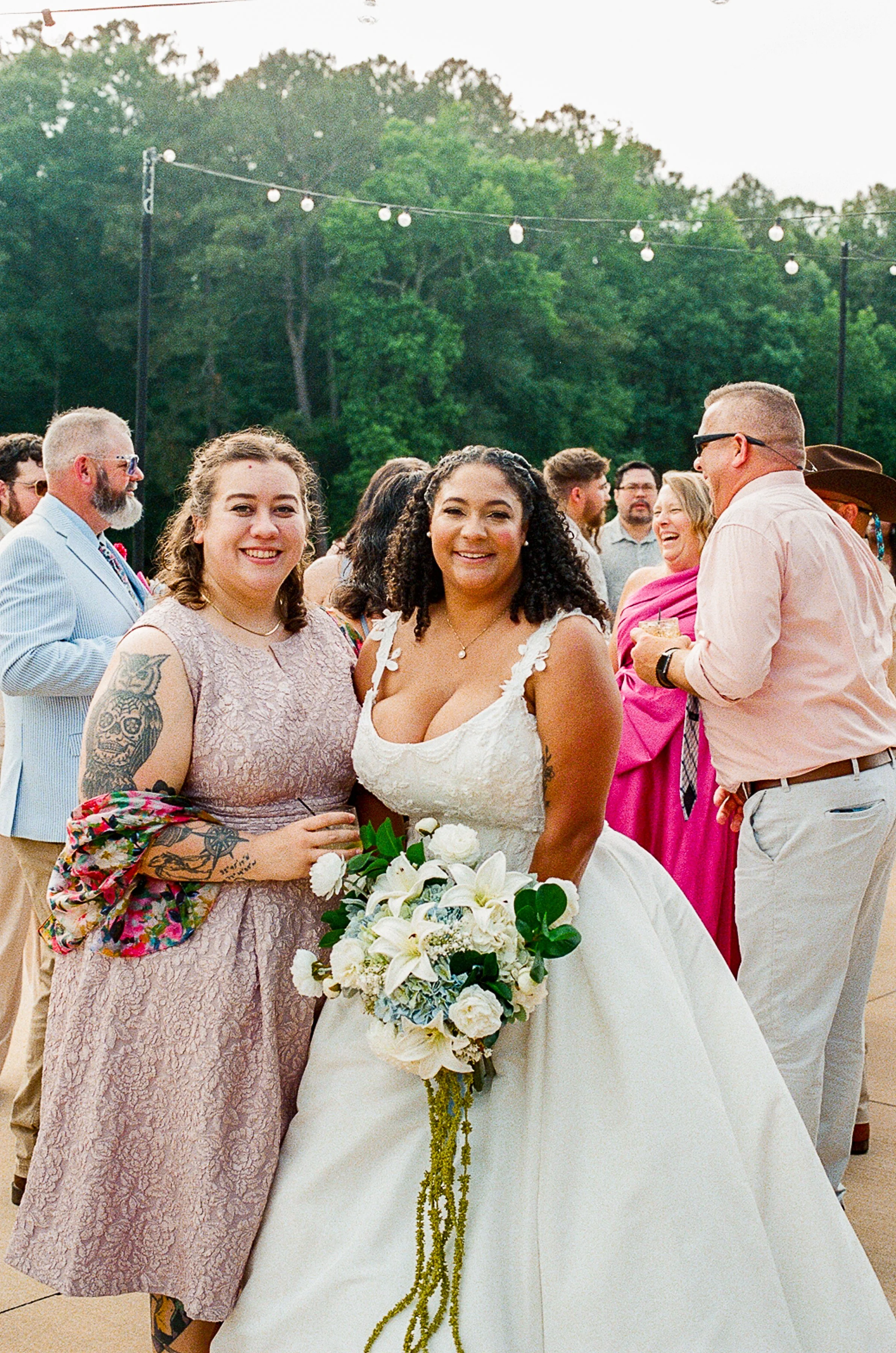
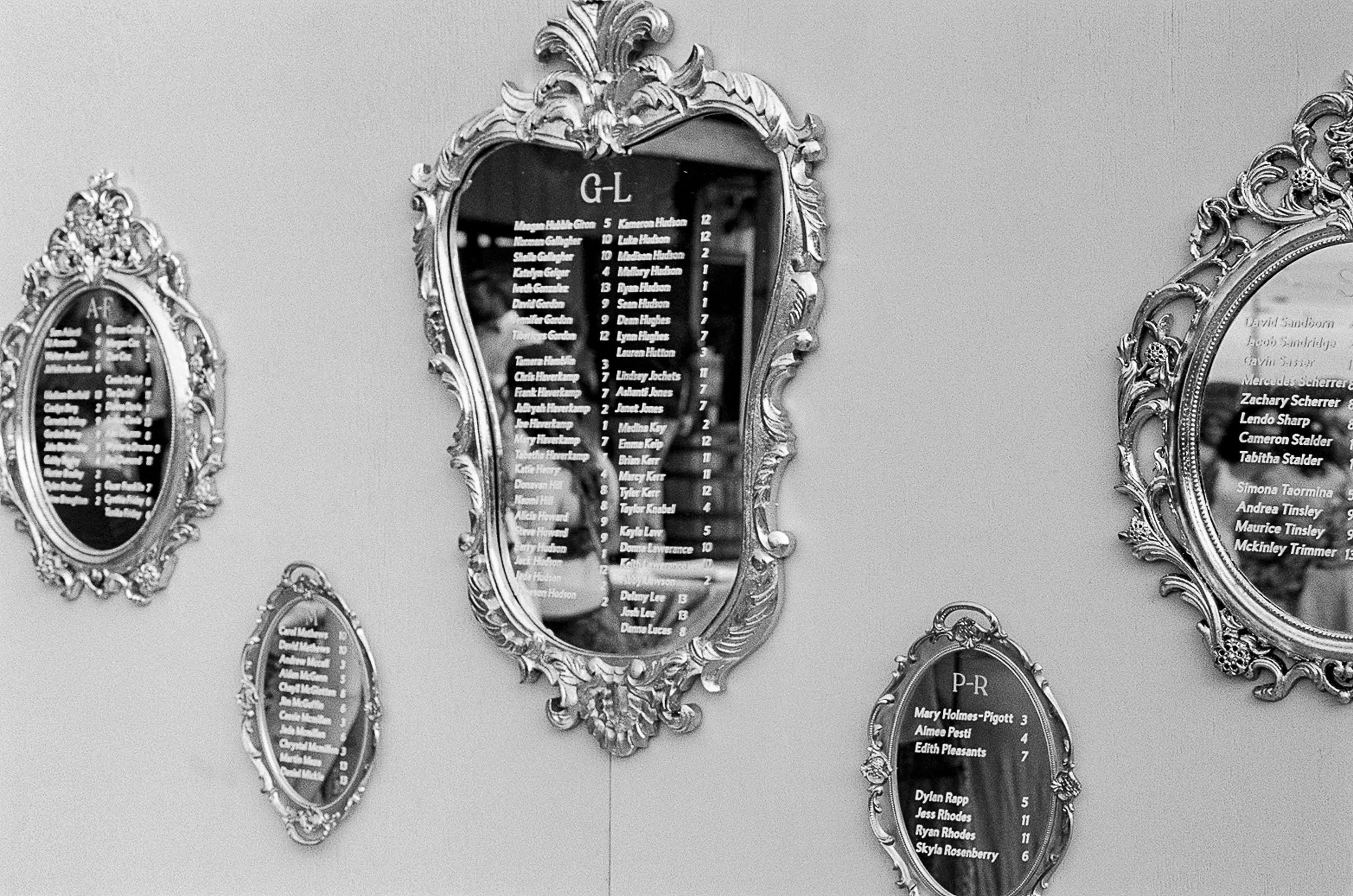
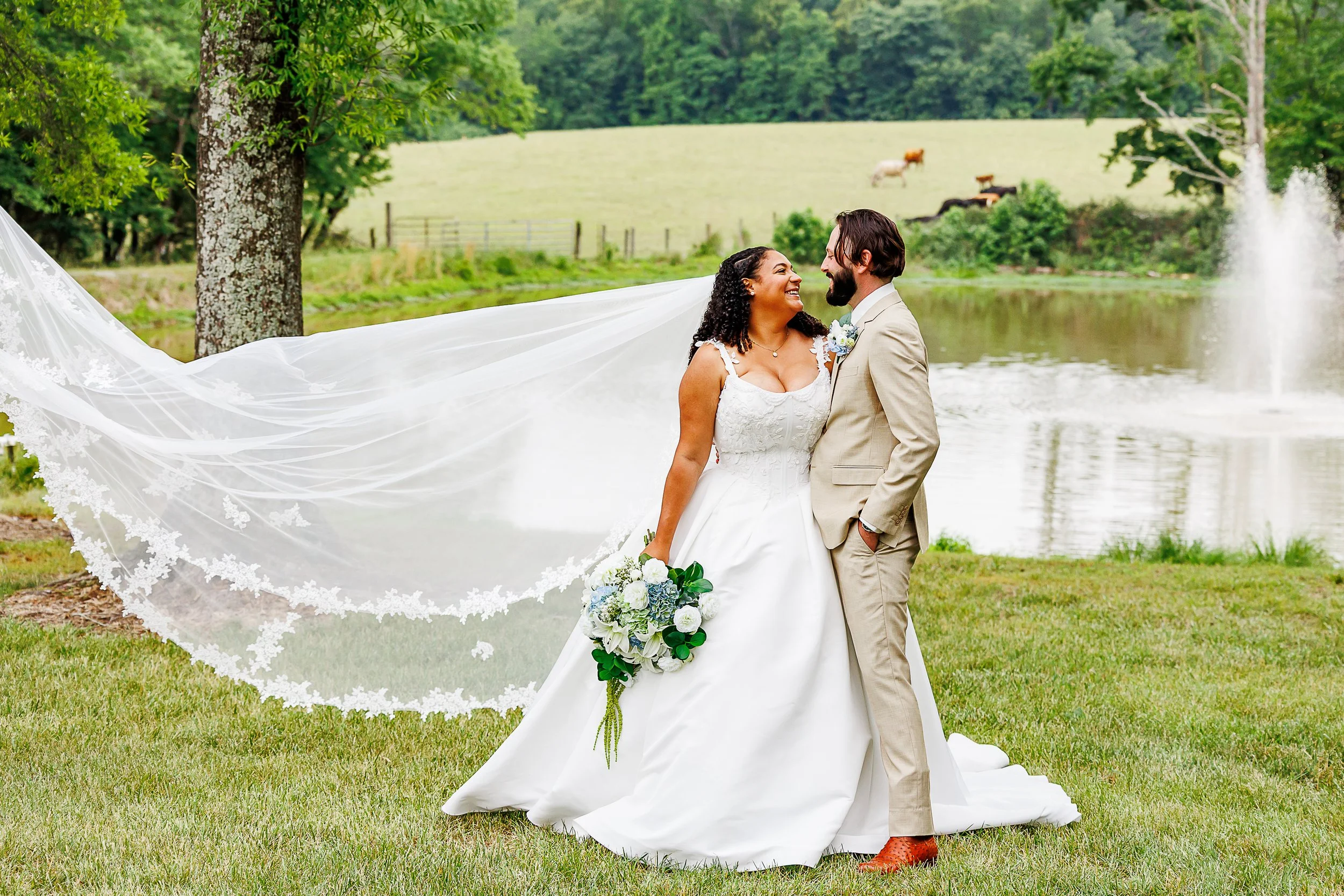
There’s a moment from their wedding that still makes me smile every time I think about it. During their couples portraits out on Oakdale’s grounds, a small herd of cows wandered over and planted themselves right in the background, just hanging out like they’d been invited to the wedding too. Zachari was THRILLED; Chandler just laughed and kept going, completely unbothered, and honestly it’s one of my favorite kinds of moments to capture. The ones nobody plans, but a couple talks about for years.
One detail about their wedding that’s stayed with me for a more personal reason: Zachari and I got married almost exactly a week apart. I remember being deep in my own elopement planning while getting to know them during theirs, and there was something really special about going through that season of life alongside a couple I was also documenting. It made the whole day feel even more special, less like I was just there to work, and more like we were walking through the same chapter together, just on our own timelines.
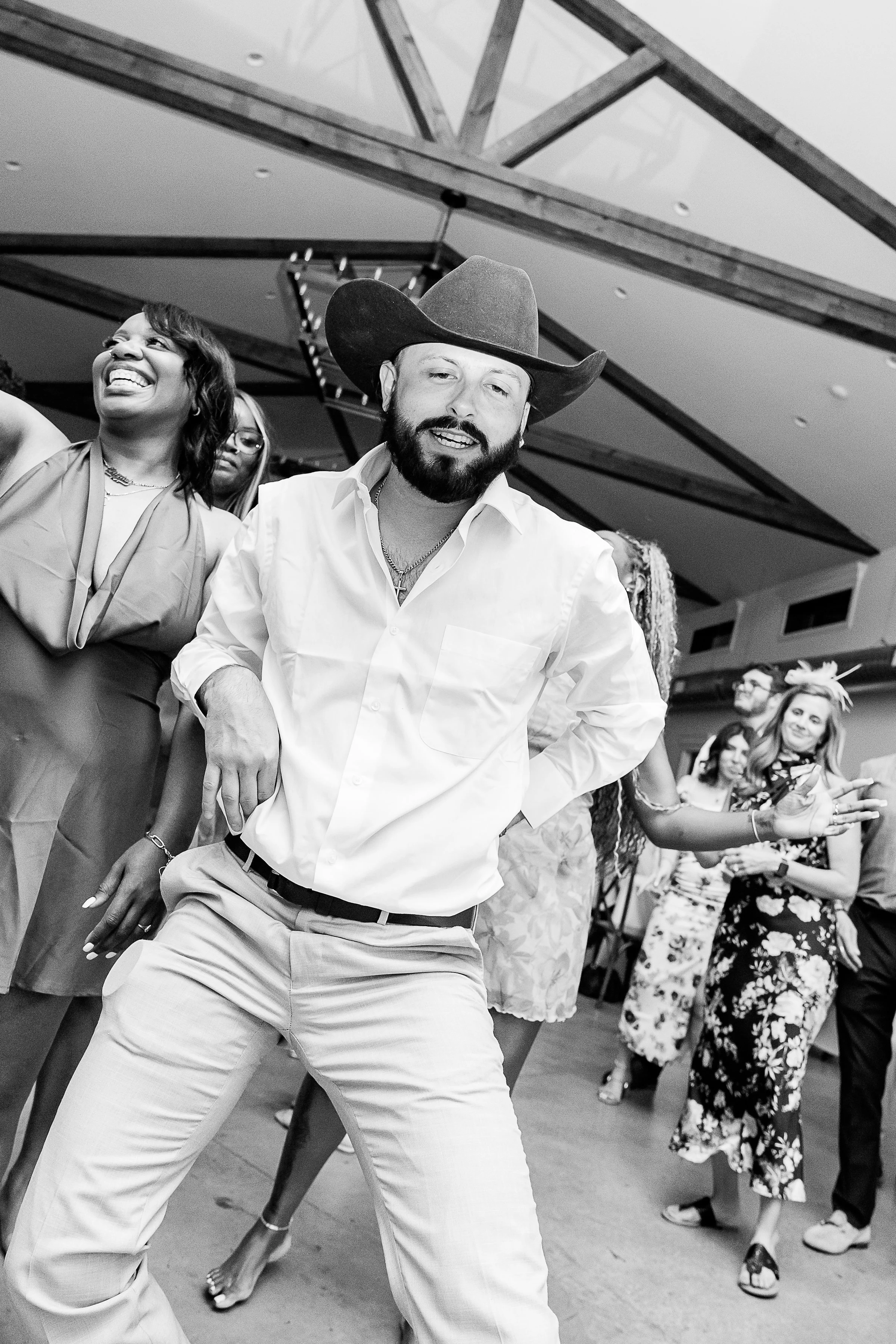
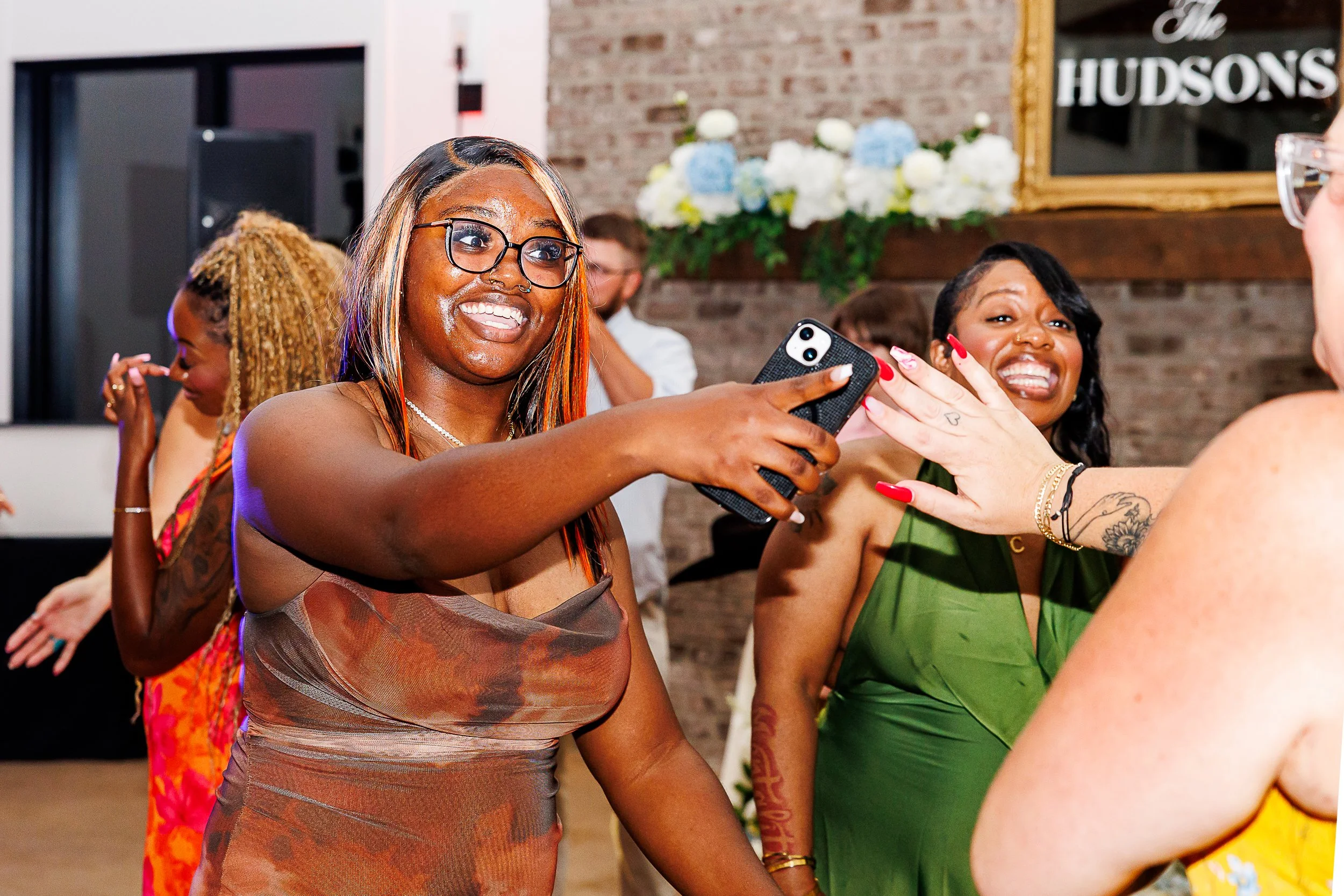
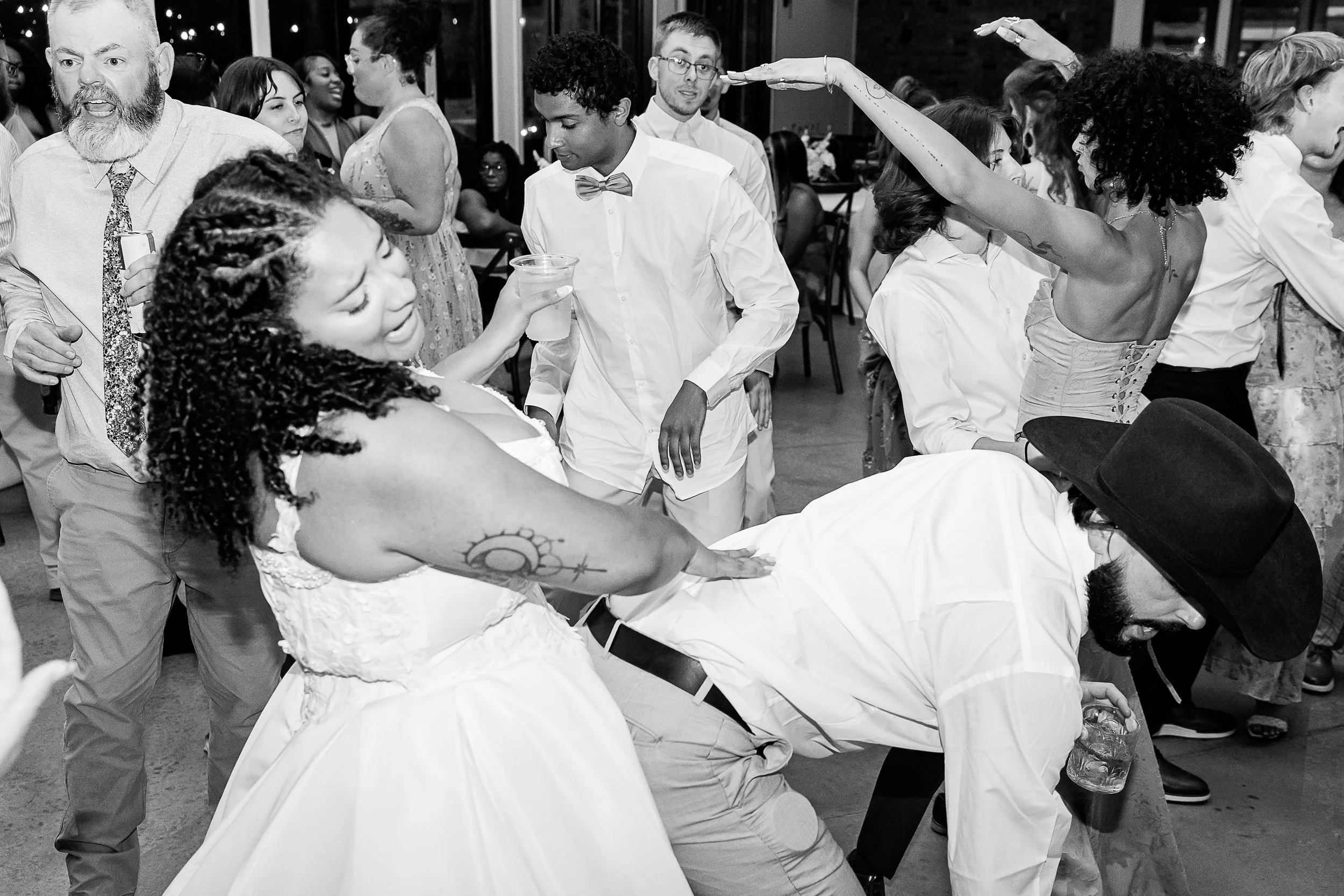
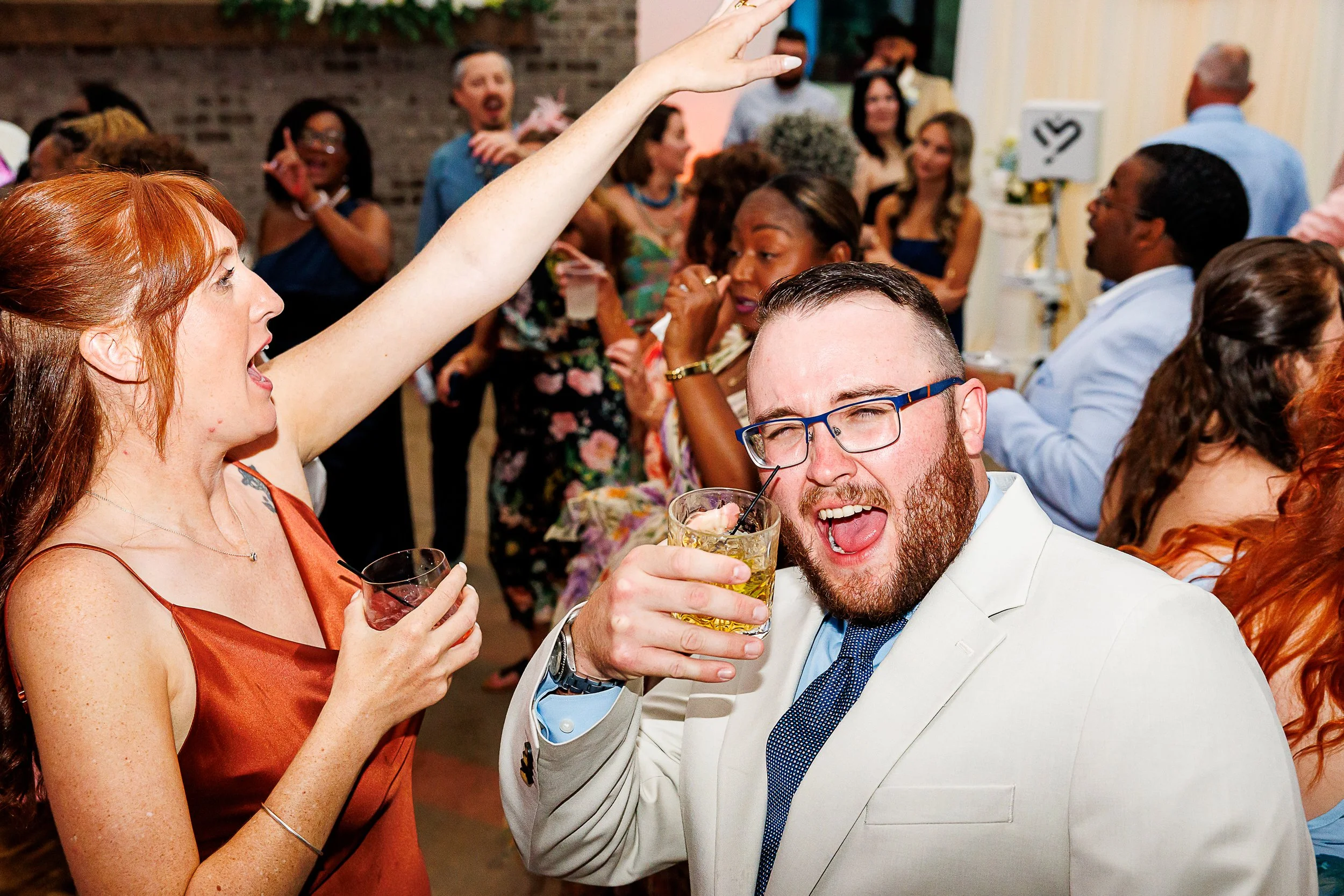
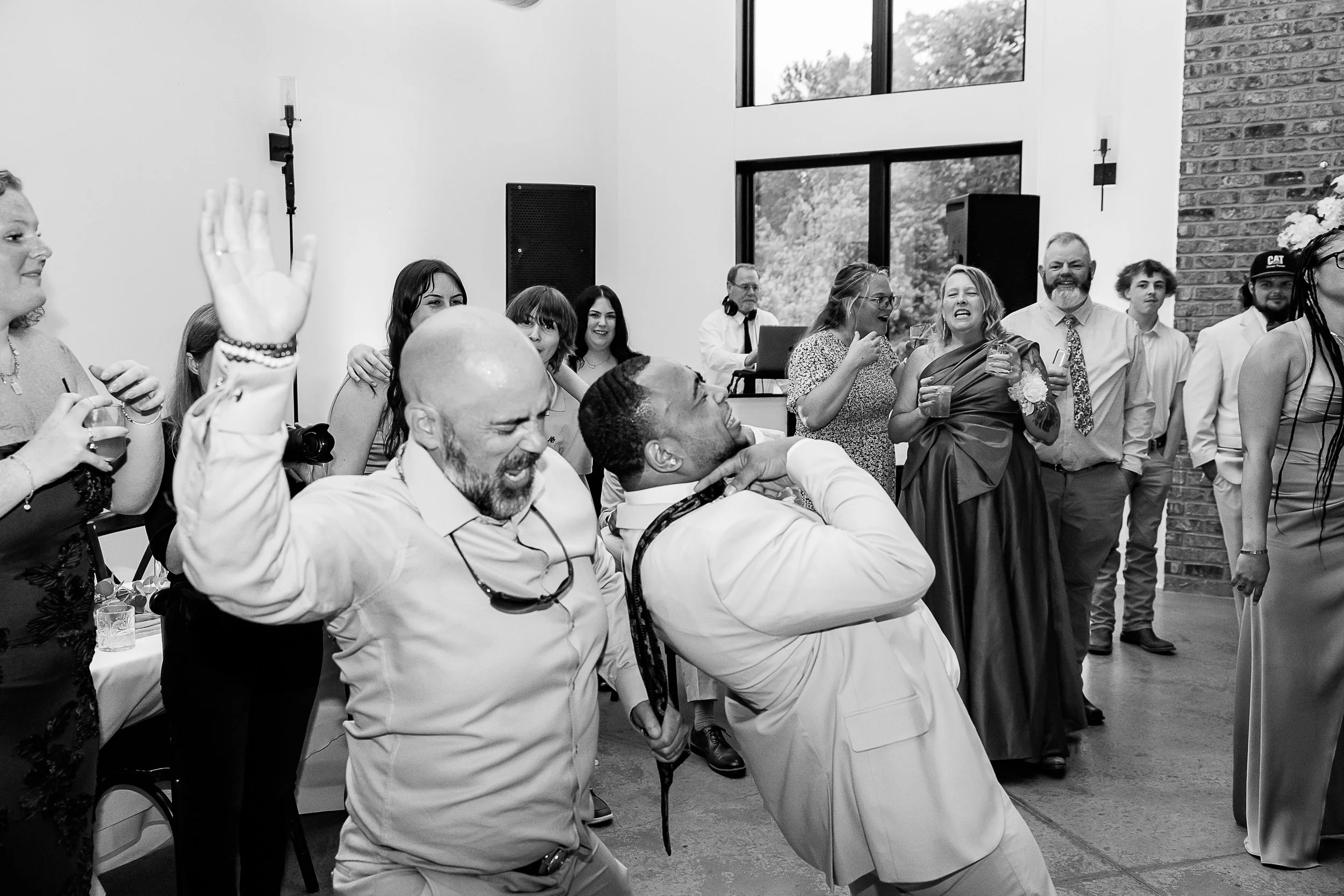
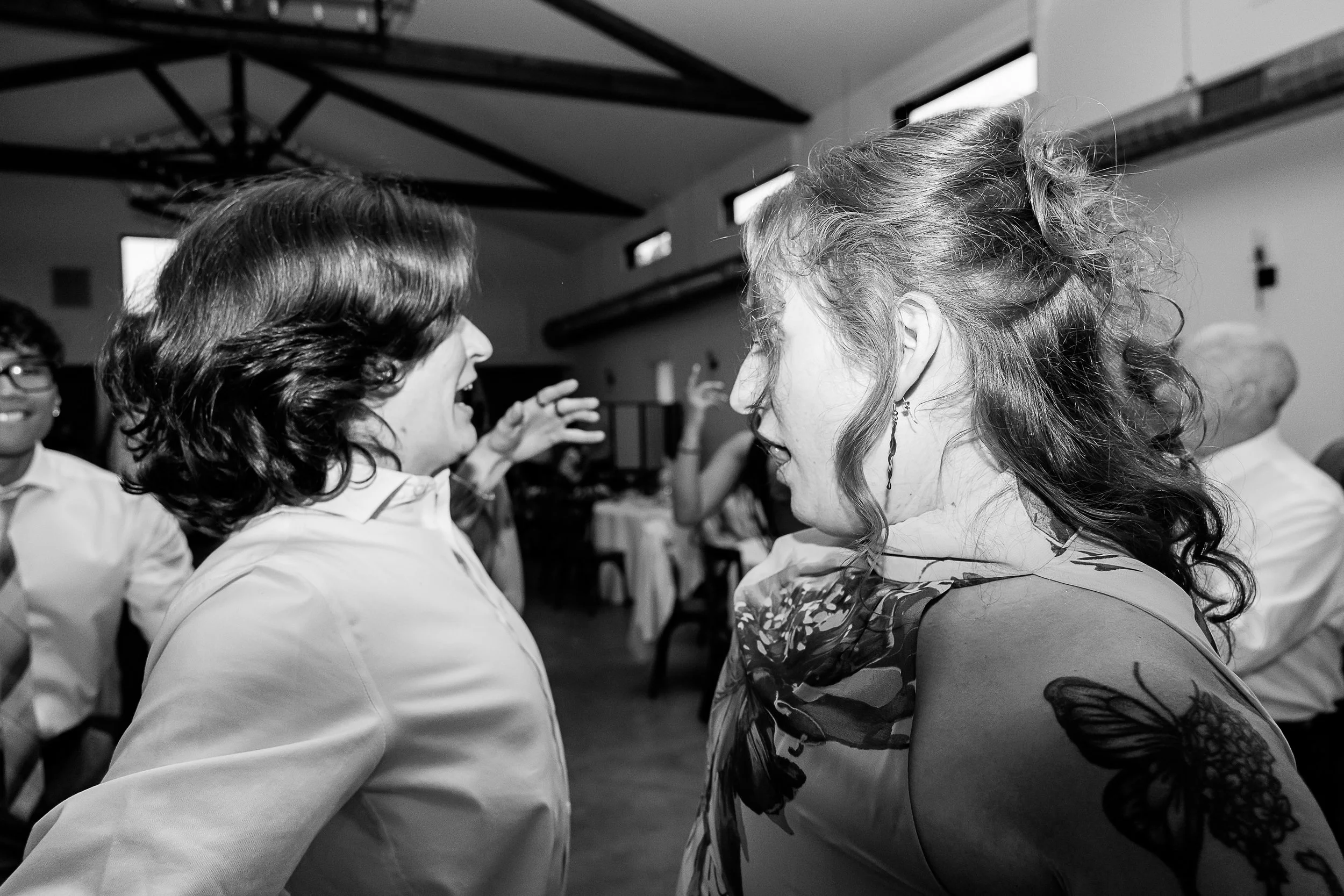
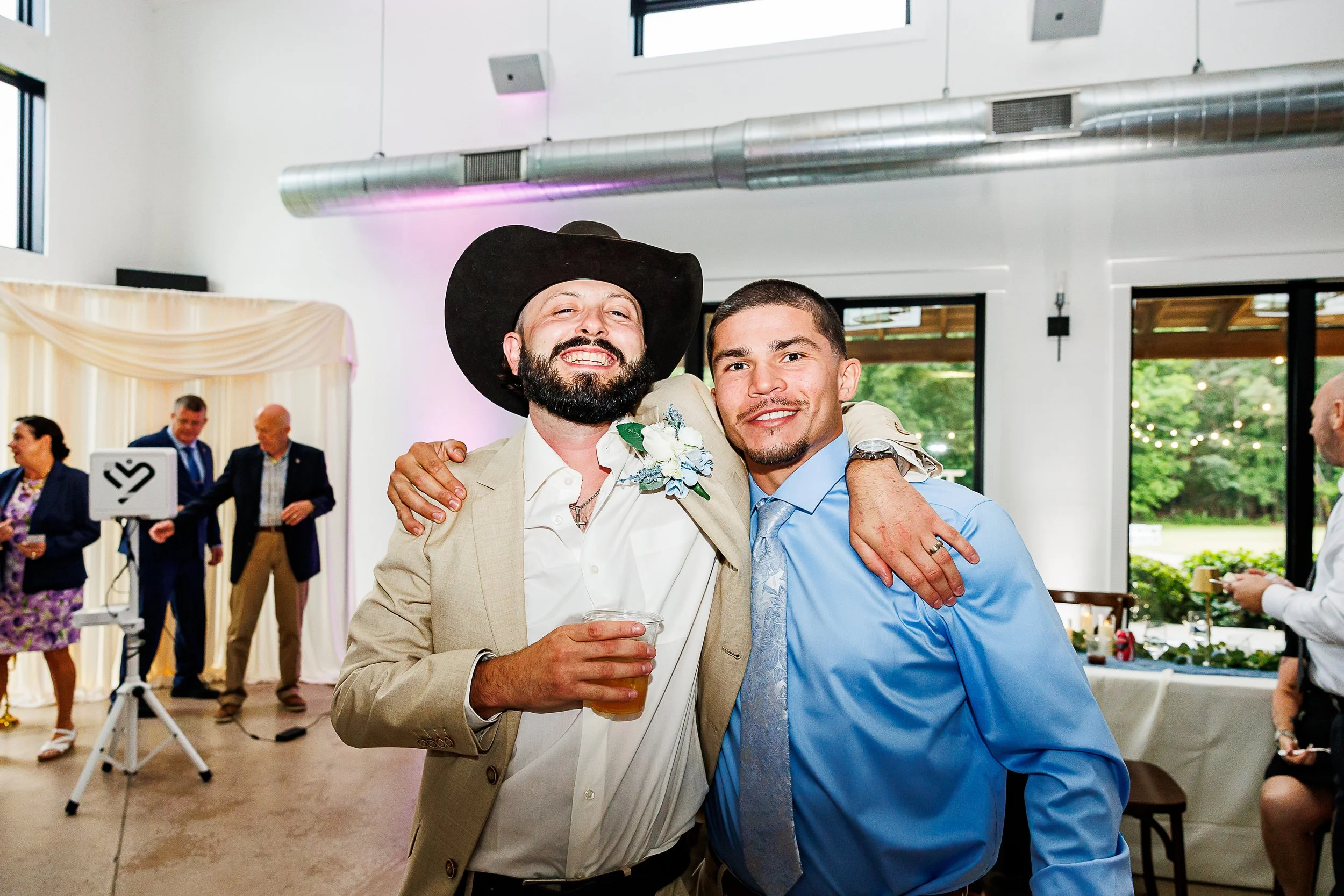
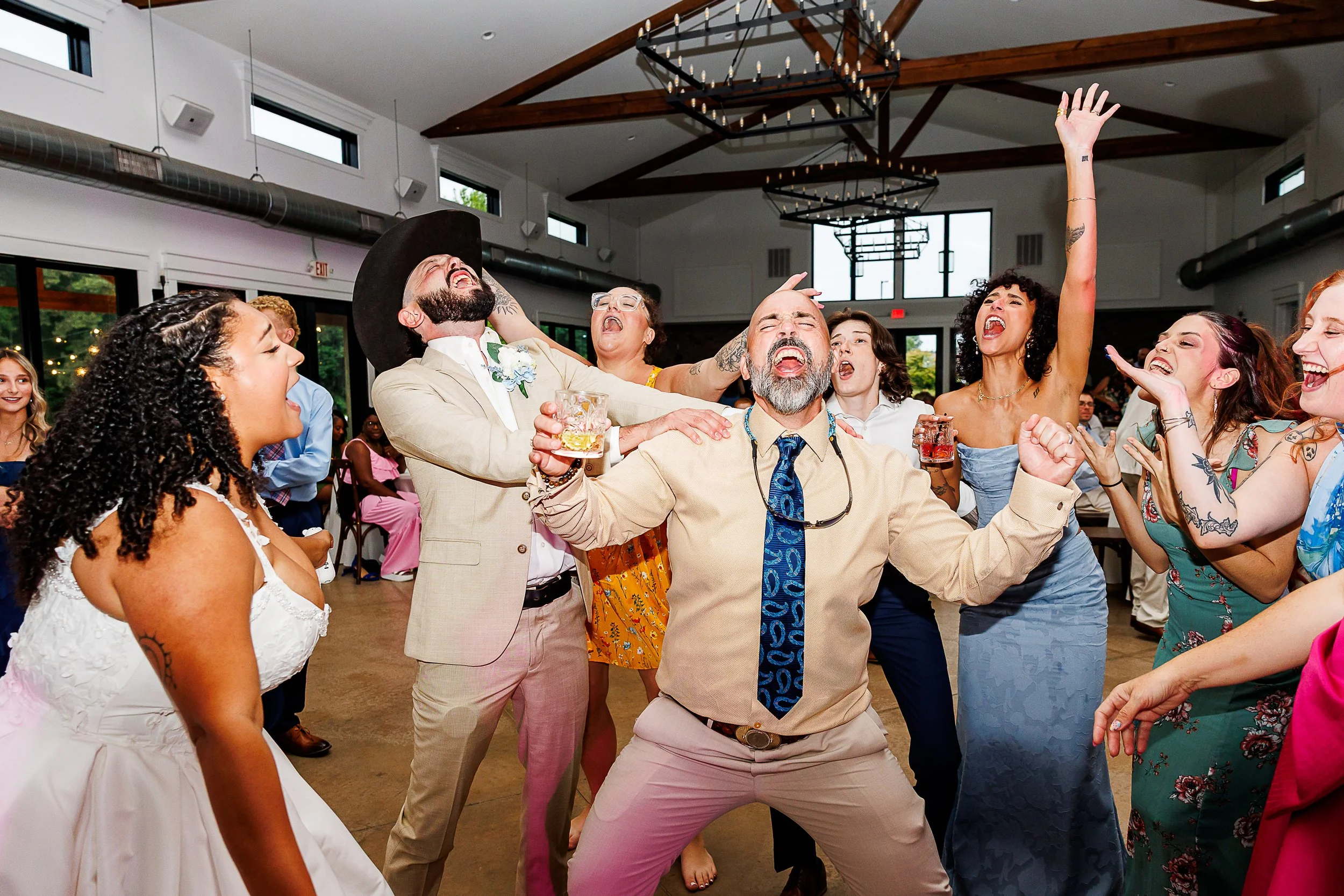
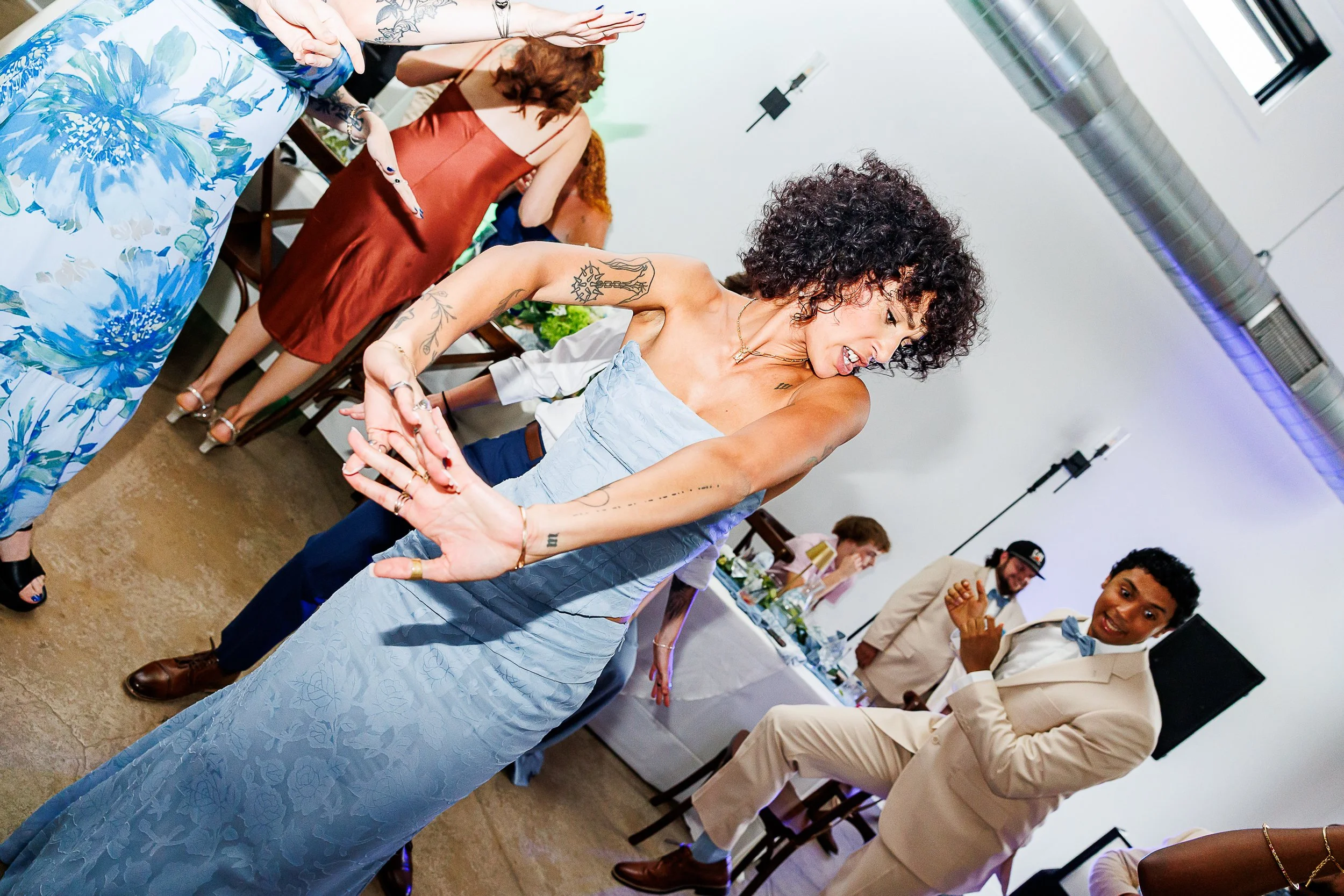
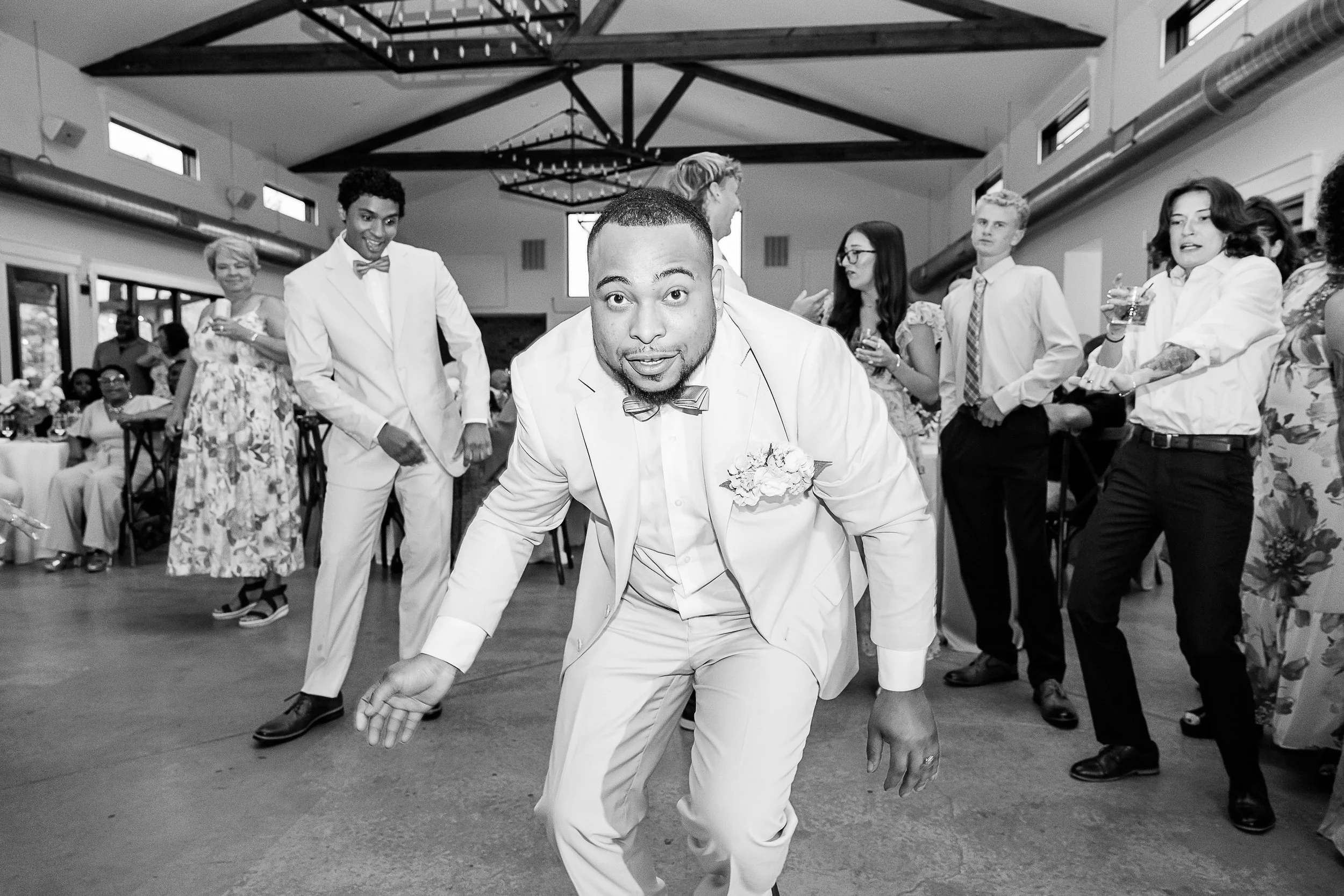
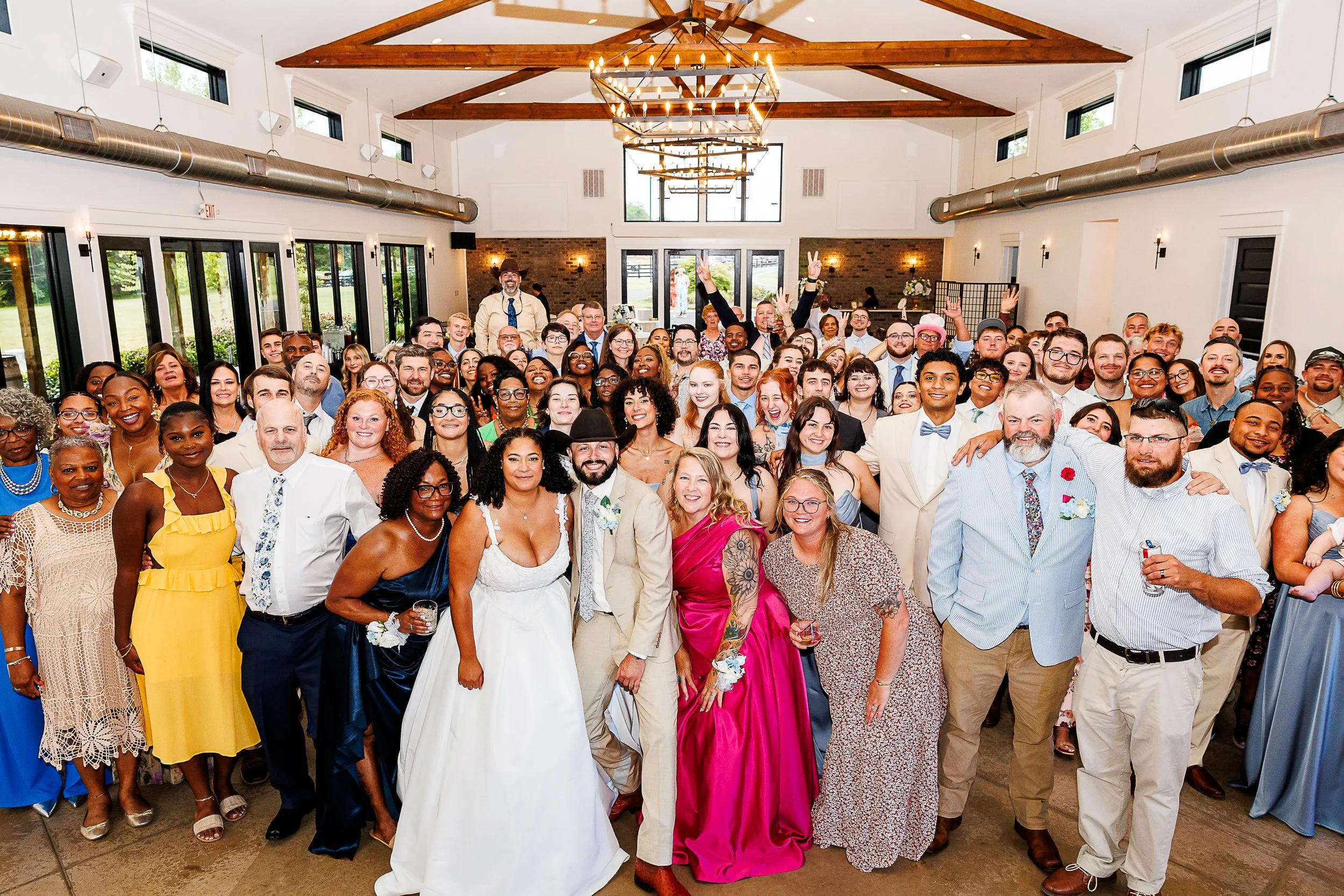
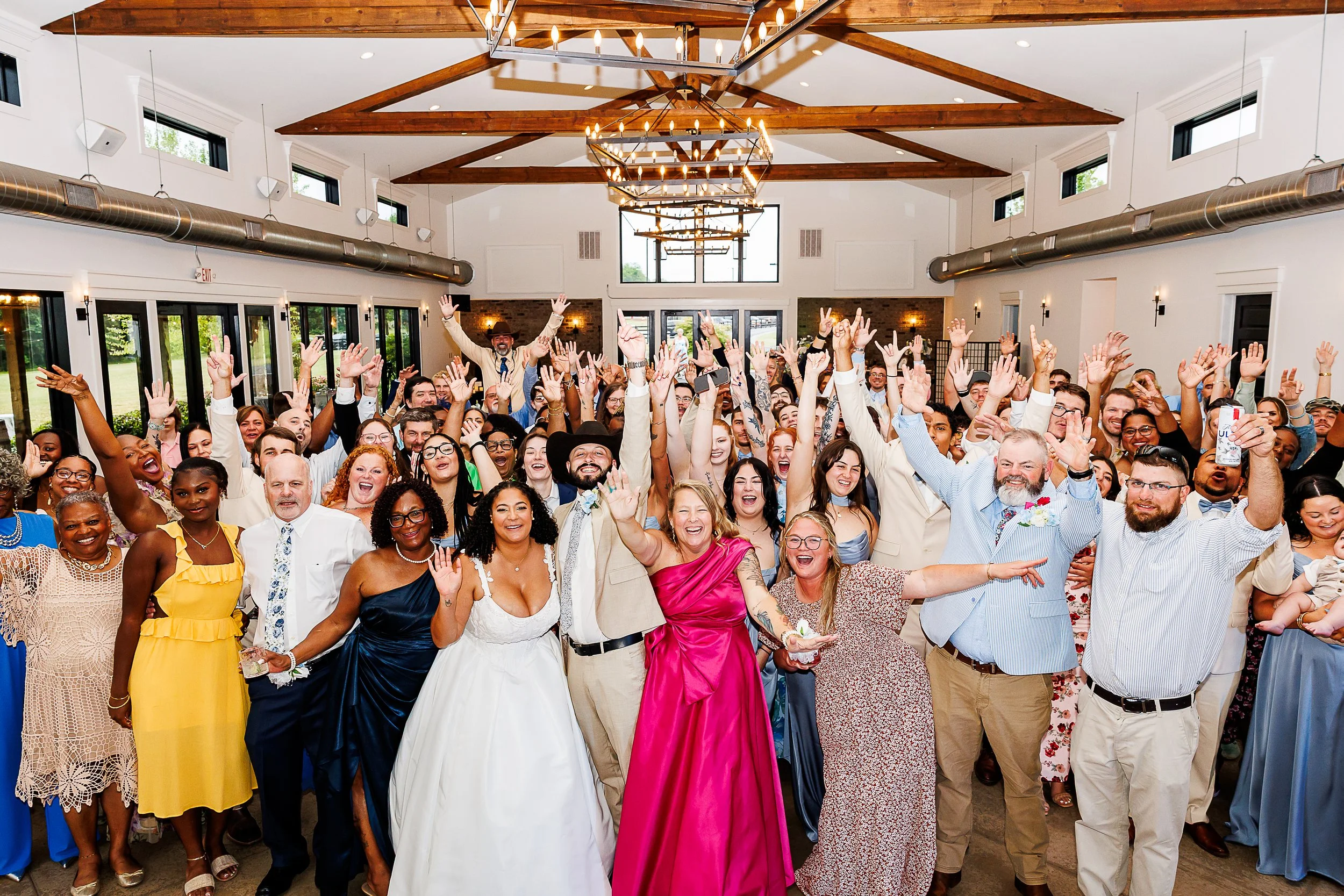
By the time the reception hit full swing, it was clear the dance floor never died, not even close. People were still out there dancing well past the point most receptions start winding down, and that kind of energy is something you can’t fake or stage. It’s one of the clearest signs a wedding actually felt like what it was supposed to feel like: a celebration people didn’t want to leave.
Their day was a family affair for us in more ways than one, too. My husband Ledo came along as my assistant for the entire day and even picked up a second camera during the reception, so a handful of those reception frames are actually his. And the friendship didn't end at the altar - Zachari invited me to her birthday party this fall, and the only reason I wasn't there was because I had another wedding booked that same day. She's genuinely one of our sweetest brides, and days like theirs are exactly why we do this.
Their note to us after the wedding said it better than we could: "You were so much fun to work with! You truly made our day so easy and so fun."
That's the goal underneath all of this - the technical work is real, but it only matters because it lets you actually relax in front of the camera instead of worrying about how you'll look next to the person you love.
Looking for a photographer that honors skin tones in multiracial and multicultural relationships? Let's talk!